


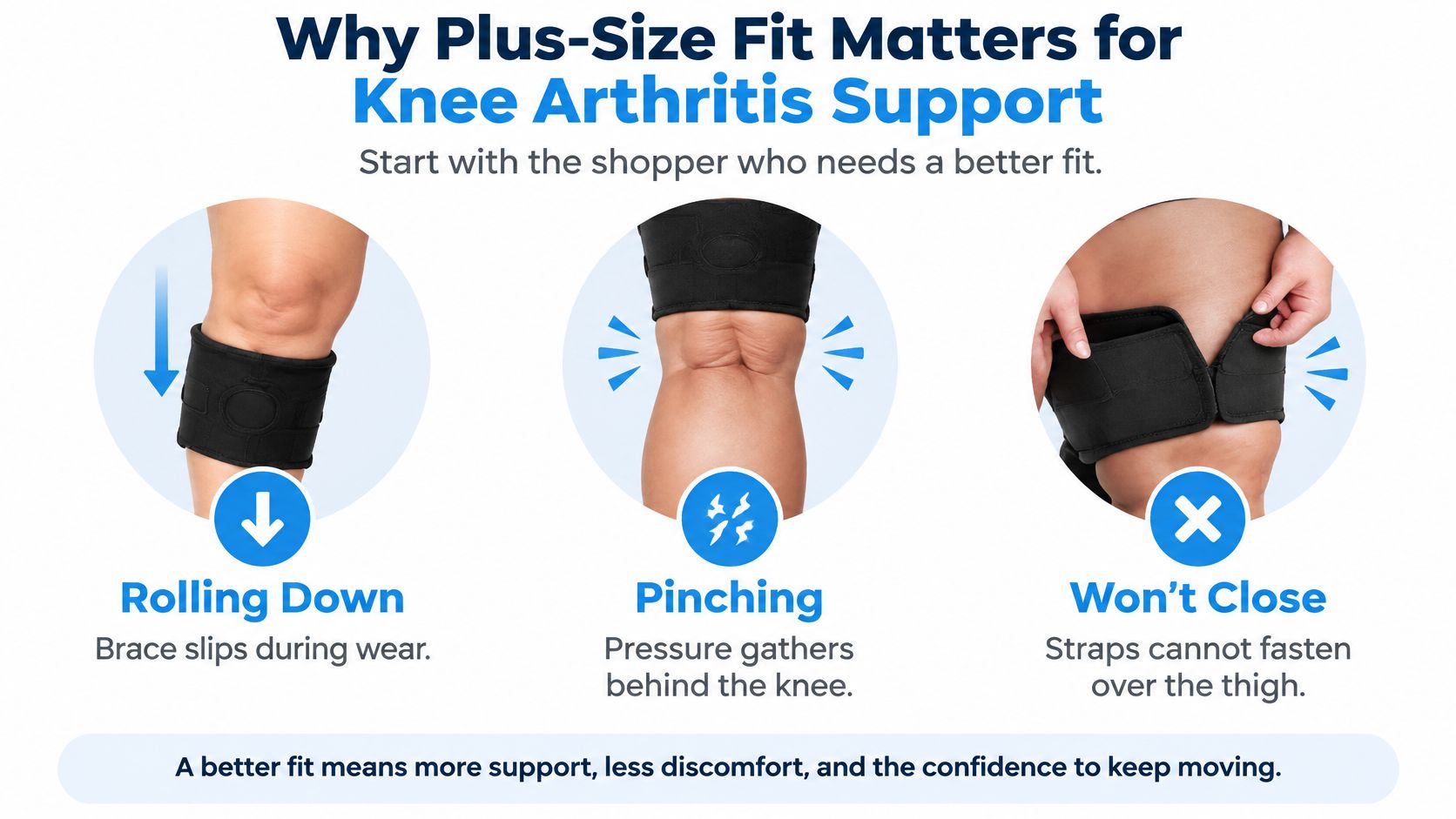
You've already tried a standard knee brace. It rolled down when you stood up, pinched behind your knee when you sat, or wouldn't fasten over your thigh. That doesn't mean you measured badly or that a brace can't help. It means a size label alone can't predict whether the brace will stay in place and feel wearable on your leg.
For a knee brace for arthritis plus size, the practical test is not just whether it closes. It's whether it stays centered through walking and sitting, supports the knee without squeezing the limb, and feels comfortable enough to wear during the activity you bought it for. Arthritis braces can offer support, but they don't guarantee pain relief. Fit, comfort, and the reason your knee hurts all matter.
Table of Contents
- Why Plus-Size Fit Matters for Knee Arthritis Support
- Measuring Thigh and Calf for a Secure Fit
- Prioritizing Non-Compressive Fit and Breathable Materials
- Comparing Brace Types for Your Knee Problem
- Breaking In a Brace and Adjusting It Safely
- Checking Return Policies and Placing Your Order
Why Plus-Size Fit Matters for Knee Arthritis Support
A brace that slips down the thigh or gathers skin behind the knee is more than an annoyance. It can make movement uncomfortable, leave pressure marks, and end up unworn in a drawer. Larger or tapered thighs, changing swelling, and the shape of the calf can all affect how a brace sits and holds its position.
Knee osteoarthritis is common, not a niche concern. The World Health Organization's osteoarthritis overview reports that osteoarthritis affected approximately 528 million people worldwide in 2019, with the knee the most frequently affected joint and an estimated 365 million people living with knee osteoarthritis. Because the knee bears body weight during standing and walking, excess body mass is a recognized risk factor for osteoarthritis in weight-bearing joints.
The CDC's arthritis analysis illustrates how arthritis prevalence differs by body size. Among adults in its 2007–2009 analysis, age-adjusted arthritis prevalence among people classified as obese was 25.2% for men and 33.8% for women, compared with 13.8% and 18.9% among underweight or normal-weight adults. The same report cited research estimating a 60.5% lifetime risk of symptomatic knee osteoarthritis among people with obesity, approximately double the risk among people at normal or underweight. These figures describe population-level risk, not what any one person will experience.
Fit is about the whole leg
A size chart can help narrow down options, but it can't show whether a brace will migrate on a tapered limb or press into a skin fold when you bend your knee. A brace may fit the thigh circumference and still slide because the calf is much narrower. Swelling can also change how a brace feels over the course of the day.
A useful fit test: The brace should stay centered during walking and sit-to-stand without digging in, sliding, or forcing you to crank down the straps.
Treat fit and comfort as core requirements, not finishing touches. A brace that's marketed as plus-size still needs to match your measurements and the way your leg moves.
Measuring Thigh and Calf for a Secure Fit
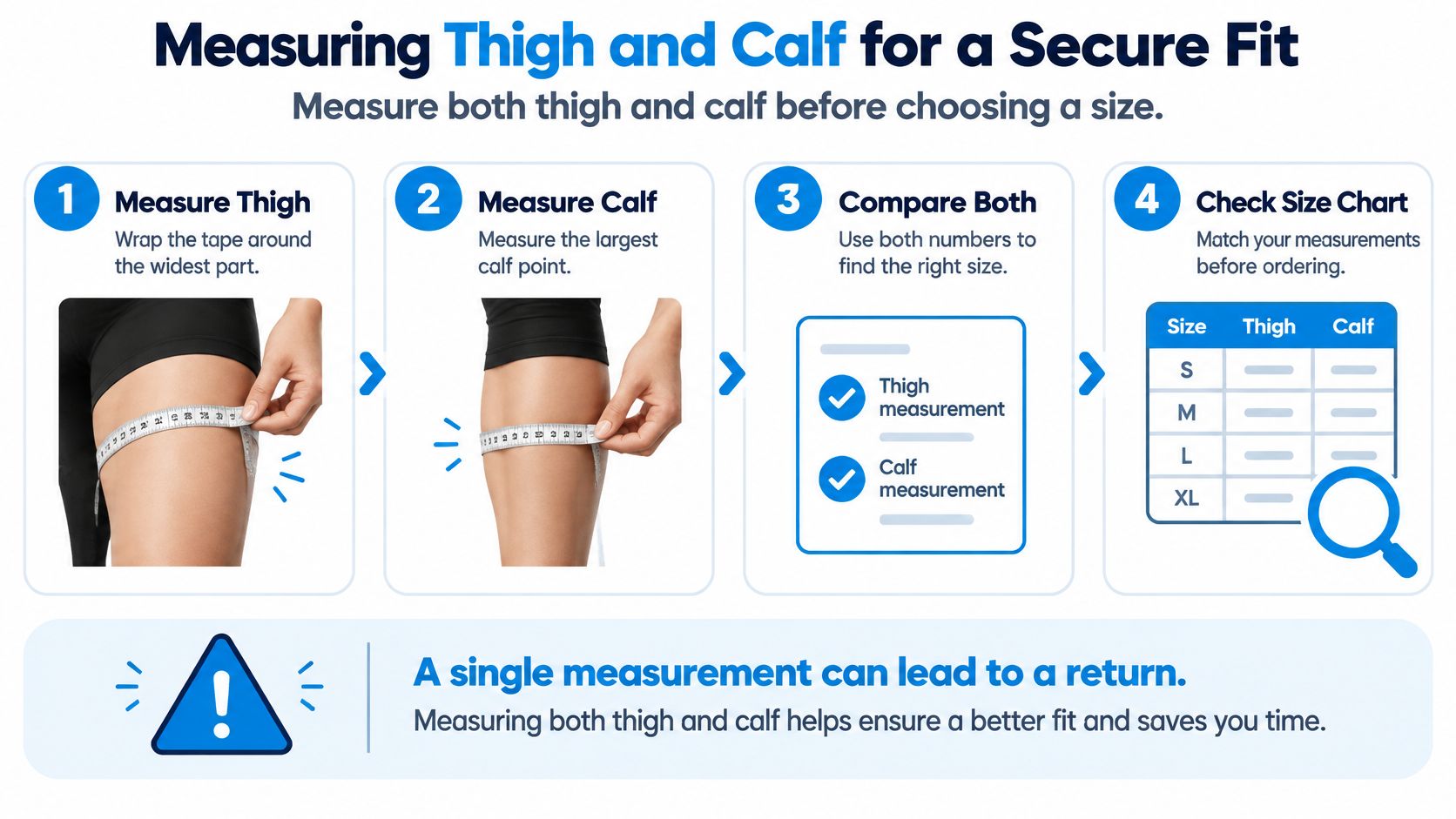
One thigh measurement can lead to the wrong purchase. A brace may close comfortably above the knee but slip because the calf is too narrow for the lower panel, or pinch when its hinges don't line up with your knee. Measure both sides of the joint, then compare the results with the instructions for the specific brace you're considering.
Take measurements the way the maker specifies
Use a flexible tape and keep it level around your leg. Follow the manufacturer's stated distance above and below the joint line, since measurement points vary between brands. Don't substitute the widest part of your thigh if the size chart tells you to measure at a different location.
- Measure the thigh. Record the circumference at the specified point above the knee, with the tape snug but not compressing the skin.
- Measure the calf. Measure at the specified point below the knee. If the chart asks for the largest calf measurement, use that location.
- Record knee-to-floor length. This helps you check whether the brace's overall height and hinge placement are likely to suit your leg.
- Compare all measurements. Check each number against the same product's chart, rather than assuming one measurement determines the size.
Write down the measurements and the location where you took each one. If the thigh and calf fall into different size ranges, don't automatically size up or down. Ask the manufacturer which measurement governs, and whether the brace is designed to accommodate that difference.
Check movement before ordering
Clinical fitting is more than a circumference purchase, especially when pain may come from a specific compartment of the knee. A clinician may use examination and, when indicated, weight-bearing imaging to assess alignment and the source of symptoms. The brace should sit centered on the knee axis and allow near-full bending and straightening.
Before you order, ask yourself whether the listed measurements include both thigh and calf, whether the brace's height suits your leg, and whether the design can stay stable without being overtightened. If you want another example of how body shape affects fit in a different kind of supportive product, Lounge Wagon's guide to supportive outdoor seating offers useful context. For a brand-specific example of measurement guidance, consult this knee sleeve sizing chart.
Prioritizing Non-Compressive Fit and Breathable Materials
A tighter brace isn't automatically a better brace. If the straps squeeze the leg to stop slipping, they may leave marks, irritate the skin, or make sitting uncomfortable. A secure fit should hold the brace in place without creating a tourniquet effect.
In a survey of people fitted with unloader braces, common reasons for stopping use included poor fit, discomfort, skin irritation or swelling, difficulty putting the brace on or taking it off, clothing interference, and bulk or heaviness. The survey of unloader-brace users also found that continued use wasn't associated with BMI, weight, age, arthritis severity, or alignment. That's a useful reminder: a plus-size label alone doesn't predict whether someone will keep wearing a brace. The details of fit and daily use matter.
Comfort keeps a brace in rotation
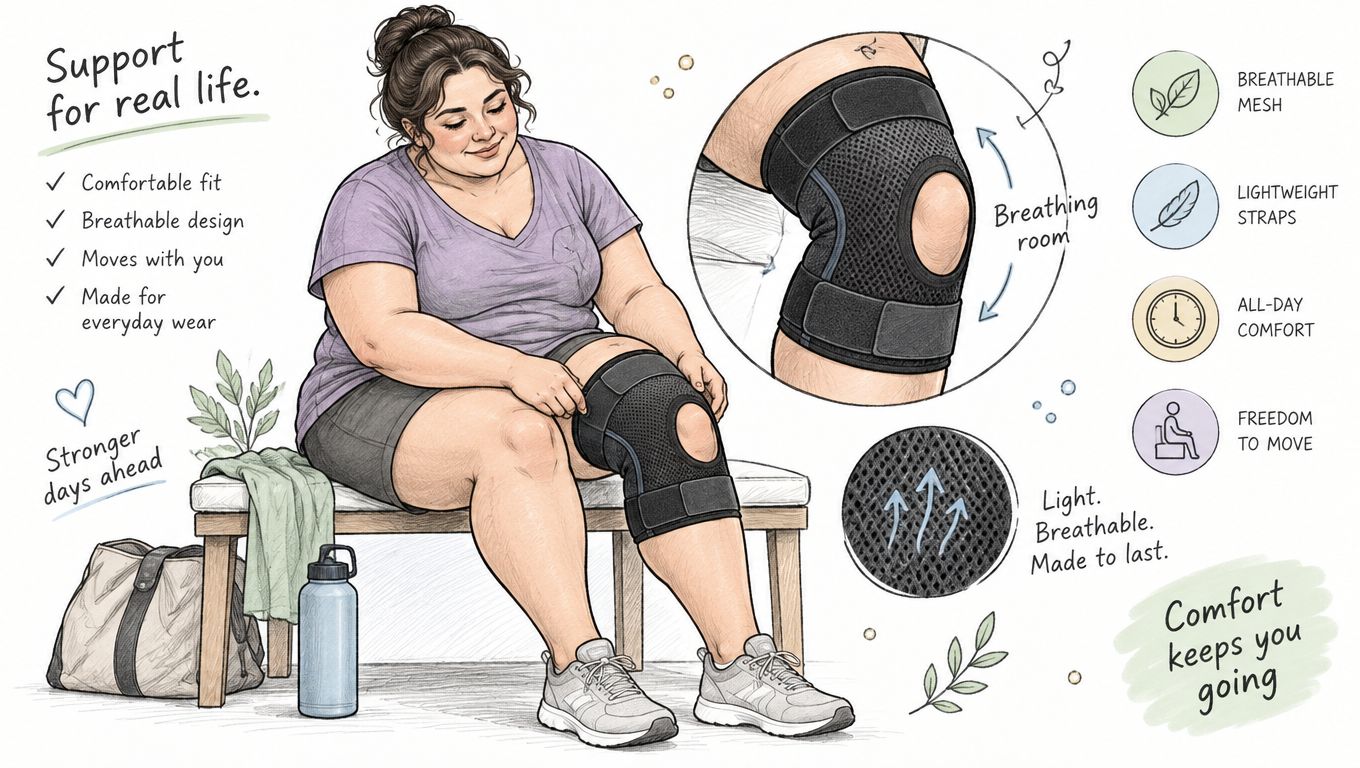
Look for materials and construction that suit how you'll use the brace. Breathable, moisture-wicking fabric can feel more comfortable during everyday movement, while a simple closure may be easier to manage without help. If you have sensitive skin, check the product details and pay attention to how seams, edges, and straps sit when your knee is bent.
A useful product-page checklist includes:
- Material: Look for breathable fabric and clear care instructions.
- Donning and removal: Consider whether you can put it on and take it off comfortably by yourself.
- Pressure points: Check whether straps or edges could press into the back of the knee or upper thigh.
- Clothing and movement: Think about whether the brace's bulk will interfere with your usual clothing or activities.
Thermo Recovery Wear describes its knee braces as non-compression, with bamboo charcoal fibers and sensitive-skin approval. Treat those as product details to compare against your own needs, not as a guarantee that every design will suit every leg. For broader context on how compression garments are selected for a different use, this guide to choosing compression garments after liposuction explains why garment purpose and fit requirements matter. You can also review the distinction between non-compression and compression sleeves.
If a brace slips, don't tighten it until your skin protests. Recheck its position, the hinge alignment, and whether the panel shape suits your thigh and calf. A brace that stays in place comfortably is more useful than one that feels impressively tight for a few minutes.
Comparing Brace Types for Your Knee Problem
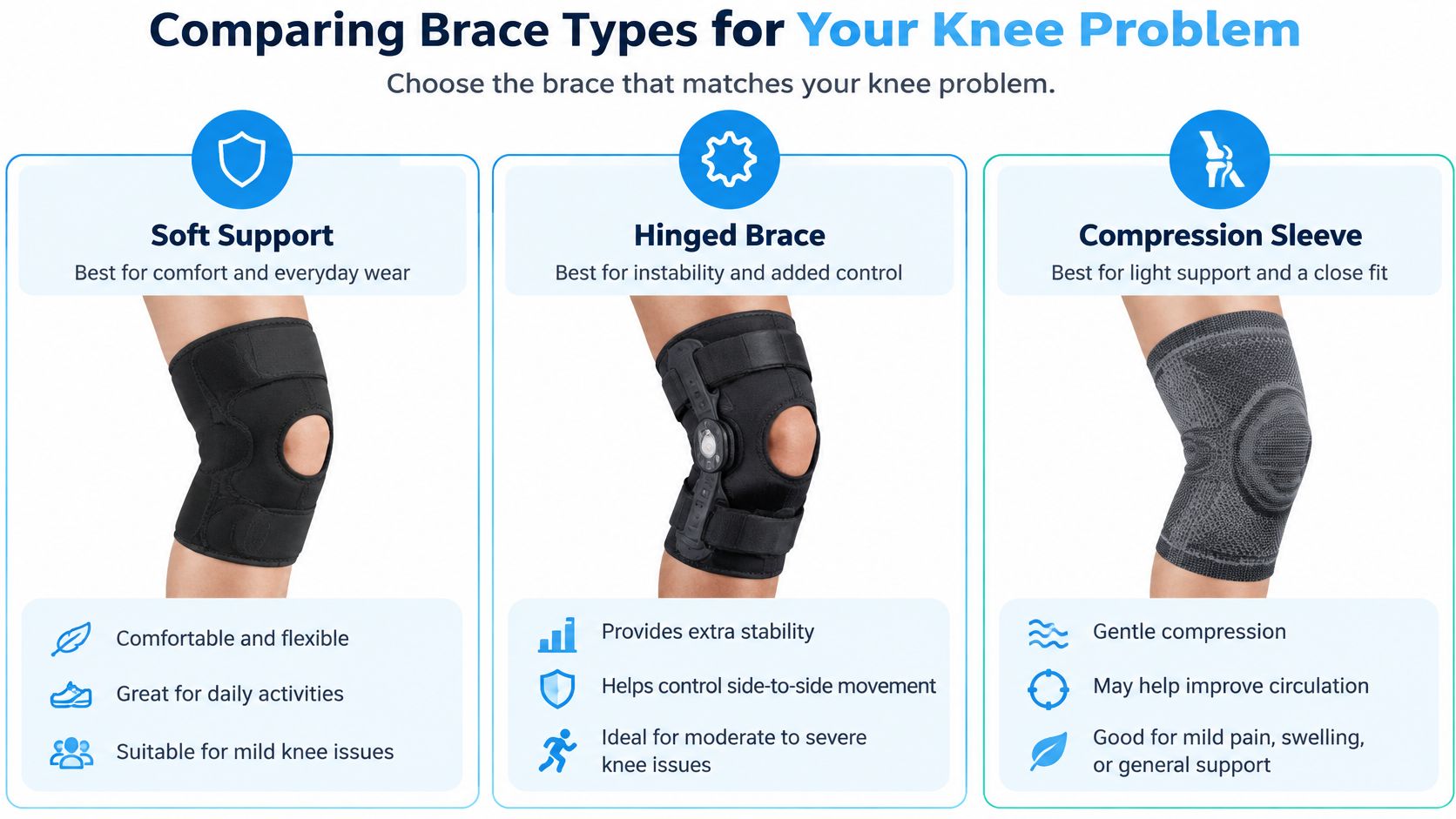
A soft support, hinged brace, and unloader brace don't solve the same problem. Choosing among them starts with what you need the brace to do: feel comfortable during routine activity, provide added control when the knee feels unstable, or address a particular pattern of loading. If you're unsure why the knee hurts or which compartment is involved, get clinical guidance before choosing a corrective brace.
The evidence calls for realistic expectations. A 2015 Cochrane review of knee braces and orthoses included 13 studies involving 1,356 participants with knee osteoarthritis. It concluded that low-quality evidence suggested little or no difference in pain, knee function, or quality of life after 12 months. Many participants discontinued their assigned treatment because they perceived limited effect. Bracing may support some people or help with activity tolerance, but it shouldn't be sold as a guaranteed pain cure.
Match the design to the job
| Brace type | What it may suit | Trade-off to consider |
|---|---|---|
| Soft support | Everyday comfort and a flexible feel | It may not provide enough control if the knee feels unstable. |
| Hinged brace | Added side-to-side support for instability | Hinges and straps can add bulk and may take more effort to position. |
| Unloader brace | Clinically assessed disease concentrated on one side of the knee | Alignment and fit are more specialized, so professional guidance may be important. |
| Sleeve | Light support and a close-fitting design | A sleeve won't provide the same mechanical control as a structured brace. |
For uncertain pain patterns, a comfort-focused or neutral design may be a more sensible starting point than an aggressive corrective angle. Unloader braces should be selected with the alignment and affected compartment in mind. If you're choosing support for activity, good movement technique matters too. This resource on how to improve technique to avoid injuries offers general movement context, though it can't identify the cause of your knee pain.
Thermo Recovery Wear's compression-lite knee sleeves and braces are positioned as non-compression options for daily joint support and light activity. Compare their intended use and sizing with the job you need the brace to do, and review the difference between a knee brace and a knee sleeve before deciding which format fits your situation.
Breaking In a Brace and Adjusting It Safely
A brace that feels fine while standing still can become uncomfortable once you walk, sit, or climb stairs. Start with brief wear during an activity that usually aggravates your knee, then check how the brace behaves as your leg moves. The goal is a tolerable trial, not proving how long you can endure it.
One clinical protocol begins with wearing a fitted brace during painful weight-bearing activity for at least one hour on two or more days weekly, then increasing gradually according to tolerance, potentially reaching 8–12 hours daily (clinical protocol for knee orthoses). That's a possible progression, not a requirement or a target for everyone. All-day wear isn't automatically better if the brace causes pressure or you can't keep it positioned.
Check fit during real movement
Begin with a short session and test the brace in the situations where you need support. Notice whether it shifts, bunches behind the knee, restricts bending, or creates pressure as you sit down. If it moves, pause and reposition it before changing strap tension.
Use this routine:
- Position the brace: Align it over the knee before fastening the straps.
- Check the straps: Secure them enough to hold the brace steady, but don't overtighten to compensate for slipping.
- Test ordinary movements: Walk, sit, stand, and use stairs if those activities are relevant and safe for you.
- Check your skin: Look for pressure marks, irritation, or areas of swelling after removing the brace.
If the brace keeps migrating, reassess hinge placement, panel geometry, and whether its size suits both your thigh and calf. A brace that slips because it doesn't match your leg won't become a good fit through tighter straps. For practical placement and fastening guidance, follow the product's instructions and review how to wear a knee brace.
Know when to stop and seek help
Stop wearing the brace and get professional advice if you develop persistent numbness, discoloration, increasing swelling, skin breakdown, or pain that worsens with wear. Don't respond to these signs by tightening or forcing the brace into position. A clinician or qualified fitter can help determine whether the problem is the brace, its setup, or the underlying knee issue.
Checking Return Policies and Placing Your Order
A good order begins with more than selecting the largest size on the page. Before buying, check that you've measured both thigh and calf at the locations the manufacturer specifies, recorded knee-to-floor length if requested, and compared every measurement with the correct product chart. Confirm that the brace's design matches your need, and consider whether you can put it on, adjust it, and wear it during the activities that matter to you.
Make a short pre-order check:
- Measurements: Do the thigh and calf both fit the chart, or do they fall into different ranges?
- Movement: Does the design allow the bending and straightening you need?
- Retention: Does it have features that may help it stay positioned without excessive strap tension?
- Wearability: Can you manage the closures, and will the bulk suit your clothing and routine?
- Trial plan: Can you test it during the return window and keep track of comfort, skin response, and slippage?
Thermo Recovery Wear lists a 30-day return window, so check its returns and exchanges policy before ordering and note any conditions that apply. Start a short, careful wear trial early enough to see how the brace feels during real activity, rather than leaving the first fitting until the end of the window.
The retailer lists free shipping on orders of $49 and above and a 3 pm EST same-day shipping cutoff for weekday orders. Review the site's size guidance before purchase, since measurement instructions can differ by product. If your thigh and calf measurements point to different sizes or you're unsure which chart applies, ask customer service before placing the order.
Measure both sides of the knee, compare the numbers with the specific product chart, and contact Thermo Recovery Wear's text support at 855-640-8844, available 9 am to 5 pm EST, with sizing questions. That quick check can help you avoid choosing by label alone and focus on the fit that determines whether the brace stays put and remains wearable.
Thermo Recovery Wear offers compression-lite knee sleeves and braces for daily joint support and light activity, with product-specific sizing guidance to help you compare fit options. Review the measurements for the design you're considering, then visit Thermo Recovery Wear to check the size guidance or ask customer service about your thigh-and-calf fit.


