


You've put on a new ankle brace, walked around the house, and started to notice a dull ache. Now you're wondering whether it needs breaking in, whether you've fastened it too tightly, or whether wearing it is making your injury worse.
An ankle brace causing pain is a signal to reassess, not a test of how much discomfort you can tolerate. The most useful clues are where it hurts, when the pain begins, and what happens after you remove the brace.
Table of Contents
- Is Your Brace Pain Normal or a Warning Sign
- Why a Brace Hurts Through Fit, Pressure and Mechanics
- Pressure Hot Spots and How to Fix Them
- How Long Pain Is Expected During Recovery
- How to Adjust or Test a Brace Without Making Pain Worse
- Alternatives When a Brace Keeps Hurting
- Confirm the Right Support Before You Go Back
Is Your Brace Pain Normal or a Warning Sign
Mild pressure that eases within minutes of removal may reflect adaptation. Pain that persists, increases, or comes with numbness, skin damage, or colour changes means stop. Neither the brace's price nor its promise of stability makes those symptoms acceptable.
Suppose your injured ankle feels mildly achy after wearing a new brace around the house. If the ache settles when you take it off, your skin looks normal, and you haven't started limping, a shorter wear session may be reasonable. If the pain becomes sharper or your toes feel numb, don't keep wearing it to complete a planned session.
The Premier Ankle Brace instructions describe gradual introduction, starting with approximately 1–2 hours for that device, while identifying increasing pain, altered sensation, circulation changes, and skin injury as reasons for review. That's device-specific guidance, not permission to wear every brace for the same duration.
Match the symptom to the immediate action
The patterns below help you decide what to do, but they can't diagnose the cause.
| Symptom | When it appears | Likely cause | Action now |
|---|---|---|---|
| Mild aching in the injured ankle | During early wear, easing after removal | Residual swelling or healing tissue | Shorten the session and reassess before increasing wear |
| Rubbing or pressure on one spot | Soon after fitting or during repeated wear | Brace edge or bony prominence | Remove, check skin, and arrange appropriate padding or tension adjustment |
| Deep pain under the outer ankle | During downhill walking or landing | Restricted motion or extra joint loading | Stop the activity and have the fit reassessed |
| Burning, tingling, or numbness | Any time | Excess pressure affecting nerves or circulation | Remove the brace and seek medical review |
| Blisters, blue or purple skin, or an open sore | Any time | Abrasion or impaired circulation | Stop wearing it and get prompt professional assessment |
| Pain that stops you bearing weight or swelling that worsens | Any time | Injury progression or inadequate support | Get a medical assessment before wearing it again |
A cold, discoloured foot or persistent numbness warrants urgent assessment. Don't repeatedly loosen and retest the brace while those symptoms continue.
Track more than a pain score
Location and behaviour matter as much as intensity. Record whether the pain feels superficial or deep, whether it changes your walking, and whether it remains after removal. Lake City Physical Therapy's resource on pain assessment during physical therapy can help you describe symptoms consistently to your clinician.
The injury itself also matters. Understanding ankle sprain grades helps explain why someone else's comfortable brace or recovery schedule may not suit you.
Safety rule: A break-in schedule never overrides new numbness, discolouration, broken skin, or increasing pain.
If your symptoms call for removal, take the brace off before troubleshooting further. You don't need to identify the exact cause before protecting your skin and circulation.
Why a Brace Hurts Through Fit, Pressure and Mechanics
A good shoe still hurts when it's too small for your foot. An ankle brace works the same way: its intended purpose doesn't guarantee that its shape, pressure, or stiffness suits your anatomy.
The comparison is useful because fit is more than the size printed on the label.
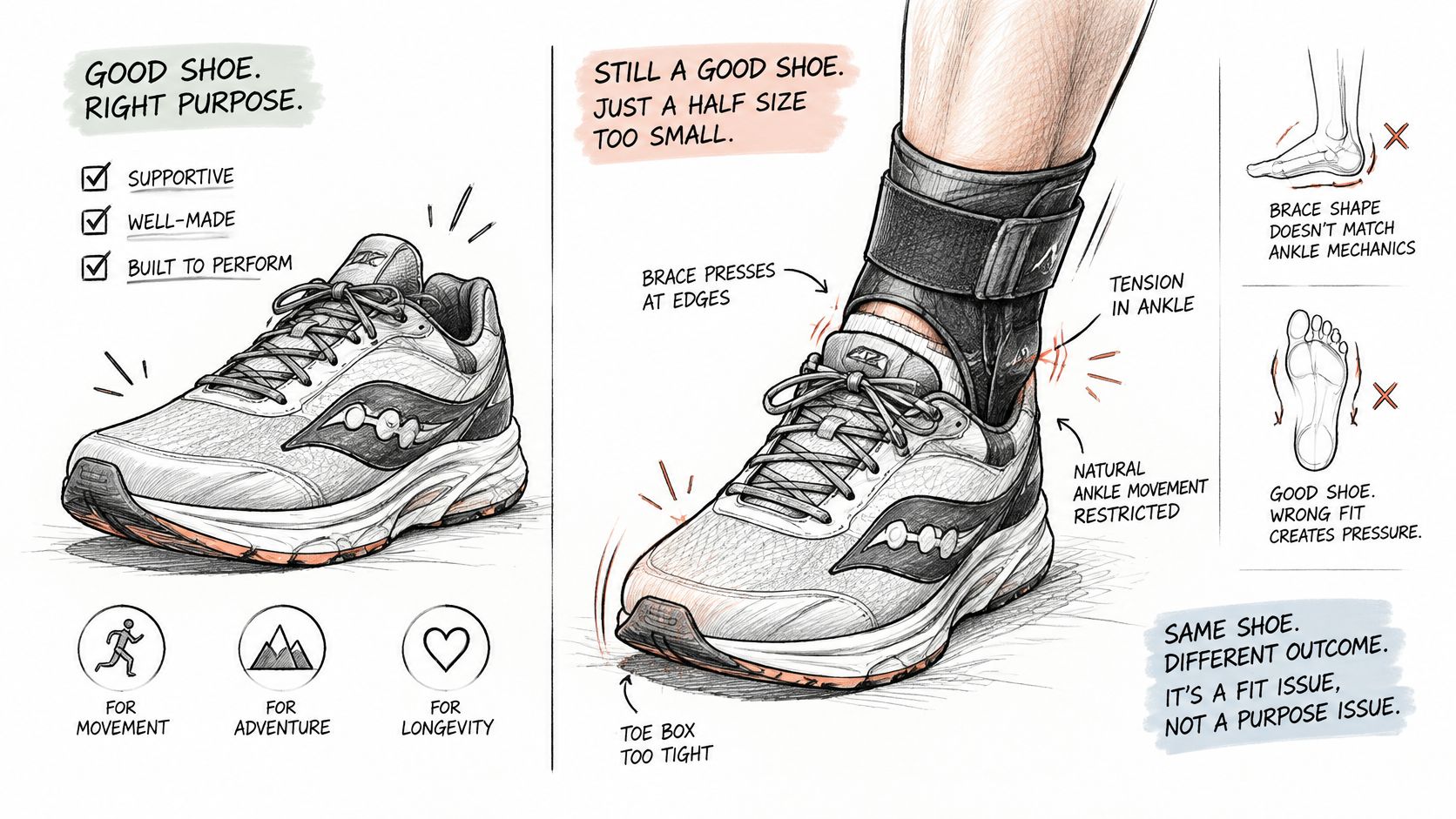
A brace can match your ankle measurement yet press against a prominent ankle bone. It can also fit comfortably while you're seated but become uncomfortable once you put it inside a shoe and walk. The combination of brace, sock, footwear, swelling, and movement determines what your tissues experience.
How an otherwise useful brace becomes painful
The common mechanisms are straightforward:
- Excessive pressure: A strap or rigid panel concentrates force over a small area instead of distributing it comfortably.
- Edge rubbing: The brace rim repeatedly moves against skin as you walk.
- Trapped moisture: Sweat leaves skin less tolerant of repeated contact and friction.
- Unwanted movement: An oversized or poorly secured brace allows the foot to slide inside it.
These problems can overlap. Tightening a slipping brace may reduce movement but create a pressure point elsewhere. Adding a thick sock may reduce direct rubbing while making the overall fit too crowded.
In a 2025 cross-sectional study of ankle-foot orthosis users at a tertiary hospital, 79% reported pain during use and 78% reported skin irritation. These were ankle-foot orthosis users in a hospital population, not a representative sample of everyone buying a sports ankle brace.
The useful lesson isn't that most retail braces hurt. It's that pain and skin tolerance deserve attention alongside stability, especially with more substantial orthotic devices.
This video provides an additional visual reference alongside the fitting considerations.
Why comfort checks need to be individual
A rigid ankle-foot orthosis and a flexible lace-up brace don't control the leg in the same way. Even within one category, differences in shell shape, strap position, and ankle alignment can change where pressure falls.
Older adults and people with reduced sensation or circulation need particular care. Someone who can't reliably feel rubbing may not receive an early pain warning, so an apparently comfortable session doesn't guarantee healthy skin.
Skin inspection is a safety measure, not an optional comfort check. If bending to inspect your heel is difficult, use a mirror or ask someone to help.
Don't judge success only by whether the ankle feels more secure. A suitable device must provide the intended support without creating a new pressure injury or forcing you to walk around pain.
Pressure Hot Spots and How to Fix Them
A brace can feel stable overall and still press painfully on one small spot. The bony bumps on either side of the ankle have little soft-tissue cushioning, so a seam, shell, or strap crossing them may cause discomfort. Brace edges and corrective-pressure zones, where an orthosis applies force to influence alignment, also need attention.
Discomfort and light pressure sores can occur with orthoses. A technician may address them by adjusting the device or adding appropriate padding. Redness that persists after removing the brace, or any sore, calls for reassessment rather than another wear session.
Identify the contact point before changing anything
Remove the brace and check whether a mark lines up with a seam, rim, strap, or hard panel. A photograph can help a fitter locate the spot after the redness fades.
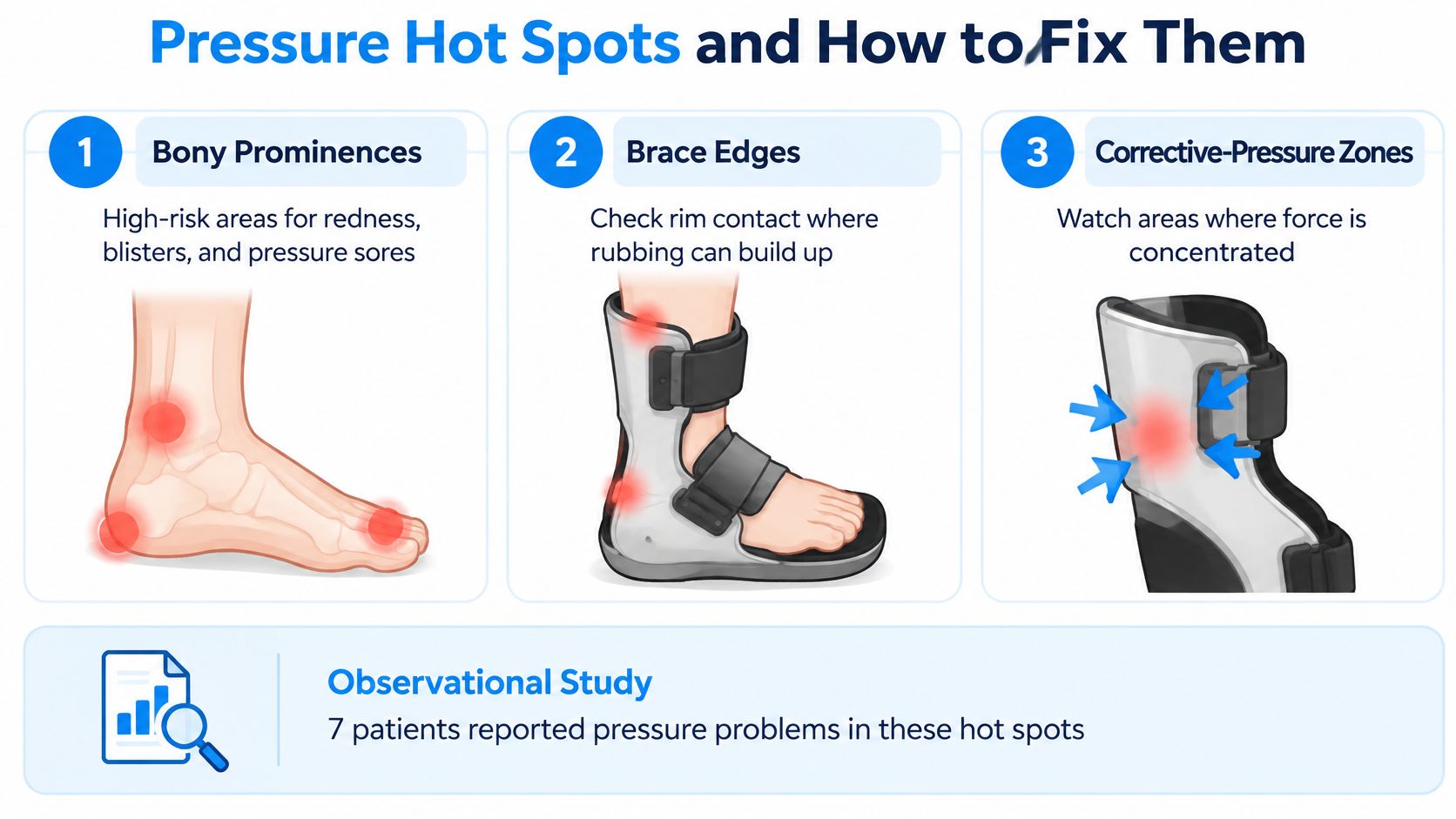
| Pressure hot spot | Typical sign | Fix |
|---|---|---|
| Bony ankle prominences | Redness that persists after the brace is removed | Stop wear and have local tension or padding adjusted |
| Brace edge over the Achilles or lateral foot | Rubbing or discomfort during activity | Reposition a movable edge or ease tension; have rigid edges professionally adjusted |
| Heel not fully seated | Foot sliding, friction, or a heel blister | Seat the heel fully back and remove wrinkles before any safe retest |
| Over-tight strap | Activity-related pain or deep pressure marks | Release the strap; don't resume if sensation or circulation seems abnormal |
| Too little tension | Foot moves inside the brace | Fasten to a secure, snug fit without concentrated pressure |
Both excess pressure and movement inside the brace can cause trouble. A tight strap may dig into the ankle or lateral foot; a loose fit can let the heel slide and create repeated friction. The goal is a seated heel and a stable brace without pressure concentrated in one place.
Make small, appropriate changes
If the brace instructions call for a sock, choose a thin, smooth layer and remove folds around the heel and ankle before fastening. If the fabric itself seems to irritate your skin, this guide to fabrics for sensitive skin can help you consider whether the material is contributing.
Avoid filling a tight brace with thick improvised padding. Added material can take up space and increase pressure. An orthotist can assess suitable padding or adjust an appropriate device without compromising its intended support.
Persistent redness, a blister, or broken skin means the fit needs attention before another wear session.
Check sensation and skin colour as well as visible marks. Tingling, numbness, unusual coldness, or a colour change means remove the brace and seek medical advice. If a blister or sore is already present, keep the brace off that area and arrange a professional assessment.
How Long Pain Is Expected During Recovery
Suppose you've sprained your ankle and received a brace for walking. During early recovery, the ankle may still ache because injured tissues remain sensitive and swelling changes throughout the day. That doesn't automatically mean the brace caused the underlying pain.
But there's an important distinction: pain during recovery isn't the same as pain you should accept from a device. A brace that adds a sharp pressure point or makes walking progressively worse needs reassessment, even while the original injury is healing.
The 2018 evidence-based ankle sprain guideline recommends functional support for approximately 4–6 weeks rather than routine immobilisation, with immobilisation used for pain or swelling limited to a maximum of 10 days before functional treatment. It also discusses earlier guidance reporting residual symptoms in at least 40% of acute ankle sprains at six months, with approximately 10–20% developing persistent instability, pain, or other chronic symptoms.
Think in recovery phases, not a pain deadline
| Phase | Timing | Evidence | Action on pain |
|---|---|---|---|
| Protected immobilisation | Brief early period when clinically indicated | Immobilisation may be used for pain or swelling, not routinely | Follow the prescribed transition to functional treatment |
| Functional support | Early rehabilitation period | Support allows protection without routine prolonged immobilisation | Reassess fit, swelling, and activity tolerance |
| Taper | As strength and function return | Progression should match individual recovery | Review whether the device still helps; stop if wearing it produces pain |
| Residual symptoms check | Later recovery | Some sprains leave ongoing symptoms | Seek assessment rather than indefinitely extending brace use |
In the protected phase, your clinician may limit movement because of the injury's severity. Don't independently replace a prescribed immobilisation device with a sleeve just because the sleeve feels more comfortable.
During functional recovery, the goal shifts toward supported movement and rehabilitation. The brace should help you participate in the prescribed plan, not become a reason to avoid restoring strength and balance.
Judge progress by function
As recovery progresses, ask whether you can walk more comfortably, tolerate prescribed exercises, and manage daily activities without increasing symptoms. A sprained ankle healing timeline can provide context, but it can't determine your individual readiness.
Persistent pain may involve healing tissue, remaining swelling, restricted motion, poor fit, or an incompletely assessed injury. The calendar alone can't separate those possibilities.
There's no universal period during which a brace is supposed to hurt. If putting it on reliably creates or worsens pain, stop and seek a different fit, model, or treatment approach rather than waiting for a recovery deadline.
How to Adjust or Test a Brace Without Making Pain Worse
This sequence assumes you've checked the pressure areas and found no warning signs that require medical review. Don't use a walking test to investigate numbness, discolouration, broken skin, or an inability to bear weight.
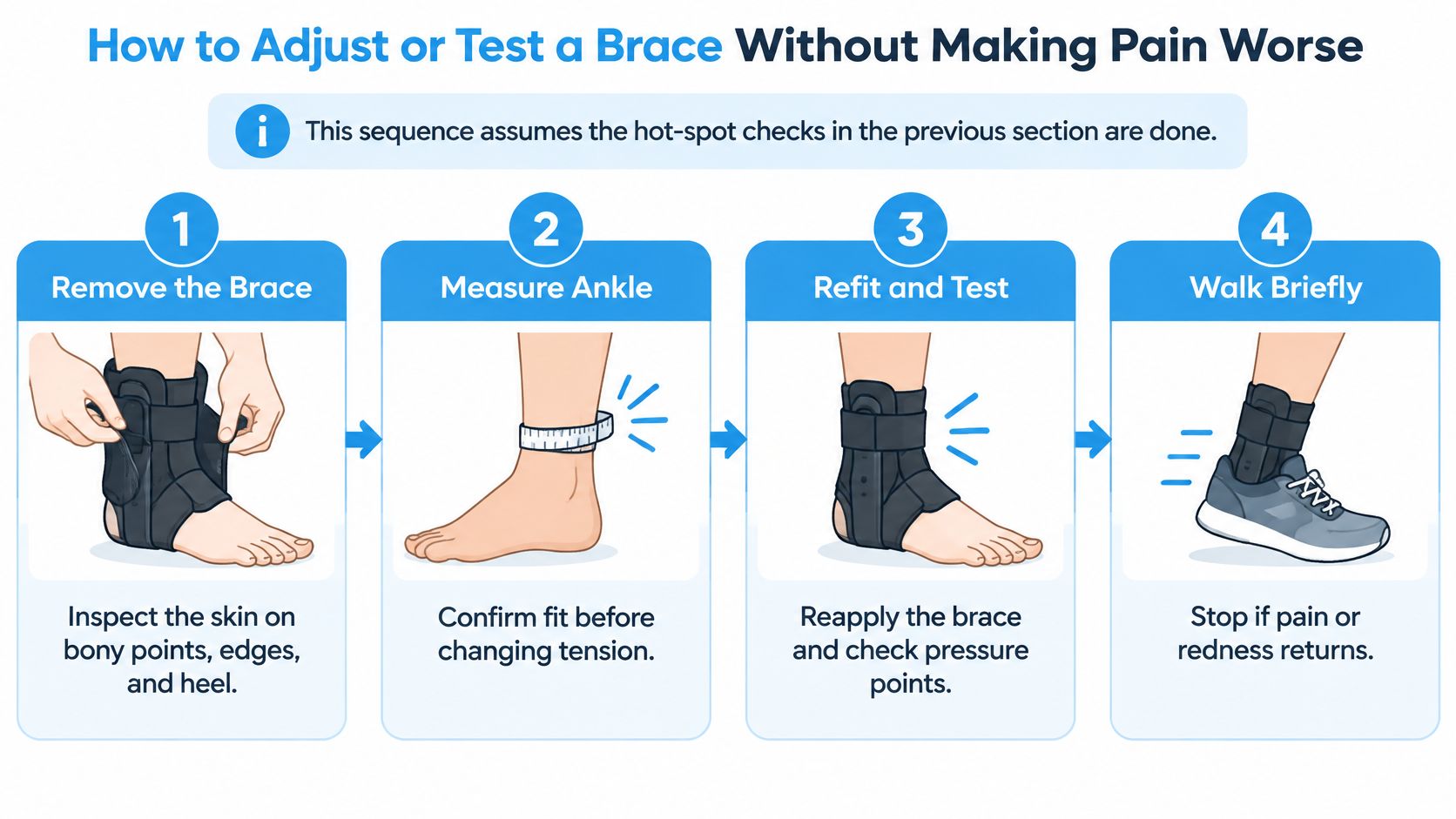
- Remove and inspect. Look at the ankle bones, heel, and every area touching a brace edge.
- Confirm the size. Use a flexible measuring tape at the location specified by the manufacturer. Don't assume every size chart uses the narrowest ankle measurement.
- Prepare the sock layer. If required, use a thin, smooth sock and remove wrinkles.
- Seat the heel. Place it fully back before fastening.
- Secure without squeezing. Adjust straps evenly rather than pulling one strap hard to compensate for poor positioning.
- Check alignment. The device shouldn't force your foot into a painful position. Use the ankle brace application guide to check the basic sequence.
- Walk briefly on level ground. Stop if pain returns. Don't progress to hills or landing tasks to prove the brace works.
- Remove and inspect again. Note any returning pressure mark or focal pain.
Surface comfort isn't the whole test. In a laboratory study of 17 recreational athletes, a semi-rigid brace reduced plantar flexion, increased eversion, and increased subtalar compression force during landing.
That finding doesn't diagnose your pain, but it explains why a brace can hurt beneath the outer ankle without rubbing the skin. Recurring deep pain needs a clinician or orthotist to review rigidity and alignment, not another round of tightening.
Alternatives When a Brace Keeps Hurting
If pain returns after appropriate adjustment, the brace type may not suit your injury or recovery stage. Match the alternative to the job it needs to do before buying another device.
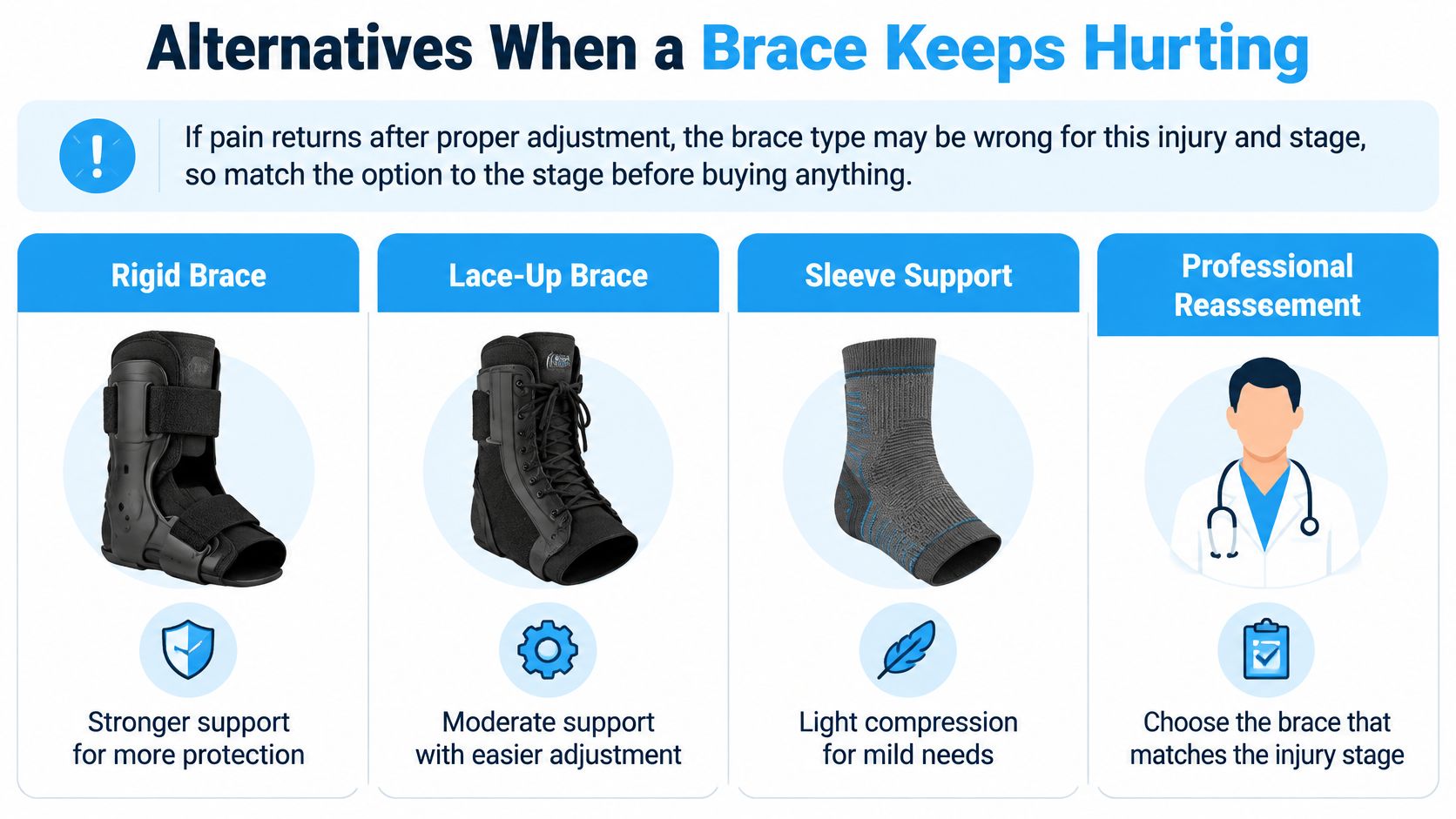
| Option | Best for | Trade-off |
|---|---|---|
| Lace-up or stirrup brace | Mild to moderate sprains needing stability | May need refitting; edges can press on skin |
| Semi-rigid brace | Stronger movement control during activity | Restricts motion and may change joint loading |
| Compression sleeve | Swelling with light support | Less stability; compression can feel tight |
| Non-compressive sleeve | People who dislike squeeze | Minimal stability for an unstable ankle |
| Short-term taping | A specific activity or event | Needs reapplication; adhesive may irritate skin |
| Physiotherapy programme | Strength, balance, and functional recovery | Requires consistent participation and progression |
Comfort and mechanical stability aren't interchangeable. A soft sleeve may feel better than a brace while providing too little control for an ankle that gives way. Taping also isn't automatically skin-friendly just because it's less bulky.
Our Thermo Recovery Wear sleeves and braces are designed to aid relief for conditions including joint pain, sprains, tendonitis, and swelling; they aren't designed as a preventive measure against injury. If you're considering a lighter-support or non-compressive option, check the individual product's intended use and compression description rather than assuming it replaces a fitted stability brace.
The guide to ankle support for pain can help frame that comparison. For recurrent instability, prioritise a clinical review and rehabilitation plan over choosing the softest garment.
Confirm the Right Support Before You Go Back
Before your next outing, decide whether you're continuing, changing the fit, or stopping for assessment. Don't let the fact that you've already bought the brace determine that decision.
Make the decision from symptoms
- Continue cautiously when tolerance is good. If discomfort was mild, settled promptly after removal, and left no persistent skin changes, follow the prescribed gradual wear schedule. Increase activity only when the current level is comfortable.
- Arrange a fitting review for recurring focal pain. If adjustment hasn't solved pain in the same location, bring the brace to an orthotist or clinician. Repeatedly tightening it is unlikely to resolve a shape mismatch.
- Stop before another session when warning signs appear. Altered sensation, colour change, skin damage, worsening swelling, or inability to bear weight needs assessment rather than another trial.
- Review the treatment plan when recovery stalls. If you've reached the end of your prescribed support period and still need the brace to manage persistent pain, ask whether the injury, rehabilitation programme, or device needs reassessment.
A useful fitting appointment starts with specific observations. Write down where the pain occurs, which activity brings it on, what the skin looks like, and whether symptoms settle after removal.
Bring that note, your brace, and the shoes you normally wear with it. Photographs of temporary pressure marks can help explain a problem that isn't visible during the appointment.
The right support should help you carry out your recovery plan without creating a separate problem.
Recheck your skin after every session, including sessions that felt comfortable. If you have reduced sensation, arrange help with areas you can't inspect reliably.
Thermo Recovery Wear offers recovery sleeves and braces, including lighter-support options for people who find firm compression uncomfortable. Visit Thermo Recovery Wear to compare intended uses and sizing, and choose alongside clinical advice if your ankle remains painful or unstable.


