


Your braces just came off, or you got a new retainer on Friday, and by Sunday you're staring at it on the bathroom counter wondering if nightly wear really matters, why it smells, and whether that tight feeling means your teeth already moved. That's where most Braces After Care goes wrong. It's not one big mistake. It's skipped nights, rushed brushing, and waiting too long to call about a small problem.
The fix is boring and effective. You need a short daily routine, a cleaning method that doesn't warp or scratch anything, and a clear rule for what you can handle at home.
Table of Contents
- Daily and Weekly Braces Aftercare Schedule
- How to Clean Braces and Retainers Step by Step
- Why Teeth Shift and How Long to Wear Retainers
- Protecting Enamel and Gums After Treatment
- Fixing Home Problems and When to Call
Daily and Weekly Braces Aftercare Schedule
Start with the essential tasks and do them at the same time every day. Consistency is more important than intensity here. A perfect clean once a week won't make up for plaque sitting around brackets or under a retainer every night.
| Task | When | How Often |
|---|---|---|
| Brush with fluoride toothpaste, around brackets | Morning and bedtime | 2 times a day |
| Floss or use interdental brushes | After the evening meal | 1 time a day |
| Rinse removable retainer or aligner | After every meal and before reinserting | Every removal |
| Brush removable retainer with mild soap | Evening | 1 time a day |
| Soak removable retainer in cleaning solution | Overnight | 1 time a week |
| Check gums, cheeks and wires for sores | Morning | 1 time a day |
| Wear retainer at night | Bedtime, after treatment ends | Nightly, long term |
What Matters Most in the First Two Weeks
Brushing comes first. Brush for two minutes, twice a day, with fluoride toothpaste and a soft brush. Angle the bristles at the gumline, then above and below each bracket. If you still have fixed braces, an orthodontic brush with a V-shaped trim helps you reach behind the wire without scrubbing harder.
Cleaning between teeth is second. Food trapped behind wires is the main reason people get cavities during treatment. Use floss threaders, interdental brushes, or a water flosser once a day. I would pick the tool you'll use nightly. A water flosser is easier for many people, but it doesn't replace floss if plaque is sticking between tight contacts.
The Rows People Skip
Rinse a removable appliance every time you take it out. Don't put a dry, dirty retainer back over clean teeth. If you're building a routine to keep retainers free of plaque, daily brushing and that weekly soak are the parts that prevent cloudy film and odor from becoming permanent.
Do a one-minute morning check in the mirror. Look for red gums, white patches, sores, or a wire that moved. Catching a sore spot early usually means wax and two soft-food days, not a repair visit.
Keep professional cleanings and adjustment visits on the schedule your orthodontist sets. Skipping them delays treatment and lets small fit problems grow.
Quick self-test: If you brushed twice, cleaned between teeth once, and rinsed after every meal, the routine is working. If you skip any row more than twice a week, fix that habit first.
How to Clean Braces and Retainers Step by Step
Clean teeth and clean retainers need different tools. Toothpaste is right for enamel and wrong for clear plastic. Hot water feels cleaner and can ruin the fit. Those two mistakes cause a lot of avoidable replacements.
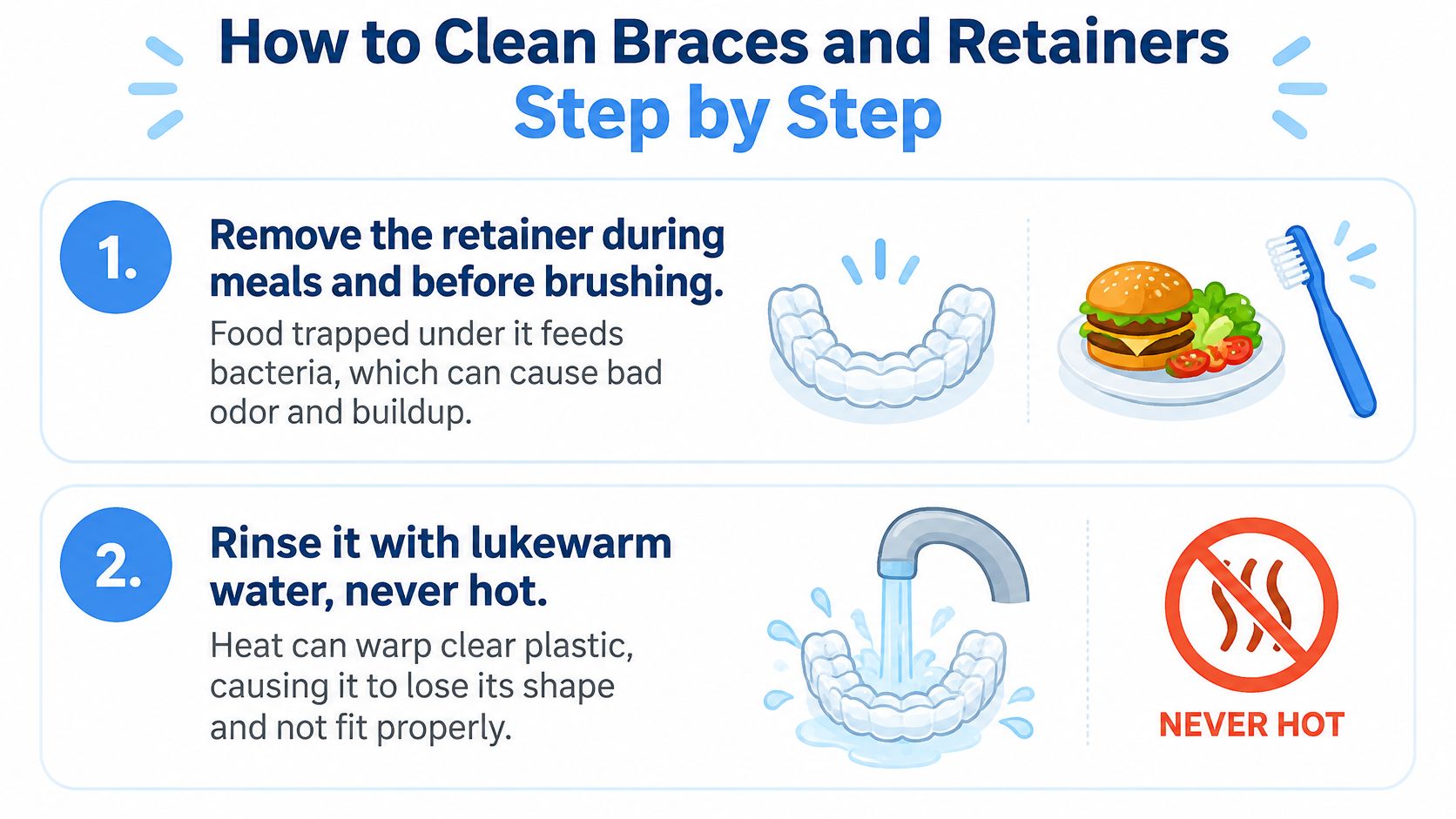
The visual below covers the first two steps people get wrong most often, removal and rinsing.
Removable Retainers
- Remove it during meals and before brushing. Food trapped under a retainer sits against your teeth and feeds bacteria. Brushing with it in place also leaves plaque exactly where you can't see it.
- Rinse with lukewarm water, never hot. Heat warps clear plastic and changes the fit. Rinse right after removal so saliva and plaque don't dry into a hard film.
- Brush gently with a soft, dedicated brush and mild soap. Use a separate brush from your toothbrush. Skip toothpaste on the retainer, since abrasion scratches the surface and scratched plastic holds more plaque and smell.
- Soak about once a week in retainer cleaning solution. Follow the product timing. Don't use bleach, alcohol, or boiling water, even if the retainer looks cloudy.
- Let it air-dry fully, then store it in its case. A damp, closed case grows bacteria and drives odor. Keep the case away from pets and heat, and never leave the retainer wet in a napkin or a warm car.
That sequence matches the American Association of Orthodontists retainer FAQ, which advises removing retainers during meals, rinsing with lukewarm water after removal, cleaning daily with a soft dedicated brush and mild soap or retainer product, and using a cleaning solution approximately weekly. For a plain-language walkthrough of daily habits, this guide on how to keep your retainer clean is a useful companion.
Fixed Braces and Bonded Retainers
For braces still on your teeth, brush around each bracket from the top and bottom edges. Then run an interdental brush under the wire between brackets. That's where a regular brush misses.
For a bonded retainer, brush around the wire every time you brush. Clean beneath it daily with floss threaded under the wire or a small interdental brush. A bonded wire collects tartar fast on the lower front teeth if you only brush the front surface.
The common slip is simple. Someone wraps a retainer in a napkin at lunch and throws it away with the tray. Case in your pocket, bag, or lunchbox. Napkins are where retainers get lost.
A clean appliance looks clear, feels smooth, and has no film, grey buildup, or sour smell. It should seat snugly without pinching.
If cleaning doesn't remove the film, don't scrub harder with toothpaste. Soak it, dry it, and check the fit again. If the fit suddenly changed, cleaning isn't the fix. That's a fit problem, not a hygiene problem.
Why Teeth Shift and How Long to Wear Retainers
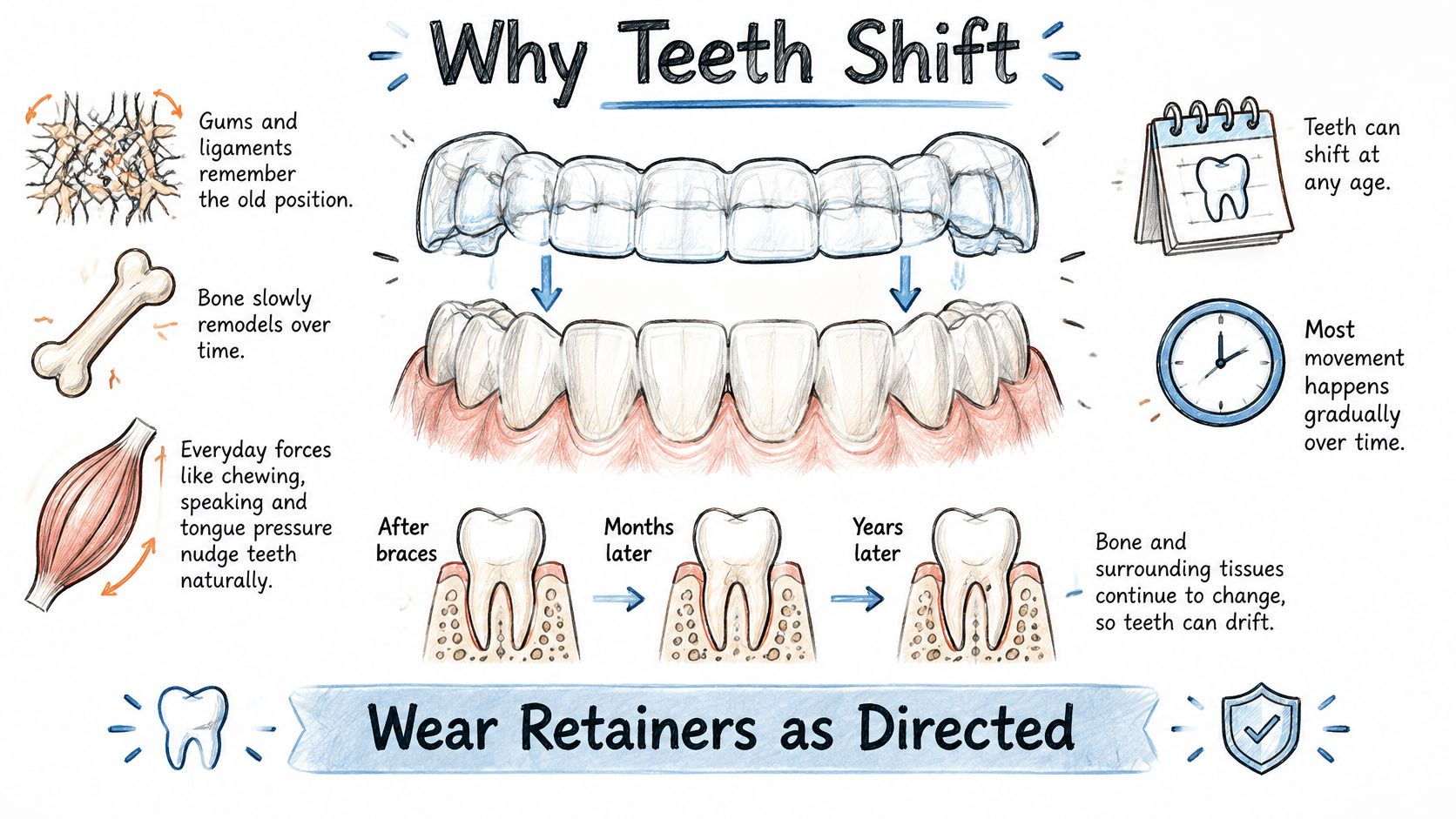
Teeth aren't set in concrete when braces come off. The bone around them needs time to rebuild in the new position, and teeth keep a natural tendency to drift. That's why retention isn't a short transition. It's the phase that protects everything active treatment achieved.
The diagram below shows why that drift happens and why the wear schedule matters more than expected.
The Usual Wear Pattern
The American Association of Orthodontists retainer guide explains that retainers allow the bone supporting repositioned teeth to rebuild and maintain teeth in their corrected positions, with common schedules involving full-time wear for several months, followed by nighttime wear. It also notes retention is often long-term and may be necessary for life.
Your orthodontist sets your exact plan. Don't copy a friend's schedule. Crowding, rotations, bite correction, and growth all change relapse risk.
What Breaks the Plan
- Missed nights: Two or three skipped nights can make a retainer feel tight. Tightness usually means movement has already started.
- A lost or warped retainer: Waiting lets teeth move further and can make a replacement based on the old shape unusable.
- Stopping after six months: Say someone wears a retainer faithfully for six months, then stops because teeth look stable. Crowding can return slowly, and fixing it may need limited aligner therapy or braces again.
- Skipped check-ups: A person who keeps nightly wear and attends follow-ups gives the orthodontist a chance to adjust fit before relapse becomes retreatment.
Removable retainers only work when they're in your mouth and need daily cleaning. Bonded retainers stay in place, but you must clean under the wire or tartar builds up. Neither option wins for everyone.
That uncertainty is real. A 2023 Cochrane review of retention procedures included 47 studies involving 4,377 adults and children and concluded there was insufficient confidence to identify one universally superior retention approach. Your plan should reflect relapse risk, hygiene, comfort, and follow-up, not a generic rule.
This short video reinforces why consistent wear matters after braces come off.
Write your wear instructions down. Keep the case on your nightstand. Set a phone reminder for nightly insertion until it's automatic.
Protecting Enamel and Gums After Treatment
Removing brackets doesn't end enamel risk. In fact, that's often when people first see the damage that built up underneath and around them. White spot lesions are the early warning sign, and they're far more common than most families expect.
The checklist below puts that risk in context and shows what to watch for after treatment.
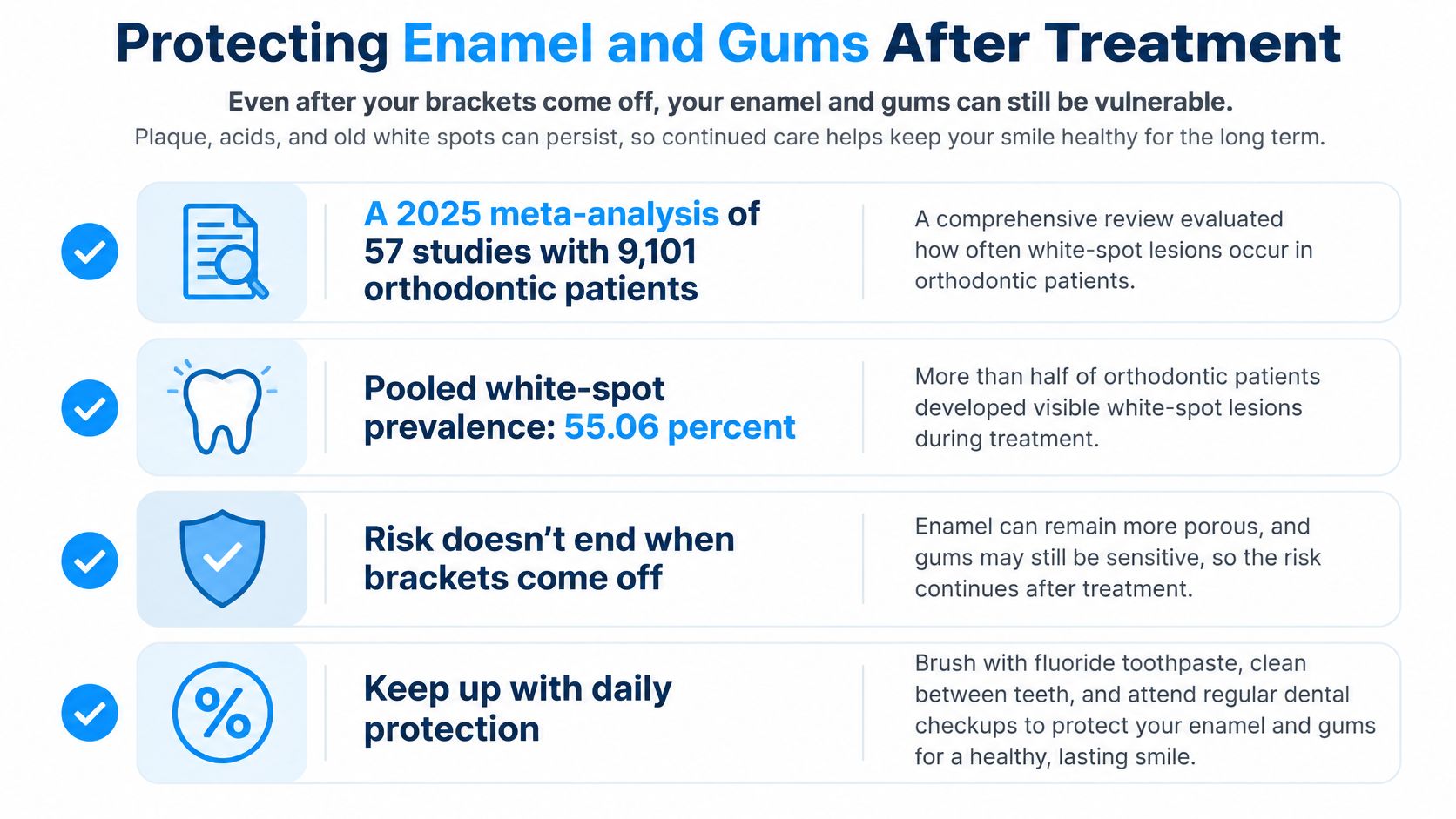
A 2025 systematic review and meta-analysis of 57 studies involving 9,101 orthodontic patients reported a pooled white-spot-lesion prevalence of 55.06%. The same review found an odds ratio of 7.0 versus no orthodontic treatment in one comparison with conventional fixed appliances.
What Early Damage Looks Like
Look for chalky, dull, pale patches near the gumline or where brackets sat. Healthy enamel looks glossy and even. A white spot looks matte, almost like chalk dust that doesn't brush off.
Early spots can reflect reversible demineralization. Without good hygiene or treatment, they can progress to cavitation, which is permanent breakdown. You can't tell by looking in poor bathroom light whether a spot is active, so don't guess for months.
Say a teenager notices a chalky line beside a former bracket a week after debonding. I would book a check rather than wait for the next routine visit. Early remineralization treatment is simpler than a restoration.
A Four Step Enamel Check
- Brush twice daily with fluoride toothpaste, concentrating on previous bracket sites and the gumline.
- Clean between teeth every day with floss, interdental brushes, or the method your orthodontist approved.
- Keep routine professional examinations and ask for a fluoride assessment based on your risk.
- Have persistent white spots evaluated for remineralization treatment, fluoride therapy, resin infiltration, or restorative care when indicated.
Don't add whitening products on your own right after braces come off. Whitening can make uneven spots look more obvious, and it doesn't repair demineralization. Ask first.
Photograph your front teeth in daylight once a week for the first month after braces come off. Consistent light makes new white patches and gum redness easier to spot.
Gums matter too. Puffy, bleeding gums after treatment usually mean plaque is still collecting at the gumline, even without brackets in the way. Gentle, consistent cleaning should improve bleeding. If it doesn't, you need an exam, not harder brushing.
Fixing Home Problems and When to Call
Most problems aren't emergencies, but some shouldn't wait. The mistake is treating every issue the same way. Use this triage approach for Braces After Care at home. Fix what's temporary, protect the tissue, and call before a small delay turns into longer treatment.
| Symptom | Likely Cause | Home Fix |
|---|---|---|
| Wire poking the cheek | Loose or sharp wire end | Cover with orthodontic wax; book a visit if it persists |
| Sore on tongue or cheek | Rubbing from brackets or wires | Warm salt rinse and wax; resolves within a few days |
| Retainer smells | Plaque and bacteria buildup | Clean daily, soak weekly and air-dry overnight |
| Retainer feels tight | Teeth are moving | Keep wearing as directed and call the orthodontist |
| Bracket feels loose | Bracket debonding | Do not push it back; wax the edge and book a visit |
| Gums bleed when brushing | Plaque near brackets or gumline | Brush and floss daily; recheck in one week |
| Chalky white patch | Early enamel demineralization | Brush around brackets and book a check |
Home Fixes That Actually Help
For a poking wire, dry the area with a tissue, roll a pea-sized ball of orthodontic wax, and press it over the sharp end. Replace wax after meals. If the wire keeps cutting through wax or the cheek is ulcerated, call.
For a sore cheek or tongue, rinse with warm salt water made with half a teaspoon of salt in a cup of warm water. Eat soft foods for two or three days. Wax the bracket that's rubbing. Most friction sores improve within a few days once the sharp contact is covered.
For a smelly retainer, don't mask it with mouthwash. Clean it daily, soak it weekly, and let it air-dry overnight before closing the case. Odor usually needs a week of consistent cleaning, not one aggressive scrub.
For bleeding gums, keep brushing gently and clean between teeth daily. Skipping the sore area leaves the plaque that's causing the bleeding. Recheck in one week. Steady improvement is a good sign.
Never clip a wire with household tools. Don't push a loose bracket back into place. Don't glue anything. Home repairs can bend wires, damage enamel, and make the professional repair harder.
The Three Tier Call Rule
Call the same day for severe pain that over-the-counter pain relief doesn't control, a loose or broken part cutting your mouth, difficulty chewing or swallowing, or gums that become very red, swollen, and painful. These symptoms affect eating, sleep, or tissue health. Wax is a temporary cover, not a solution.
Book a routine appointment promptly for pain lasting more than a few days, a lost, broken, or warped retainer, or a bracket that feels loose but isn't painful. The NHS braces guidance advises contacting an orthodontist when pain lasts more than a few days, gums become very red, swollen, or painful, or the brace breaks. It also notes that if the next appointment is within two weeks and there is no pain, waiting for a broken brace may be acceptable.
Monitor at home for a short window if wax settles a poking wire, a salt rinse calms a sore, or bleeding improves day by day. Set a limit before you start. If a sore isn't better in a few days, or bleeding hasn't improved in a week, stop monitoring and call.
A retainer that suddenly feels tight deserves special attention. Keep wearing it as directed and call. Tightness after missed nights usually means your teeth moved. Forcing a retainer that won't seat fully can crack it, so don't bite it into place.
A broken bracket isn't automatically an emergency, but delay can extend treatment because that tooth isn't being guided. If it's sliding on the wire, cover rough edges with wax, avoid hard foods on that side, and report it. Bring any loose piece, your retainer, and wax to the appointment.
When in doubt, call. A short call costs less than a delayed repair, a warped replacement, or months of retreatment.
Don't let work or travel become the reason you wait. Call from the road, describe the symptom, the day it started, and whether pain relief helps. That detail lets the office triage you correctly the first time.
Good aftercare habits protect joints as well as teeth, especially when stiffness makes daily routines harder to keep. Visit Thermo Recovery Wear to explore our non-compression, infrared-responsive sleeves and braces for knees, wrists, ankles, elbows, back, and shoulders, designed for comfortable wear during rest and light daily activity. Pick the support that fits your routine, check the sizing and wear-care guidance, and text us with questions before you order.


