Learn how to care for sensitive skin with practical routines, fabric choices, and product tests that reduce flare-ups and protect your skin barrier.
About 71% of the general population reported sensitive skin to some degree in a 2019 review of published studies, and a U.S. survey of 994 adults found 44.6% described their skin as sensitive or very sensitive, with women reporting it more often than men, 50.9% vs. 38.2% (source). That's not a niche complaint. It's a routine skin-health problem that shows up in bathrooms, laundries, gyms, and even under braces and sleeves.
Table of Contents
- Why Sensitive Skin Is More Common Than You Think
- The Barrier-First Skincare Routine
- How to Patch Test Anything New
- Fabrics and Supports Irritate Skin
- Laundry Habits That Quietly Trigger Flare-Ups
- Reintroducing Actives, Treatments, and Sunscreen Safely
- Your 30-Day Sensitive Skin Care Plan
Why Sensitive Skin Is More Common Than You Think
Sensitive skin isn't rare, and it isn't imagined. Pooled estimates place sensitivity in the 60% to 70% range for women and 50% to 60% for men, and one 2019 review reported that about 71% of the general population had some degree of sensitive skin (PMC review). A separate representative U.S. survey of 994 adults found 44.6% self-identified as sensitive or very sensitive, which is enough to make this a routine part of skin care, not a niche complaint.
What “sensitive” usually means in real life
Sensitive skin is skin that reacts to products and environmental factors rather than a single diagnosis, as described by Cleveland Clinic. That matters because people often group every sting, flush, or dry patch into one bucket. In practice, the reaction may be plain sensitivity, but it can also reflect allergic contact dermatitis, eczema, rosacea, or a barrier injury from over-cleansing, over-exfoliating, or repeated friction.
Practical rule: if the same routine keeps setting off the same flare, stop guessing and identify the trigger category.
A barrier problem usually shows up as skin that stings quickly, feels tight after washing, or turns reactive to ordinary products. Allergy tends to follow a clearer pattern tied to a specific ingredient or material. Eczema and rosacea can overlap with sensitivity, but they do not behave like a vague “my skin hates everything” complaint. One routine cannot fit every cause.
When self-care is enough, and when it isn't
Barrier-first care is the right first move when the main issue is irritation, dryness, or general reactivity. Gentle cleansing and regular moisturizing can calm a lot of skin that has been overworked. If symptoms keep returning, worsen, spread, or include persistent rash-like changes, the problem may be more than sensitivity alone.
Clinical guidance from Cleveland Clinic supports getting evaluated when skin keeps reacting instead of settling down, especially after you have already simplified your routine. Do not wait for a perfect label before acting. If basic care keeps failing, that is already enough reason to strip the routine back and look for the trigger.
A connected system, not separate problems
The most useful way to think about how to care for sensitive skin is as a connected irritant system. What you put on your face matters, but so do the fabrics touching your neck, the detergent on your pillowcases, and the brace pressing on your wrist or knee. A calm routine protects the skin barrier, and a tolerable routine also removes friction from the rest of daily life.
That is the goal here, a low-irritation routine that supports the barrier without forcing you to give up comfort, support, or the products you need.
The Barrier-First Skincare Routine
Sensitive skin does better with a routine that protects the barrier instead of pushing it. Dermatology guidance points to a simple sequence, start with a gentle cleanser that does not disturb skin pH, then use a moisturizer built around ceramides, fatty acids, and humectants, and keep the rest of the routine as plain as possible (Dermatology Times). If skin is xerotic or eczema-prone, apply emollients right after bathing with the soak and seal technique, because timing matters as much as product choice. The same barrier logic also applies to the things that sit against the skin all day, from pillowcases to wrist supports.
Cleanser choice does more damage than many patients realize
The cleanser is usually where sensitive-skin routines fail first. A formula that strips lipids or disrupts the acid mantle increases transepidermal water loss and makes even a decent moisturizer sting more. That is why syndet-style cleansers and low-irritation formulas tend to outperform foaming, harsh, or heavily fragranced washes for both healthy and compromised skin (Dermatology Times).
Use lukewarm water, rinse lightly, and stop chasing the “squeaky clean” feeling. If your face feels tight within minutes, the cleanser is too aggressive for your skin right now. The same logic applies to body wash, laundry residue, and anything else that leaves surfactants behind on cloth that touches the skin.
Moisturizer chemistry should do the heavy lifting
Look for a moisturizer that supports barrier repair, not just a cream that feels pleasant for 30 seconds. Ceramides help restore the lipid structure, fatty acids support the barrier matrix, and humectants help hold water in the skin (Dermatology Times). For many reactive users, the best texture is the one they will apply consistently, not the one that sounds fanciest on the shelf.
A useful companion read is Skin Perfection summer skincare insights, especially if heat, sweat, or seasonal drying makes your skin feel more reactive. Seasonal barrier stress changes what people tolerate, and that is worth factoring in before you blame a whole ingredient class. Fabric choice and brace materials can behave the same way, because trapped heat and friction make otherwise tolerable contact feel irritating.
Practical rule: if a product smells strong enough to be noticed across the room, it is already making the wrong trade-off for reactive skin.
Use: gentle cleanser, ceramide moisturizer, humectants, fragrance-free formulas.
Avoid: overexfoliation, harsh actives, heavily fragranced products, and anything that leaves your skin hot or stripped.
How to Patch Test Anything New
Switching products is one of the fastest ways to turn mild sensitivity into a full flare. Expert instructions cited in clinical comparisons recommend testing a new product on a small area such as the inner forearm or behind the ear, twice daily for 5 to 7 days, while watching for delayed redness, tightness, or warmth that can show up up to 48 hours later. That timing matters because a product can look fine at first and still bother you later. Alibaba BeautyHub clinical comparison

Test one variable at a time
The most common mistake is stacking changes. A cleanser changes, then a serum, then a moisturizer, and when the skin flares, nobody knows which product caused it. Introduce only one new product at a time so you can isolate the trigger and avoid cumulative irritation.
Use the same amount each time, the same spot, and the same schedule. If the test area stays quiet for the full window, that does not guarantee total tolerance, but it does lower the odds of a major reaction. If it reacts, stop there and do not “test harder” by extending use to the full face.
Patch testing works best when you are boring and repetitive. Boring is the point.
Read the reaction, not your hopes
Delayed warmth, itching, tightness, or a rash-like change is more useful than a vague feeling that the formula “might not be right.” A calm first day does not prove tolerance. Sensitive-skin users get misled most often by speed, because the skin often tells the truth later.
Keep a written note of the product name, where you applied it, and what changed each day. That record beats memory every time, especially if you are juggling multiple products or trying to narrow down what keeps flaring you.
The internal medical advisory page at Thermo Recovery Wear's medical advisory board is a useful model for how products and claims should be reviewed carefully before use.
Fabrics and Supports Irritate Skin
The skin on your face is not the only part that reacts. Wearable supports can flare sensitive skin because they combine heat, pressure, friction, and trapped moisture in one place. Rough seams, synthetic fibers that hold sweat, latex or rubber elastic, nickel in closures, and dye transfer in warm, damp conditions all raise the odds of irritation, especially in areas that already see repeated movement.

What tends to flare reactive skin
Tight compression is a specific problem because it concentrates pressure right where people often already have friction. Knees, wrists, and ankles are common support zones, and they are also places where a small design issue can become a daily rash. If the material traps sweat or the edge rolls and rubs, the support stops being helpful and starts acting like a sanding strip.
That is why smooth seams and breathable moisture-wicking fibers matter more than marketing language. Latex-free elastic is a sensible default for anyone with reactivity around bands or closure points. If metal hardware is unavoidable, watch nickel exposure closely, because repeated contact is often enough to keep skin angry.
The same logic applies to what stays on the body for hours at a time. Bedding, sleeve linings, and brace contact points all belong to the same irritant system, so a skin flare rarely comes from just one item. If you are choosing sleep surfaces at the same time, complete allergen-free bedding belongs in the comparison because overnight contact can keep irritation going even after the rest of the routine is simplified.
What usually wears better
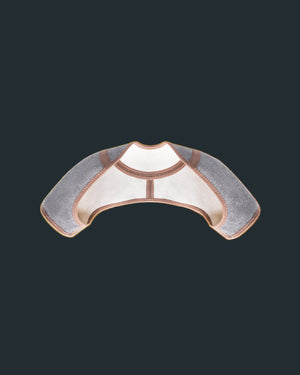
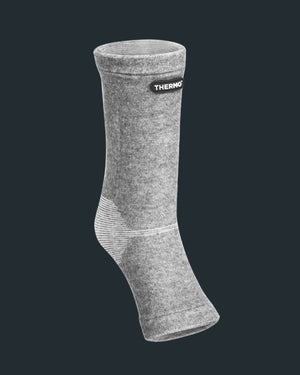
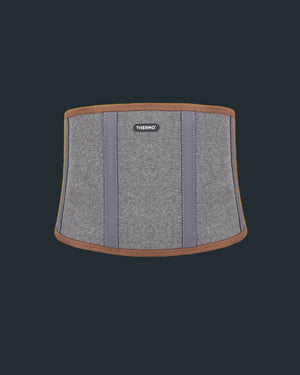
For many reactive users, the better choice is the support that reduces skin stress instead of adding it. Look for smooth construction, low-profile seams, breathable fabrics, and non-compressive designs that do not pinch or trap heat. Some recovery garments are built around infrared-responsive or warmth-focused materials rather than tight compression, which changes how they feel during long wear.
Thermo Recovery Wear sits in that category with compression-lite sleeves and braces, including moisture-wicking options and sensitive-skin positioning, so it is one example of a support style that prioritizes less squeeze rather than more. That does not make every item tolerable for every person, but it shows the right design logic for reactive skin. If you are sorting through textile choices for clothing and supports, best fabric for sensitive skin is a useful reference point for comparing how different materials behave against the body.
Practical takeaway: a sleeve or brace that you can wear consistently without itching is more useful than a tighter one that looks more “serious.”
Laundry Habits That Quietly Trigger Flare-Ups
Laundry is part of the skin-care system whether people treat it that way or not. Detergent residue, fragrance, dyes, fabric softeners, and dryer sheet coatings all stay in contact with pillowcases, towels, sheets, shirts, and brace liners long after the wash is done. If your skin keeps reacting and you've already simplified the face routine, laundry is one of the first places to look.

The habits that subtly make skin worse
Fragrance-free and dye-free detergents are the most sensible starting point for reactive skin. Fabric softeners and dryer sheets are a poor match for items that sit directly against the skin because they add fragrance and coating residue where you don't want either. Cooler wash temperatures also help reduce lingering residue, which matters when the same garment is worn over and over.
Wearable supports need the same care. Wash sleeves and braces with a fragrance-free detergent, skip fabric softener, and air dry them away from direct heat so the material stays tolerable over time. Heat can stiffen fabrics and make them feel scratchier, which is the opposite of what reactive skin wants.
What to do instead
The internal washing guide at Thermo Recovery Wear's washing instructions is a useful model for treating support gear gently so it stays wearable. That same approach works for towels, pillowcases, and base layers that touch sensitive skin every day.
Do: fragrance-free detergent, extra rinse when changing products, air dry supports, keep skin-contact fabrics soft.
Don't: fabric softener, dryer sheets on skin-contact items, strong perfume additives, hot wash cycles that leave residue behind.
If you switch detergents, run an extra rinse cycle on the first few loads. That small step removes a lot of the guesswork, because sometimes the flare isn't from the garment, it's from what's left in the weave.
Reintroducing Actives, Treatments, and Sunscreen Safely
A skin barrier that reacts easily does not need total avoidance. It needs order. The safest way to bring back active ingredients, treatments, or sunscreen is to start with one product, use a low-intensity version, and watch the barrier response before adding more. The aim is not to strip away performance, it is to stop loading the skin faster than it can tolerate.
What usually goes in more comfortably
Some ingredient classes are often easier to tolerate when they are introduced carefully. Mineral sunscreen with zinc oxide or titanium dioxide is a common starting point for reactive skin because the formula is often simpler and less likely to sting than many multi-active products. Niacinamide, low-dose azelaic acid, and gentler retinoid esters can also fit into a careful routine when the barrier is steady.
For a support ingredient that is usually added for maintenance rather than aggressive resurfacing, the internal overview on peptide treatments in 2024 is a useful place to start.
What tends to cause trouble
High-strength direct acids, alcohol-heavy formulas, and strong fragrance blends are frequent irritants for reactive skin. That does not mean they are always off limits, but they usually need the slowest introduction and the closest patch testing. A product can be excellent in theory and still be the wrong fit for a barrier that is already stressed.
Stronger skin treatments deserve the same caution. A chemical peel treatment should be matched to how reactive your skin has been lately, especially if you flush easily or sting after ordinary products. In those cases, a conservative sequence is the safer choice.
A simple reintroduction sequence
Start with the lowest concentration or the shortest contact time. Patch test first, then increase use slowly over a couple of weeks instead of moving straight to daily application. Pair each new active with a barrier-supportive moisturizer so the skin is not left to absorb the full effect on its own.
Sensitive skin is a spectrum, not a fixed label. Many people tolerate useful actives once they are introduced in a controlled way instead of being layered all at once.
The internal recovery resource at Thermo Recovery Wear's recovery guide follows the same logic for support wear, because recovery products work better when the skin underneath is not already irritated.
Your 30-Day Sensitive Skin Care Plan
A workable plan stays simple enough to repeat and specific enough to troubleshoot. Start with a gentle cleanser, a ceramide moisturizer, and a mineral sunscreen, then audit laundry products and any wearable supports for fragrance, dye, and tight compression. That reset gives your skin a cleaner baseline before you try to interpret anything else.

Week by week
- Week 1, strip back: Cleanser, moisturizer, sunscreen, plus fragrance-free laundry and low-irritation supports only.
- Week 2, patch test: Choose one product, test it on a small area, and don't add anything else new.
- Week 3, introduce gently: If the test stays calm, use the product on a limited schedule and keep the rest of the routine stable.
- Week 4, review: Check what improved, what didn't, and whether symptoms still point to a bigger issue.
A few people will be able to bring back an active during week three. Others will find that the calm routine alone is enough for now. Both outcomes are useful because they show how much load your skin can handle without tipping into a flare.
A stronger chemical peel treatment needs the same caution, especially if your skin has been reactive lately. If you flush easily or sting after ordinary products, start with the most conservative option and wait to see how your skin responds before adding anything else.
Persistent or worsening symptoms, signs of infection, or reactions that spread beyond the test area deserve professional attention. Recurring flares that come back as soon as you reintroduce a product or support garment do too. As noted earlier, if the problem is not settling, it is time to get it checked.
If you want support gear that is designed to reduce squeeze while still being wearable through the day, Thermo Recovery Wear makes compression-lite sleeves and braces that can fit into a low-irritation routine. Visit Thermo Recovery Wear's recovery guide to review the materials, washing guidance, and support options, then match them with the same low-friction habits you'd use for skincare and laundry.