


You know the feeling. You stand up after a long drive, a shift on your feet, or a hard workout, and your lower legs feel heavy, puffy, or strangely sluggish. That's the moment many people start looking at leg recovery compression, because it promises a simple fix, more support around the calves and ankles, and a quicker return to comfort.
The tricky part is that people often buy compression for different reasons and expect it to do the same job for everyone. An athlete may want less post-exercise heaviness, while someone who sits all day may just want legs that feel less swollen by evening. This guide separates those goals, explains what compression can do, and shows where non-compressive infrared-responsive wear fits into the picture. For a broader overview of recovery wear categories, this guide to recovery wear in 2024 gives helpful background.
Table of Contents
- Introduction to Leg Recovery Compression and What It Promises
- How Leg Recovery Compression Supports Circulation
- Benefits Evidence and Where Results Are Mixed
- Compression Versus Infrared Recovery Wear for Legs
- How to Choose the Right Pressure Fit and Wear Time
- Common Misconceptions and When to Avoid Compression
- Putting It All Together for Your Recovery Routine
Introduction to Leg Recovery Compression and What It Promises
A lot of people first notice leg recovery compression when ordinary comfort starts slipping. You finish a flight, a long workday, or a run, and your legs don't feel injured so much as burdened, as if fluid and fatigue have settled there and refused to leave. Compression garments promise to nudge that feeling in the right direction by supporting circulation, easing swelling, and making the legs feel lighter.
That promise sounds simple, but the details matter. Compression is not a magic reset button, and it doesn't work the same way as warmth-based recovery wear. It uses pressure, not heat, to influence how fluid moves through the leg, which is why fit, pressure level, and wear time matter so much.
The old idea behind compression is surprisingly deep. Compression bandaging goes back to ancient and pre-modern medicine, and modern elastic compression advanced after vulcanized rubber was discovered in 1839, when John Watson, MD, reported elastic stocking use for varicose veins the same year, an early medical milestone in leg compression therapy (source). That history matters because it shows compression wasn't invented as a gym trend, it grew out of circulation care.
For people trying to choose between options, the practical question is simple. Do you want pressure-driven support for swelling and post-activity heaviness, or a different kind of recovery wear that focuses more on comfort and warmth? If you keep that distinction in mind, the rest of the decision becomes much clearer.
How Leg Recovery Compression Supports Circulation
Gravity works against venous return in the lower legs, especially when you sit or stand for hours. During hard exercise, the muscles and blood vessels also face changing demands. Leg recovery compression applies measured outside pressure around the limb, helping blood and fluid move back upward. With a suitable fit, that support can feel steady rather than restrictive.
What the pressure does
Compression supports venous return, the movement of blood toward the heart. It can also limit fluid pooling in surrounding tissues, which may reduce the puffy, heavy sensation that develops after prolonged sitting, standing, or activity. The mechanism is hemodynamic: pressure changes fluid movement and blood-flow patterns rather than acting like a medication.
Practical rule: judge compression by the circulation support it provides, not by how tight it feels. Excessive tightness is not a better version of the same effect.
A 2023 meta-analysis of 19 studies found that sports compression garments improved peripheral blood flow during exercise and recovery. The reported effects lasted up to 4 hours after resistance exercise, and pooled analyses showed significant gains in peripheral, venous, and arterial blood flow (source). These findings describe measurable physiological changes, while individual comfort and perceived recovery can still differ.
The garment gives the leg a gentle external assist, similar to helping water move through a hose that is compressed in a controlled way. The aim is to guide the return journey and reduce lingering fluid, not to squeeze the tissue like a tourniquet.
Everyday habits still matter. Movement, adequate hydration, and appropriate medical care address parts of circulation that clothing cannot. Readers looking for practical natural circulatory health tips can treat compression as one support within that broader routine.
What it can feel like in real life
A useful garment usually feels snug and even, without pain, numbness, or sharp pressure. Sports recovery garments commonly use ~14–24 mmHg, while around 20 mmHg is often used to help prevent swelling after extended sitting or standing (source). These ranges provide context for comparison, but the right choice depends on the garment's design, your measurements, and your health needs.
For a plain-language explanation of options that may improve lower-leg circulation, read this overview of blood flow solutions for the feet. It helps separate pressure-based support from other recovery approaches, including non-compressive warmth. That distinction matters for anyone seeking daily comfort rather than athletic performance alone.
Benefits Evidence and Where Results Are Mixed
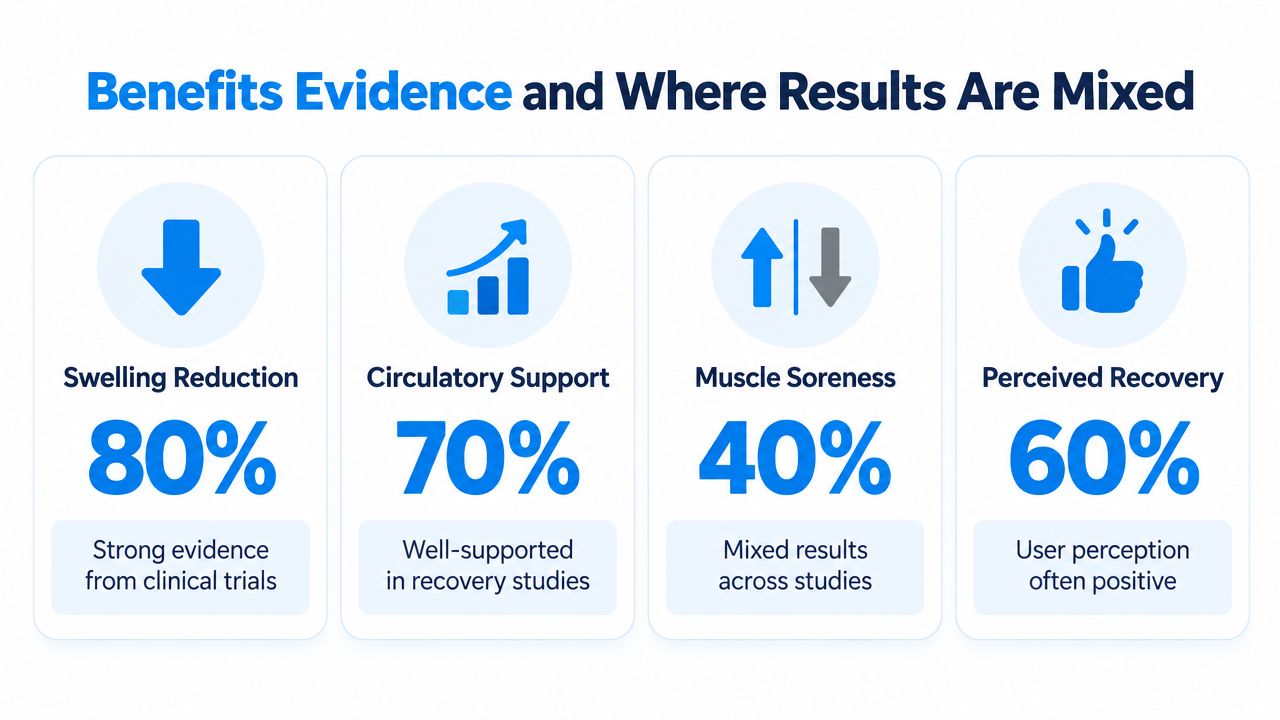
After a long shift, flight, or training session, legs can feel heavy even when nothing is visibly wrong. Leg recovery compression may help by changing fluid movement, yet its benefits depend on the outcome being measured. A garment can support circulation without guaranteeing better performance or immediate relief from soreness.
What tends to hold up
The clearest evidence concerns compression's hemodynamic effect. External pressure can increase venous return, limit interstitial fluid accumulation, and improve local blood flow, helping explain its use for edema and post-exercise symptoms (source). In plain language, the garment helps the leg move fluid onward rather than allowing it to collect in one area.
Results for recovery feel less consistent. Systematic reviews have found mixed effects on immediate performance recovery and delayed-onset muscle soreness. A tight garment therefore does not automatically provide noticeable soreness relief. The same analysis also found small-to-moderate improvements in lower-limb strength preservation at 48–72 hours after fatigue, while soreness findings remained uncertain because those measures are highly sensitive to expectations and placebo effects.
Compression is more reliable for circulation support than for universal soreness relief.
The practical value also changes by user. A runner may focus on the next workout, while a teacher, nurse, traveler, or older adult may care about heavy-feeling legs after prolonged standing, sitting, or walking. Research still emphasizes athletic outcomes, so evidence for daily comfort and extended wear among non-athletes remains less developed.
Why expectations should stay narrow
A 2026 review found soreness effects were directionally favorable but highly uncertain. A review of intermittent pneumatic compression found no clear superiority over other recovery methods (source). These findings do not make compression or pneumatic devices useless. They show why one product should not be expected to address every form of leg discomfort.
A more useful approach is to match the mechanism to the need. Pressure-based garments may suit someone seeking circulation support or a modest post-exercise recovery aid. Someone prioritizing a comfortable layer for routine wear may value a different design, especially if tightness feels distracting. Infrared-responsive wear belongs to that separate, non-compressive category, so it should not be judged by the same pressure-based claims.
With those limits in mind, the next comparison can focus on how compression differs from warmth-based recovery wear.
Compression Versus Infrared Recovery Wear for Legs
The easiest way to separate these two categories is to stop treating them like rivals and start treating them like different tools. Compression garments use external pressure to influence fluid movement and support circulation. Infrared-responsive recovery wear is non-compressive, designed for warmth-oriented wear and daily comfort rather than a squeeze-based mechanical effect.
Pressure and warmth are not the same thing
Compression works by changing mechanics. It puts pressure on the leg, supports venous flow, and may reduce swelling or heaviness after sitting, standing, or training. Infrared-responsive wear works differently, it aims to provide a comfortable, wearable layer that supports warmth and may feel easier to keep on for longer periods.
That difference matters if you have sensitive skin or dislike tight gear. A non-compressive garment won't create the same pressure profile, so it won't be the right substitute if your main goal is swelling control. But if your goal is low-profile daily wear, freedom of movement, or comfort during light activity, the non-compressive approach can fit better.
For beginners who want a simple entry point into that category, this infrared therapy guide for beginners is a useful companion read.
Wear time and lifestyle decide the winner
The key question is not which one sounds more advanced. It's which one fits your day. A person who exercises, showers, and then wants a few hours of post-workout support may lean toward compression. Someone with chronic stiffness, skin sensitivity, or a need for all-day discretion may prefer a non-compressive recovery sleeve.
Thermo Recovery Wear belongs in that second camp. Its recovery sleeves and braces are built around infrared-responsive, non-compressive fabric for light daily activity and extended wear, which makes sense for users who want support without the squeeze. That is a different use case from training-day compression, and it should be evaluated that way.
The comparison below is less about superiority and more about matching mechanism to goal.
| Feature | Compression Garments | Infrared Non-Compressive Wear |
|---|---|---|
| Main action | External pressure | Non-compressive warmth-oriented fabric |
| Best fit for | Swelling control, post-exercise support | Daily comfort, light activity, sensitive skin |
| Wear feel | Snug, shaped support | Softer, less restrictive feel |
| Main goal | Fluid support and circulation | Comfortable wear with thermal support |
If you remember only one thing, make it this, pressure and warmth solve different problems. That's why a garment can be excellent for one person and the wrong choice for another.
How to Choose the Right Pressure Fit and Wear Time
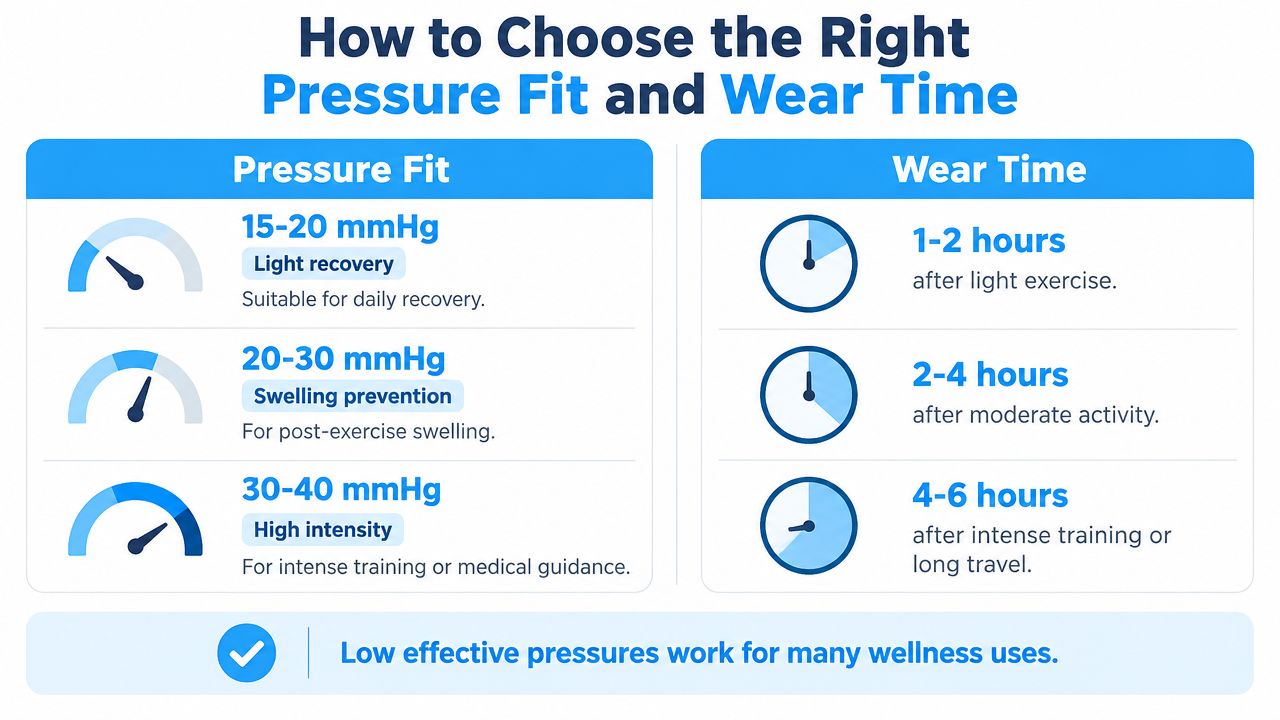
Fit decides whether leg recovery compression feels helpful or irritating. The pressure label is only a starting point. Your goal, leg shape, skin tolerance, and planned wear time matter just as much.
Start with the goal, not the label
For athletic recovery, commonly used garments fall around 14–24 mmHg. Garments used to help prevent swelling after extended sitting or standing often sit near 20 mmHg. Higher pressures are generally intended for more serious venous or lymphatic conditions, so they should not be chosen casually (source).
A “recovery” label does not define the right fit for every person. Someone managing end-of-day swelling needs steady support that remains tolerable. Someone seeking post-training support may prefer a graduated garment designed for shorter, more active use. A non-athlete who mainly wants daily comfort may need a lighter, less restrictive option.
Graduated pressure follows the leg's shape rather than treating it like an even cylinder. It is usually firmer lower down and gentler higher up, helping the garment support fluid movement without creating one harsh band. Accurate measurements therefore matter more than guessing from a familiar clothing size.
Use a simple checklist
- Check the feel: Firm and supportive is appropriate. Numbness, pain, tingling, or pinching signals a problem.
- Watch for slippage: Rolling, sliding, or bunching usually means the size or shape does not match your leg.
- Match the duration: Shorter wear can suit post-exercise use. Lighter pressure is often easier to tolerate over longer periods.
- Respect your skin: Brief marks may occur, but irritation that persists after removal needs attention.
- Compare your goal: Swelling prevention, daily comfort, and athletic recovery call for different choices.
Pressure does not need to feel extreme to have an effect. Lower effective levels can still influence venous movement while you are lying down, so choosing the highest setting is not automatically better. The garment should support circulation without becoming a distraction.
For a practical explanation of how pressure grades differ, read this guide to compression levels. It can help translate millimeter ratings into a pressure choice that fits your routine, tolerance, and intended wear time.
Common Misconceptions and When to Avoid Compression
The biggest myth is that tighter automatically means better. In reality, leg recovery compression should feel controlled and purposeful, not restrictive. If the garment is too tight, too loose, or the wrong shape for the leg, the result can be discomfort instead of support.
Why athlete results don't automatically transfer
A lot of compression research comes from sports settings, where the question is often about recovery after exertion. That doesn't automatically answer the question of whether it helps older adults, people with osteoarthritis, or anyone with chronic daily discomfort. The literature still leaves that non-athlete group underexplored, and that gap matters because comfort, swelling, and mobility are often the goals there.
Intermittent pneumatic compression, cryocompression, and other recovery modalities add another layer of confusion. Some newer studies show promising effects on soreness, lactate, or perceived recovery, while others show only small or variable benefits. There isn't a universal winner, which is why “advanced” doesn't always mean “better for you.”
If you want a broader look at non-compressive recovery approaches, cold therapy for post-workout pain is useful context when you're comparing recovery methods rather than assuming one tool covers everything.
When caution matters
Compression deserves extra caution if you have a vascular condition, unexplained swelling, persistent pain, or symptoms that don't behave like ordinary post-activity fatigue. It also deserves caution if you have diabetes-related circulation concerns, which is why fit and skin checks matter before long wear. For that topic, this compression and diabetes guide is worth reading before making assumptions.
A simple rule helps here, if the leg feels worse after putting compression on, stop and reassess. Discomfort that improves quickly can be normal adaptation, but pain, tingling, or color change are not signs to push through.
Putting It All Together for Your Recovery Routine
The simplest way to choose is to start with the job you need done. If the problem is swelling control or post-exercise heaviness, compression is the more direct tool because it works through pressure and fluid mechanics. If the problem is all-day comfort, skin sensitivity, or wanting something you can wear more casually, infrared-responsive non-compressive wear may fit better.
A practical first test is short and honest. Try the garment, check how it feels at the ankle, calf, and top band, then notice whether your legs feel lighter, warmer, or more comfortable over the next wear. Don't judge it only by the label, judge it by fit, comfort, and whether it supports the goal you have.
Use pressure as a match, not a badge. Lower effective pressures can be enough for many wellness uses, while stronger compression belongs in more specific clinical or performance settings. If the garment is hard to put on, leaves persistent marks, or conflicts with your skin and circulation needs, it's probably not the right choice.
For many readers, the smartest path is to treat compression and infrared-responsive wear as different answers to different problems. One supports fluid movement through pressure, the other supports comfortable, non-compressive daily wear. If you keep that distinction clear, you'll make a better decision the first time and avoid buying for hype instead of function.
Thermo Recovery Wear offers infrared-responsive, non-compressive sleeves and braces for people who want light daily support without a tight squeeze. If you're comparing pressure-based compression with a more comfortable wear-all-day option, visit Thermo Recovery Wear to look at the recovery wear category that matches daily comfort and circulation support goals.


