Find the right lightweight back support for daily wear, recovery, and sensitive skin. Compare lumbar belts vs sleeves, fit, materials, and care tips.
You wake up stiff, sit through a long workday, then notice your lower back again when you bend for groceries or take a walk after dinner. That's usually the moment people start looking for lightweight back support, something they can wear without feeling strapped into a medical device. The right choice depends less on hype and more on what your body tolerates, how you move, and whether you want gentle reinforcement, recovery warmth, or a firmer brace that changes motion.
Low back pain is common enough that this decision matters. The World Health Organization estimates that 619 million people live with low back pain, and calls it the leading cause of disability worldwide (WHO low back pain fact sheet). If you're trying to keep working, walking, lifting, or recovering without making your day miserable, the fit and feel of the support matter just as much as the label on the package. For people who also want a soothing topical option while they figure out a wearable support routine, find soothing muscle relief can be a useful complement to a comfort-focused plan.
Table of Contents
- Why You Might Be Looking for Lightweight Back Support
- What Lightweight Back Support Means
- Lumbar Belts vs Back Sleeves
- Materials, Weight, and Breathability
- How to Wear Lightweight Back Support for Daily Activity
- When Lighter Is Not Better
- Care, Cleaning, and When to Replace It
- Choosing the Right Lightweight Back Support for You
Why You Might Be Looking for Lightweight Back Support
You might not be looking for a brace at all. You may just want something that calms your back during a workday, helps you get through errands, or takes the edge off after a strain without turning your torso into armor.
The people who usually benefit most
This category tends to fit adults with low back discomfort, older walkers who want a little more confidence during movement, and people coming back from a mild strain who still want to stay active. It also fits anyone who hates heavy compression, skin pressure, or rigid materials against the waist. For those readers, a lightweight back support can feel more like a daily aid than a medical restriction.
The key question is not whether you need support in a general sense. It's whether you need gentle reinforcement, targeted lumbar compression, or a more structured brace that limits motion. That distinction matters because a supportive garment can help you feel steadier during sitting, walking, and light lifting, while a firmer device makes more sense when movement control is the primary goal.
Practical rule: If you want something you can forget about during normal movement, start with a lighter garment. If you need the support to actively change how you bend or lift, move one step up in structure.
A good way to think about it is lifestyle first, then product type. People who spend hours at a desk and then walk, carry bags, or do chores often care most about comfort across different positions. That's also why guidance for movement-based recovery matters, and why a practical lower-back routine like these yoga poses to soothe your lower back pain can sit alongside a wearable support rather than compete with it.
If your main issue is severe instability, numbness, or symptoms that worsen sharply with movement, a lightweight option may be too little. If your issue is discomfort, stiffness, or the need for a wearable nudge toward better posture, this is the right category to explore.
What Lightweight Back Support Means
Lightweight back support means a low-profile wearable that helps the lumbar area without feeling like a rigid medical shell. In practice, that usually means something you can wear under clothing, move in comfortably, and put on for long stretches without feeling trapped. It is support built for daily life, not for locking movement down.
Why the term matters
The scale of low back pain explains why this category exists at all. The World Health Organization says 619 million people live with low back pain, and that it is the leading cause of disability worldwide (WHO low back pain fact sheet). That burden is not a niche problem, so products that are comfortable enough for regular wear have real value for people trying to get through work, walking, and recovery routines.
The important thing to understand is that “lightweight” does not mean “flimsy.” It usually means the design trims bulk while still giving enough structure to feel supported. A related resource on find the right knee brace makes the same point for other joints, fit and structure matter more than a marketing label that promises simplicity.
Belt, sleeve, or recovery garment
The main split is between compressive lumbar belts and non-compressive sleeves or recovery garments. A belt usually adds more motion control, while a sleeve or recovery-style garment aims for comfort, warmth, and easier all-day wear. That difference matters if your skin is sensitive, your schedule is long, or you want support that does not feel like a squeeze.
A useful framework comes from broader recovery wear too. The overview of types of recovery wear for joint and muscle support shows how support can range from firmer stabilization to softer, lower-pressure wear. For the back, the same logic applies. If you want posture reinforcement, choose structure. If you want comfort and wearability, choose a lighter, less compressive design.
Lumbar Belts vs Back Sleeves
A lumbar belt and a back sleeve can both count as lightweight support, but they solve different problems. The belt is for control. The sleeve is for comfort and wear time.
How they differ in structure and feel
A lumbar belt usually uses elastic webbing, hook-and-loop closure, and often internal stays or rods to guide the torso. It feels more deliberate on the body, because it changes how the midsection moves. A back sleeve behaves more like a fitted garment, with breathable knit fabric that hugs the torso without the same level of tightening.
That matters during bending and twisting. Belts can feel reassuring during short bouts of lifting or an acute flare, because they give you a clearer sense of restraint. Sleeves tend to feel easier during walking, sitting, commuting, and recovery wear, because they don't fight every breath or shift in position.
A support that feels great for ten minutes can become annoying after two hours. Your real test is not the mirror, it's the workday.
Which one fits which day
Use a belt when the day has a clear task that may overload your back. Use a sleeve when the day is long, mixed, and movement-heavy but not highly demanding. That might include desk work, grocery trips, light housework, or a recovery day after a minor strain.
Here's a quick comparison.
| Feature | Lumbar Belt | Back Sleeve |
|---|---|---|
| Main purpose | More motion control and compression | Easier wear with lighter reinforcement |
| Feel | Firmer and more noticeable | Softer and more garment-like |
| Best for | Short lifting bouts, flare management, posture cues | Sitting, walking, long wear, recovery comfort |
| Layering | Can be more obvious under clothes | Usually easier to hide under clothing |
| Movement | Can limit bending more | Usually preserves more natural movement |
The choice is not “which is better,” it's “what do I do in a day?” If you want a support you can keep on while moving around normally, the sleeve side of the category is often the better fit. If you want a device that changes your mechanics more directly, the belt side is worth a look.
Materials, Weight, and Breathability
The part that touches your skin often decides whether a product becomes a daily tool or a drawer item. Lightweight back support is a system, not just a number on a box. Fabric, closures, shell material, and airflow shape how it feels after an hour, not just after a minute.
What the materials are doing
Breathable Lycra and spandex knit fabrics can make a support feel more flexible and easier to wear for extended periods. Some recovery garments also use bamboo charcoal fibers, which are valued for moisture management and a softer touch against skin. Those choices matter most for people who wear support for hours, sweat easily, or dislike scratchy interiors.
Skin comfort becomes a design issue, not a minor detail. Guidance on fabric choices for sensitive skin is relevant here because irritation often comes from the fabric system, not just from compression level. A smooth interior, breathable weave, and moisture-handling material can make a support far more wearable.
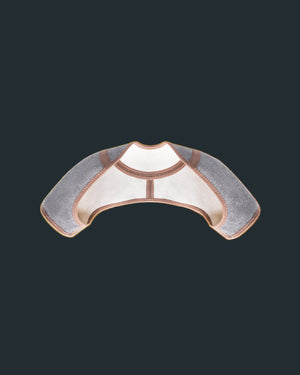
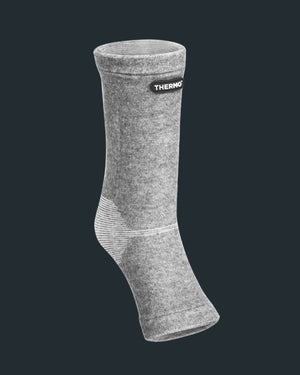
A non-compressive infrared-therapy sleeve fits this conversation too. For daily wear, sensitive skin, or recovery days, some people do better with a sleeve that feels more like clothing than a brace. A traditional lumbar belt still has a place when you want firmer restraint, but if the goal is to stay comfortable through walking, sitting, commuting, and light activity, a lower-pressure sleeve may make more sense.
Weight versus structure
On the shell side, manufacturers often use aircraft-grade aluminum or carbon fiber to reduce mass while keeping stiffness. One seating and back-support system lists a shell weight of about 680 g for a 16-inch standard back, and a related premium configuration uses carbon fiber at about 1.38 kg versus 1.8 kg for aluminum (Stealth Products brochure). That comparison shows the engineering tradeoff clearly. Lower weight helps, but structure still costs material.
In wearable lumbar support, very usable products can stay under the half-kilo range when the goal is posture reinforcement rather than rigid immobilization. One lightweight support uses breathable Lycra/spandex and stands about 22 cm tall, while a compression-style brace adds 4 stabilizing rods, a double-belt closure, moisture-wicking materials, and weighs 394 g (BodyHeal product page). The lesson is simple. Lightweight depends on the entire design, not a single spec.
Comfort rule: If you plan to wear it for hours, prioritize smooth seams, moisture handling, and closure design before you chase the lowest possible weight.
How to Wear Lightweight Back Support for Daily Activity
Fit decides whether a support helps or irritates. The best product in the world won't feel right if it sits too high, pinches the waist, or shifts every time you stand up.
Where it should sit and how it should feel
A belt or sleeve should rest on the lumbar curve, not ride up into the ribs or sit low on the hips. You want contact that feels secure, but not so tight that it changes breathing, pins the skin, or creates a pressure line by the end of the day. A snug fit is useful, a strangling fit is not.
If you're trying one for the first time, use it during low-stakes tasks first. Wear it for a walk around the block, a light grocery run, or a short block of desk time before relying on it for a full shift or a heavier workout. That short break-in period tells you whether the product stays in place and whether the feel matches your expectations.
How to use it across a normal day
For desk days, the support should help you notice posture without making sitting miserable. For walking, it should feel stable but not rigid. For lifting chores, it should sit firmly enough that you feel guided, yet still let you move in a controlled way.
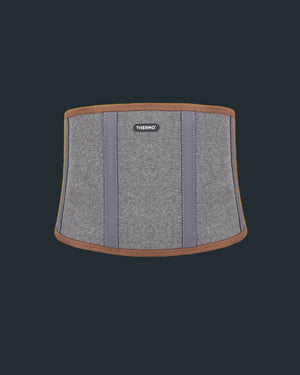
The product page for the Thermo Lite Back Brace is a useful example of the kind of low-profile support many people look for when they want daily wear without a heavy brace. That kind of design language makes sense when someone needs support during errands, light activity, or recovery time rather than full immobilization.
Remove it when it starts getting in the way. Meals can be easier without it if the fit is snug, sleep can be better without shifting hardware, and any activity that needs free twisting may call for less restriction. The primary goal is not constant wear, it's smart wear.
When Lighter Is Not Better
People often assume the lightest option is automatically the smartest one. That's not always true, especially when the problem is posture control or motion restriction rather than comfort alone.
Structure can solve the real problem
Recent CDC testing of a passive back-support exoskeleton found measurable biomechanical changes during lifting, including significantly reduced hip flexion angles (CDC exoskeleton testing PDF). That kind of result matters because it shows how structure can change mechanics without relying on bulk alone. A product can be low-profile and still alter how the body moves.
Rehab evidence points in the same direction. Research on wheelchair backs found that a solid back promoted a more neutral pelvis and base of support, and improved functional mobility, comfort, and satisfaction compared with a standard upholstery back (PMC study). The lesson isn't that everyone needs rigid support. It's that shape and control can matter as much as weight.
What that means for buyers
If you feel unstable when bending, need to limit forward flexion, or want more obvious posture guidance, a slightly heavier and more structured support may work better than an ultralight sleeve. If your main issue is skin tolerance, comfort, or the ability to wear support for long stretches, lighter and softer may be the better match.
That's why fit-and-lifestyle thinking beats brand loyalty. A structured brace can outperform a featherweight garment when motion control is the actual goal. A softer garment can outperform a stronger brace when the actual goal is daily wearability.
Care, Cleaning, and When to Replace It
A lightweight support lasts longer when you treat it like gear, not disposable packaging. Elastic, closures, and interior fabric all change over time, and the first sign of wear is usually fit, not visible damage.
What to look after
Wash after sweaty wear, especially if you have sensitive skin or plan to wear the support again the next day. Follow the product's washing instructions, and use the care guidance at washing instruction so the fabric keeps its shape and feel. Air-drying is usually the safer choice for elastic components, because heat can wear down stretch and closures faster.
Avoid fabric softeners if the garment uses moisture-wicking fibers. They can coat the surface and reduce the very breathability you bought the support for. If you rotate between two supports, each one gets time to dry fully and recover its shape.
Signs it's time to retire it
When the webbing feels stretched, the edges fray, the foam gets crushed, or the fit no longer feels snug, the support has probably lost enough structure to matter. If you keep tightening it more and more just to get the same feeling, that's another clue. The garment may still look fine, but if it no longer sits where it should, it's no longer doing its job.
Replace the piece when the fit changes, not just when it looks worn out.
A well-cared-for support should be part of regular use, not a temporary fix that falls apart after a few weeks. Hygiene matters too, because skin comfort drops quickly when sweat, residue, and stretched elastic all stack up at once.
Choosing the Right Lightweight Back Support for You
The easiest way to choose is to match your day, your skin, and your need for control. The product that feels right on a web page can still fail in real life if it fights your routine.
A simple decision framework
If you're a daily desk-and-walk user, choose a low-profile belt or sleeve that disappears under clothing and stays comfortable across sitting and movement. If you're in post-strain recovery, lean toward adjustable compression or a more structured lumbar design that gives targeted support without becoming bulky. If you're a sensitive-skin wearer who avoids compression, pick a non-compressive sleeve with soft interior fabric and moisture-wicking construction.
That same logic shows up in other support categories too, including products often handpicked by pedorthists. The point is not to chase the fanciest label, it's to match support style to the body and the task.

Three questions that usually settle it
How many hours a day is reasonable? Long enough to get through the activity you bought it for, but not so long that you start depending on it for every movement. Can it go over or under clothing? Yes, but under-clothing wear usually works better for a smoother fit, while over-clothing wear can be easier to adjust. What if symptoms get worse? Stop wearing it and reassess, because the support may be too tight, poorly positioned, or the wrong type for your body.
The practical answer is this. Choose the least restrictive option that still gives you the support you need, then test it in the movements that matter most to your life.
If you want recovery wear that favors comfort, breathability, and everyday use, Thermo Recovery Wear offers compression-lite sleeves and braces built around infrared-responsive materials and sensitive-skin-friendly construction. If you're comparing a sleeve-style back support with a traditional lumbar belt, visit Thermo Recovery Wear and look for the option that matches your daily movement, skin tolerance, and recovery routine.