


You pull a knee sleeve from your gym bag and immediately regret it. It smells stale, the neoprene feels stiff, or the opening has started curling away from your leg. Sometimes the sleeve still looks clean, yet the compression no longer feels as supportive as it did when new.
Knee sleeves need more care than a regular workout shirt because their dense materials hold sweat, body oils, skin cells, and moisture close to the skin. A reliable routine protects the fit without turning laundry into a weekly project. The basic rule is simple: use cool or lukewarm water, a mild detergent, gentle handling, and complete air drying, as recommended by Gym Reapers' knee-sleeve care guide.
Table of Contents
- Why Knee Sleeves Need a Different Washing Routine
- Hand Washing Knee Sleeves the Right Way
- Drying Knee Sleeves Without Damaging the Fabric
- Hand Wash vs Machine Wash vs No Wash
- What to Avoid When Cleaning Knee Sleeves
- How Often Should You Actually Wash Knee Sleeves
- A Simple Care Routine That Keeps Sleeves Like New
Why Knee Sleeves Need a Different Washing Routine
A gym shirt releases moisture quickly because air can move through its fabric. A knee sleeve is different. Neoprene, elastic fibers, compression knits, and performance yarns create a close-fitting layer that can hold sweat against the skin for much longer. If you leave that sleeve rolled inside a gym bag, odor develops inside the material rather than only on its surface.
The first warning sign is often smell. The next may be a rough or stiff inner face, a curled edge, or a sleeve that feels looser around the knee. Heat and twisting are especially hard on elastic fibers. They can alter the shape that gives the sleeve its support, while aggressive handling can stress seams and bonded areas.
Practical rule: A sleeve that stays damp between uses is being stored in its worst possible condition.
Infrared and bamboo-charcoal sleeves require the same caution, with an added material consideration. Specialized yarns may be designed to reflect body heat, manage moisture, or provide an antimicrobial textile surface. Strong detergents, excessive heat, and fabric softeners can change how those fibers feel and perform. For background on the textile technology, see this explanation of what antimicrobial fabric means.
The cleaning routine also matters for people who wear support gear because movement is already uncomfortable. A sleeve shouldn't become another source of irritation, especially if you're managing mechanical knee problems in runners. Clean fabric won't solve an underlying knee problem, but it can reduce the avoidable discomfort caused by trapped sweat, residue, and odor.
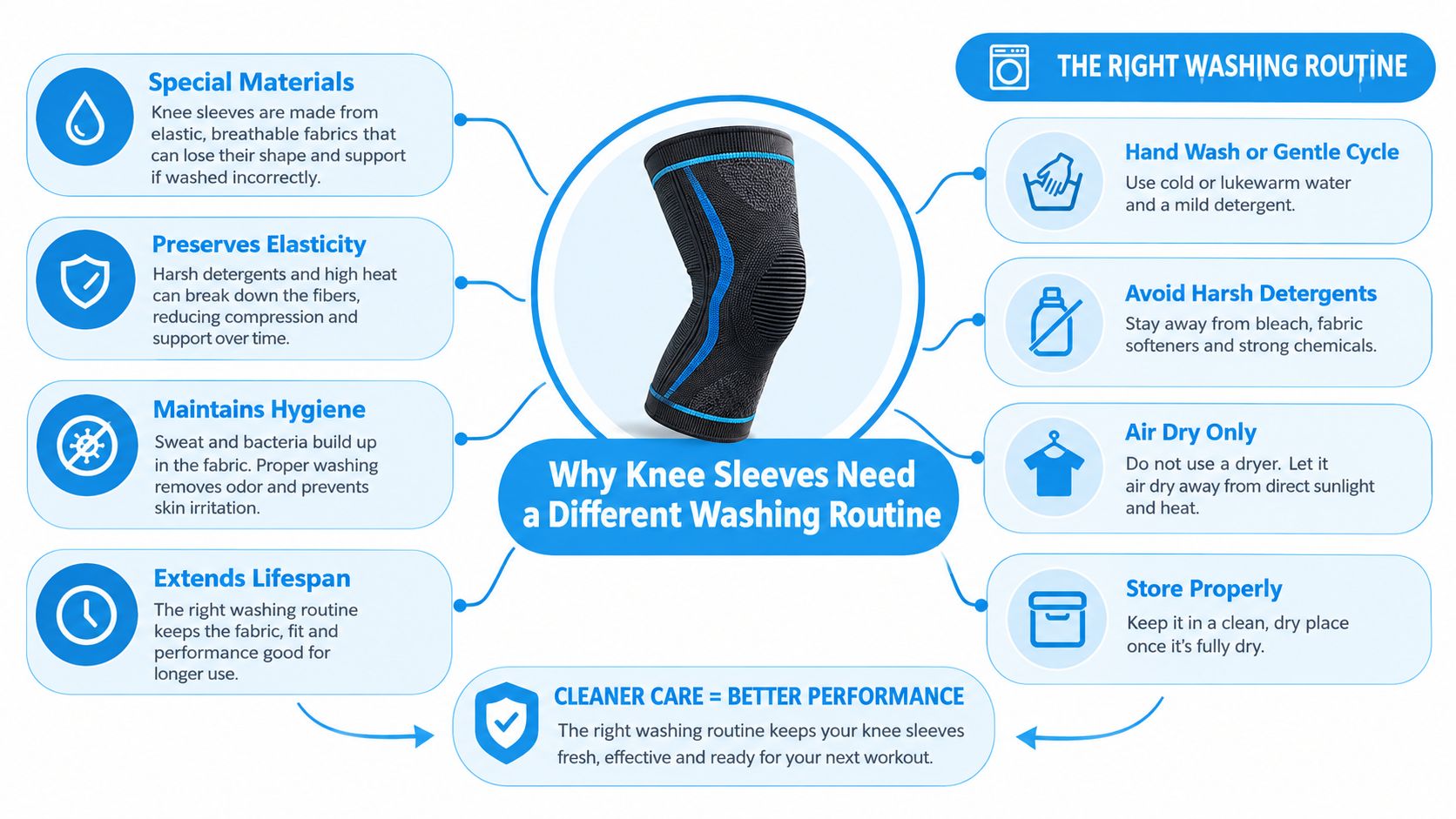
The fix isn't complicated. Turn the sleeve inside out, wash it gently, rinse thoroughly, and let it dry completely away from direct heat. That small routine protects the material far better than occasional aggressive cleaning after the odor has already set in.
Hand Washing Knee Sleeves the Right Way
After a hard session, a sleeve can feel dry on the outside while holding sweat and salt against the skin. Hand washing gives you control over that residue without overstretching the opening or stressing the seams. The same basic method works for neoprene, compression sleeves, infrared fabrics, and bamboo-charcoal blends, but specialized fibers deserve gentler treatment.
Prepare the sleeve and wash water
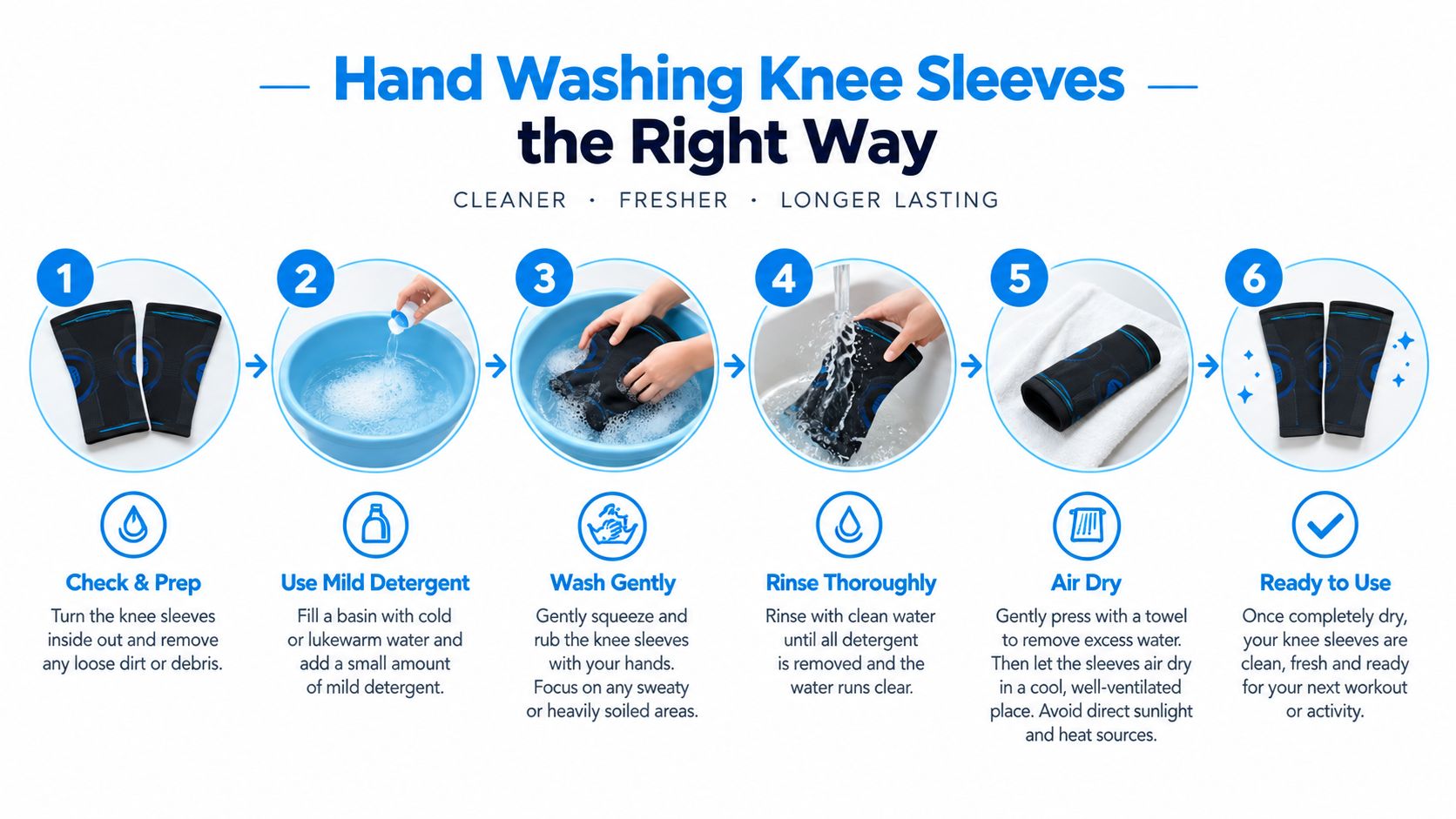
Turn the sleeve inside out. The inner surface collects most of the sweat, salt, and skin residue, so washing only the exterior leaves the dirtiest area untouched.
Fill a clean sink or basin with cool or lukewarm water. Hot water is a poor trade-off for elastic fibers, neoprene, and infrared or bamboo-charcoal textiles. Add a small amount of mild liquid detergent, preferably fragrance-free. A sports-wash product is suitable only if its label allows use on technical fabrics.
Thermo Recovery Wear provides product-specific washing instructions for its recovery wear. Follow those directions for infrared and bamboo-charcoal sleeves, since detergent and heat can affect how the specialized fibers feel and manage moisture. Skip bleach, fabric softener, and harsh household cleaners. Dish soap may also leave a film that is difficult to rinse from dense material.
Agitate without attacking the seams
Submerge the sleeve and press it beneath the water. Knead the fabric gently, concentrating on the inner face and the area around the opening. A short, careful wash cleans better than aggressive scrubbing at a seam.
Do not twist the sleeve into a rope or wring it out. Torsion can deform elastic fibers, stretch the opening, and leave creases that remain after drying. If the sleeve is heavily soiled, let it soak briefly before washing instead of increasing hand pressure. A soak of about 10 to 15 minutes is commonly used for this type of cleaning.
Rinse until the water runs clear
Drain the dirty water and refill the basin. Press the sleeve through the clean water, then repeat with fresh water until the water looks clear and the fabric no longer feels slippery.
Rinsing matters because trapped detergent can stiffen knit or foam, attract more grime, and irritate sensitive skin. Work the inner surface through the rinse as carefully as the outside.
Remove water with towels
Do not wring the sleeve after rinsing. Lay it on a clean towel, roll the towel around it, and press gently. This removes excess water without stretching the sleeve or pulling on its seams.
Move the sleeve to air drying immediately. Keep the dedicated infographic nearby as a quick reference for hand washing and air drying knee sleeves.
For lingering odor, a brief baking-soda soak can help before the final rinse. Rinse thoroughly afterward, and do not use odor treatment to compensate for incomplete drying.
Drying Knee Sleeves Without Damaging the Fabric
Washing removes the residue. Drying determines whether the sleeve keeps its shape.
Machine dryers are the shortcut that causes the most trouble. High heat can affect neoprene, elastic fibers, bonded seams, and specialized textile finishes. Hair dryers, radiators, heated towel rails, and direct hot surfaces create the same basic problem on a smaller scale. The sleeve may come out feeling dry, but its opening, compression, or seam structure may no longer be the same.
Use flat air drying as the default
After pressing out excess water with a towel, lay the sleeve flat on a clean, dry towel in a shaded, ventilated room. Use your hands to restore the opening to its natural shape and flatten any folded seams. Don't leave the sleeve bunched up, because the inner layers need air exposure to release moisture.
Turn it over once the exposed side has had time to dry. For thicker neoprene, a complete dry can take much longer than the surface suggests. The inside may still be damp even when the outside feels dry, so check both faces before wearing it.
Drying rule: If the sleeve still feels cool, heavy, or damp inside, it isn't ready for your knee.
Thin compression sleeves can sometimes dry on a broad plastic hanger, provided the hanger doesn't create a sharp crease. Heavy neoprene sleeves are safer flat because their weight can pull the fabric out of shape while wet. Direct sunlight is also a poor choice. Shade protects dyes and reduces unnecessary exposure to heat and ultraviolet light.
Thermo Recovery Wear's wear-care guidance should take precedence for its specialized recovery products. In general, air drying remains the gentler approach when your priority is preserving fabric behavior and fit.
Plan the wash around your training schedule. If you need the sleeve tomorrow, wash it the night before rather than waiting until the morning. Putting on a damp sleeve traps moisture against your skin and gives odor another opportunity to develop.
Hand Wash vs Machine Wash vs No Wash
The choice usually comes down to how much convenience you're willing to trade for material life.
Hand washing is the safest option. It gives you control over water temperature, pressure, soaking, rinsing, and the way you handle the seams. That control matters most for neoprene, infrared-responsive textiles, bamboo-charcoal fabric, and sleeves with glued or laminated construction.
Machine washing is a calculated shortcut. A durable nylon-spandex sleeve may tolerate a cold, delicate cycle inside a mesh laundry bag, but the repeated movement and spin can create abrasion and place stress on elastic fibers. If you use a machine, select cold water, a delicate setting, mild detergent, and no heat drying. Broader guidance about choosing gentle washer settings for flexible training gear is available in this resource on safe washer settings for yoga mats, though the sleeve's own care label should come first.
No washing is not a care strategy. Airing out the sleeve after use is useful, but it doesn't remove sweat, body oils, or residue. Leaving the sleeve untreated allows odor to settle deeper into the material and can make skin discomfort more likely.
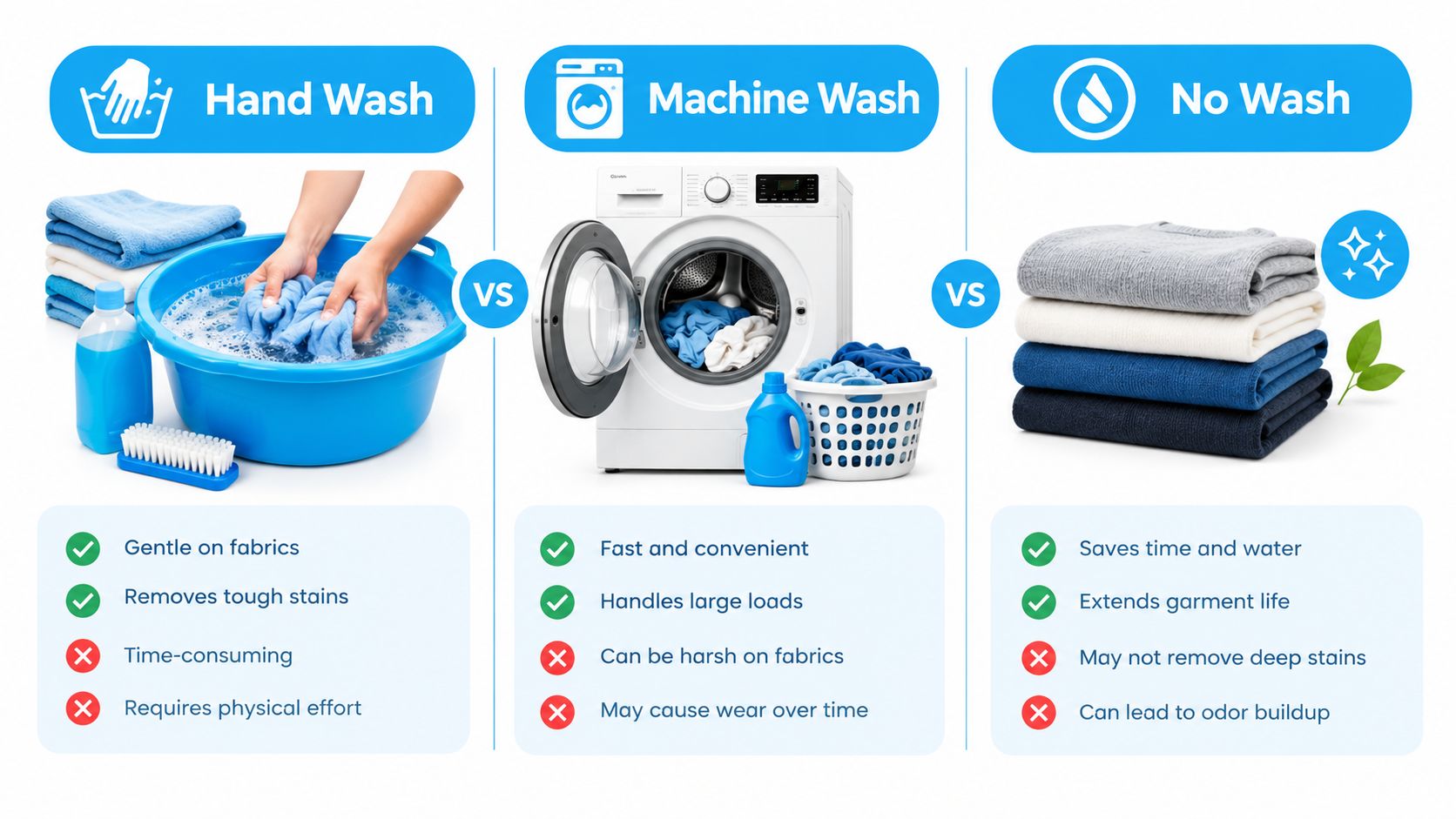
If you're training often and sweating heavily, hand washing gives you the most predictable result. If you wear a tough basic sleeve occasionally, a carefully controlled machine cycle may be acceptable. Whatever you choose, avoid aggressive spin cycles and never combine machine washing with tumble-dryer heat. Guidance on reducing friction and preventing fabric pilling is also relevant because abrasion gradually changes how technical fabrics feel and fit.
What to Avoid When Cleaning Knee Sleeves
Most ruined sleeves don't fail because their owner forgot to wash them. They fail because the cleaning method was too aggressive.
Fabric softener is a common mistake. It coats fibers instead of removing sweat residue, which can reduce the clean feel of the fabric and leave a film that holds odor. It can also interfere with the texture and moisture behavior of performance textiles.
Bleach and harsh detergents are too strong for elastic fibers and technical finishes. They can weaken spandex, affect neoprene, and alter specialized yarns used for infrared or bamboo-charcoal garments. Use mild detergent in a small amount, then rinse thoroughly.
Tumble dryers and radiators deliver heat directly to materials that need their shape and elasticity preserved. A dryer may seem convenient after a late workout, but heat can deform neoprene, stress bonded seams, and reduce the sleeve's recovery. Air drying takes longer, but it avoids the damage caused by heat.
Direct sunlight is also unnecessary. A shaded, ventilated area gives the sleeve airflow without exposing dyes and elastic materials to intense heat and ultraviolet light.
Wringing and twisting put force through the knit and seams. Press water out with towels instead. The sleeve doesn't need to be treated delicately forever, but it does need to be handled without torsion while wet.
Dry cleaning is another poor fit for most technical knee sleeves unless the manufacturer specifically approves it. Solvents designed for other garments may strip or change performance coatings. If skin sensitivity is part of your concern, the discussion of fabric choices for sensitive skin offers useful context when comparing materials.
Keep this short list beside the sink
- Do use: Cool or lukewarm water and a mild detergent.
- Do use: Gentle pressing, kneading, and a thorough rinse.
- Do use: Flat air drying in the shade.
- Don't use: Bleach, fabric softener, or harsh cleaners.
- Don't use: A tumble dryer, radiator, hair dryer, or direct heat.
- Don't do: Wring, twist, or scrub hard across seams.
- Don't skip: The final rinse or the complete drying stage.
These aren't fussy rules. They're small habits that protect the exact properties you bought the sleeve to provide.
How Often Should You Actually Wash Knee Sleeves
A sleeve can look clean and still need washing. Sweat salts, skin oils, and moisture collect inside compression fabric where a quick sniff or visual check won't show the full picture. Waiting until the sleeve smells strongly makes the cleanup harder and can leave residue embedded in the material.
For sweaty training sessions, hygiene guidance recommends washing after use, ideally every wear. For lighter daily wear, one care guide suggests two to three washes per week to help control odor and skin irritation, as outlined in this knee-brace cleaning guide. Those are practical benchmarks rather than rigid laws. Heavy sweaters need to clean more often than someone using a sleeve briefly for light support.
Match the routine to the warning signs
Wash the sleeve promptly if you notice:
- Persistent odor: Airing it out no longer removes the smell.
- Itchiness: Your skin reacts after wearing it.
- Salt lines: Dried sweat appears around the inner face or edges.
- Stiffness: The material feels less flexible than usual.
- Dampness: The sleeve stays moist inside your bag or storage area.
Warm, damp fabric gives microorganisms a better environment than clean, dry fabric. That doesn't mean every odor signals a serious health issue, but it does mean “it still looks fine” isn't a reliable maintenance test. Broader hygiene guidance, including this resource discussing how often to wash towels and manage moisture exposure, supports the same practical principle: items that hold sweat against the body need regular cleaning.
A small rotation works better than forcing one sleeve to cover every session. Keep two sleeves available, let each one dry completely after hard use, and wash them according to how much sweat they absorb. The result is cleaner gear and less pressure to put a damp sleeve back on because the alternative is no support.
A Simple Care Routine That Keeps Sleeves Like New
Good sleeve care works because it is repeatable, not because it is elaborate. After training, take the sleeves out of your gym bag immediately and open them up so air can reach the inside. Turn them inside out if the inner face is wet, then leave them in a clean, ventilated place until you're ready to wash them.
For regular use, build hand washing into your weekly laundry rhythm. Use cool or lukewarm water, mild detergent, gentle pressure, and a complete rinse. Put the sleeve flat on a towel in the shade and reshape the opening before leaving it to dry.
Adjust the rinse for specialized fabrics
Infrared sleeves should avoid fabric softener entirely. Softener leaves a coating that can interfere with the feel and behavior of technical fibers, while heat can change the construction that gives the sleeve its intended fit.
Bamboo-charcoal sleeves benefit from careful rinsing because their dense textile structure can hold sweat salts and detergent residue. If the sleeve feels slick, stiff, or unusually heavy after washing, rinse it again with clean water rather than adding stronger soap.
Use the manufacturer's instructions when they differ from general care advice. For products from Thermo Recovery Wear, the brand's recovery sleeves use semiconductor-integrated, infrared-responsive fabrics and bamboo-charcoal textile options, so following the product-specific label is more sensible than guessing based on an ordinary gym garment.
Diagnose the problem before changing products
- Stiff fabric: Suspect heat exposure or detergent residue. Re-rinse and stop using heated drying.
- Persistent odor: Suspect incomplete rinsing, slow drying, or storage while damp.
- Loss of compression: Suspect normal fiber fatigue, repeated heat, or excessive twisting.
- Curled edges: Check whether the sleeve was wrung, hung heavily while wet, or exposed to high heat.
- Skin discomfort: Wash more often, rinse more thoroughly, and review the detergent.
Keep this checklist near the laundry area:
- Cool water
- Mild detergent
- No fabric softener
- No bleach
- No dryer heat
- Flat drying in the shade
- Complete drying before wearing
- Rolled storage rather than tight folding
Clean the sleeve after hard, sweaty use, let it dry fully, and inspect it before the next session. That routine preserves comfort and support far more reliably than waiting for a visible problem.
Thermo Recovery Wear offers compression-lite recovery sleeves and braces with infrared-responsive fabrics and bamboo-charcoal textile options, along with dedicated washing and wear-care guidance. Review the available support products at Thermo Recovery Wear, then choose a sleeve whose material and care routine fit the way you train, recover, and live.


