


Your knee hurts on the stairs, then stiffens while you're waiting in line at the grocery store. You search for the best treatment and find a jumble of exercise plans, painkillers, braces, injections, and surgery. The useful question isn't which one wins. It's what to try first, how to judge whether it's helping, and what to consider next if it isn't.
| Treatment tier | What it's for | Best place in the sequence |
|---|---|---|
| Foundation care | Builds strength, supports mobility, and helps manage joint load | Start here and keep it in the plan |
| Medication | Reduces pain or inflammation so daily activity is more manageable | Add when symptoms call for it, with safety in mind |
| Injections | Offers targeted symptom relief for selected situations | Consider when other measures aren't enough or suitable |
| Surgery | Addresses substantial disability that persists despite nonsurgical care | Discuss when pain and function remain seriously affected |
A sensible plan treats these choices as steps that can work together, not rival products competing to be the single fix. The sequence should fit your symptoms, function, health conditions, weight status, and response to treatment.
Table of Contents
- Where Most People Start and Why That Matters
- The Foundation Layer Every Plan Should Start With
- Medications, Braces, and Sleeves for Daily Symptom Control
- Injections, Duration of Relief, and Honest Expectations
- When Surgery Becomes the Right Next Step
- Matching the Path to Your Profile
- Tracking Progress and Knowing When to Reassess
Where Most People Start and Why That Matters
Knee pain can make ordinary tasks feel like tests: stairs, getting out of a chair, or walking through a shop. The temptation is to reach for the fastest answer, especially when a brace or injection promises relief. But a treatment that eases symptoms today doesn't necessarily build the capacity you need for daily life tomorrow.
Think in four tiers. Foundation care includes education, self-management, exercise, and weight management when relevant. Medication can help control symptoms enough to make movement more manageable. Injections may offer a targeted bridge when pain remains difficult to control. Surgery becomes a serious consideration when disability persists and nonsurgical treatment hasn't helped enough or isn't suitable.
That order matters because each tier has a different job. Exercise and self-management support strength and function. Medication and injections primarily address symptoms, and they need to be chosen with individual risks in mind. Surgery is a larger step, best judged by how the knee affects quality of life and whether other options have been effective or appropriate.
Practical rule: Don't ask whether a sleeve, a pill, or exercise is “the best” in isolation. Ask what problem it solves, what you'll combine it with, and what would count as a good enough result.
For many people, a reasonable starting move is to choose a manageable foundation program and review symptoms and function with a clinician. If pain blocks participation, symptom relief may help you get moving. If activity remains substantially limited despite a sustained nonsurgical approach, it's time to reassess rather than adding another untested product.
The Foundation Layer Every Plan Should Start With
Osteoarthritis affects people around the world, and the knee is its most frequently affected joint. The World Health Organization's osteoarthritis overview reports that about 528 million people were living with osteoarthritis worldwide in 2019, including an estimated 365 million people with knee osteoarthritis. That burden makes practical, accessible care essential. A useful plan begins with habits people can adapt and sustain, not with the assumption that a device or procedure must come first.
Build a program around strength and movement
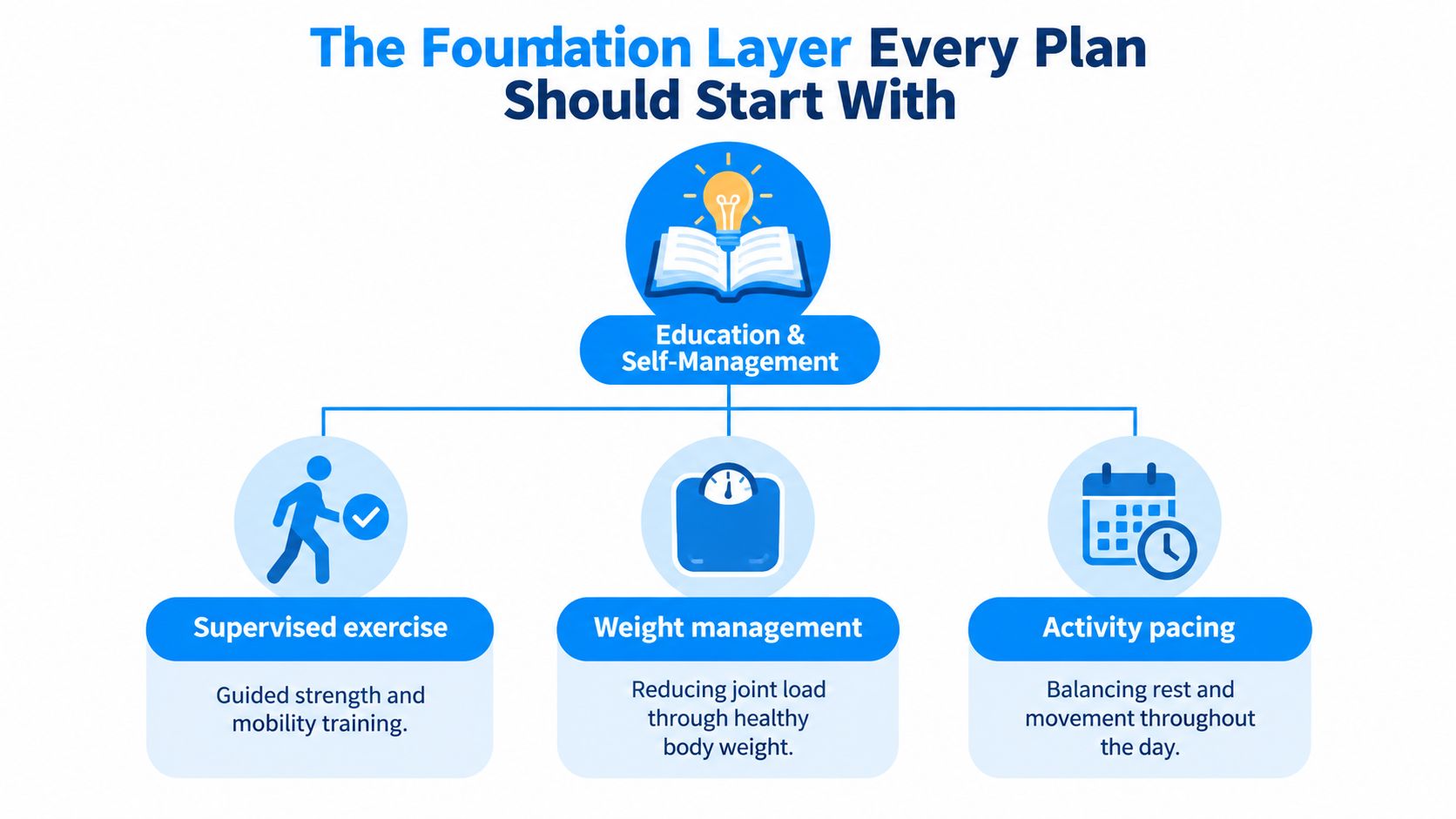
The AAOS knee osteoarthritis guideline recommends supervised, unsupervised, or aquatic exercise over no exercise. A practical routine can pair quadriceps and hip strengthening with low-impact aerobic activity, such as walking, cycling, or water exercise. Neuromuscular training and self-management can also help you move with more control and adapt activity to symptoms.
Physical therapy is particularly useful if weakness, reduced range of motion, gait problems, or movement mechanics are getting in the way. Supervision can help you choose suitable exercises, learn safe technique, and adjust the plan as your capacity changes. If you're starting from scratch, a beginner guided workout plan can help you structure activity, but ask a clinician or physical therapist to adapt exercises to your symptoms and needs.
Exercise isn't a short course you finish and forget. Its benefits can fade when activity stops, so aim to make movement a maintainable part of the routine. Education and self-management matter too: pace demanding tasks, notice which movements trigger a flare, and adjust rather than abandoning activity altogether. For examples of knee-friendly movements, see this guide to knee mobility exercises.
Add weight management where it fits
For people with excess weight, weight management can complement exercise by reducing load on the knee. NICE says that any weight loss may help, while a 10% reduction in body weight is likely to provide greater benefit than a 5% reduction. Those targets aren't a reason to delay movement or to treat weight as the only measure of progress. Use them as context when deciding whether support with weight management belongs in your plan.
The foundation is the benchmark for everything that follows. A brace or sleeve may improve comfort, and medication may ease symptoms, but neither should replace an exercise and self-management plan that's suited to you.
Medications, Braces, and Sleeves for Daily Symptom Control
When symptoms make daily movement hard, the best medication choice is usually the one that addresses the problem while fitting your health risks. Topical NSAIDs reduce inflammation near the knee and can be preferable when systemic risks are a concern. Oral NSAIDs may help, but they require a safety review because of possible gastrointestinal, kidney, liver, and cardiovascular toxicity. Ask a clinician or pharmacist to review your health conditions and other medicines before using them, especially if you're considering regular use.
Acetaminophen is another pain-relief option, but it doesn't address inflammation in the same way an NSAID does. It may suit some people, though its usefulness depends on the person and the clinical context. Don't assume that an over-the-counter medicine is automatically safe for you.
| Daily Symptom Control at a Glance | Best for | Key limitation |
|---|---|---|
| Topical NSAID | Local knee pain when limiting systemic exposure is a priority | Still needs to fit your health and medication picture |
| Oral NSAID | Symptoms that need broader anti-inflammatory relief | Requires attention to gastrointestinal, kidney, liver, and cardiovascular risks |
| Acetaminophen | Pain relief when an NSAID may not suit you | Doesn't work as an anti-inflammatory |
| Brace or assistive device | Support or altered loading during particular activities | Benefit and suitability vary by person and knee problem |
| Sleeve or warmth-based aid | Comfort during rest or light activity | An adjunct, not a treatment for the underlying joint changes |
Braces are not interchangeable. A clinician may consider a valgus brace or assistive device for someone who needs support or a change in how load passes through the knee. But guidance on orthoses differs, and these devices shouldn't be treated as necessary for everyone. A supportive sleeve is a different proposition: it may make the knee feel more comfortable, but it doesn't rebuild cartilage or replace strengthening.
Treat wearables as adjuncts
A recent review describes variable relief from local heat and TENS, and notes that PRP results vary with preparation methods and study quality. That's a reason to judge a device by your own day-to-day function, not by its marketing. Track whether it helps you walk, manage stairs, or stay comfortable during ordinary activity, and stop or seek advice if it causes skin irritation or circulation symptoms.
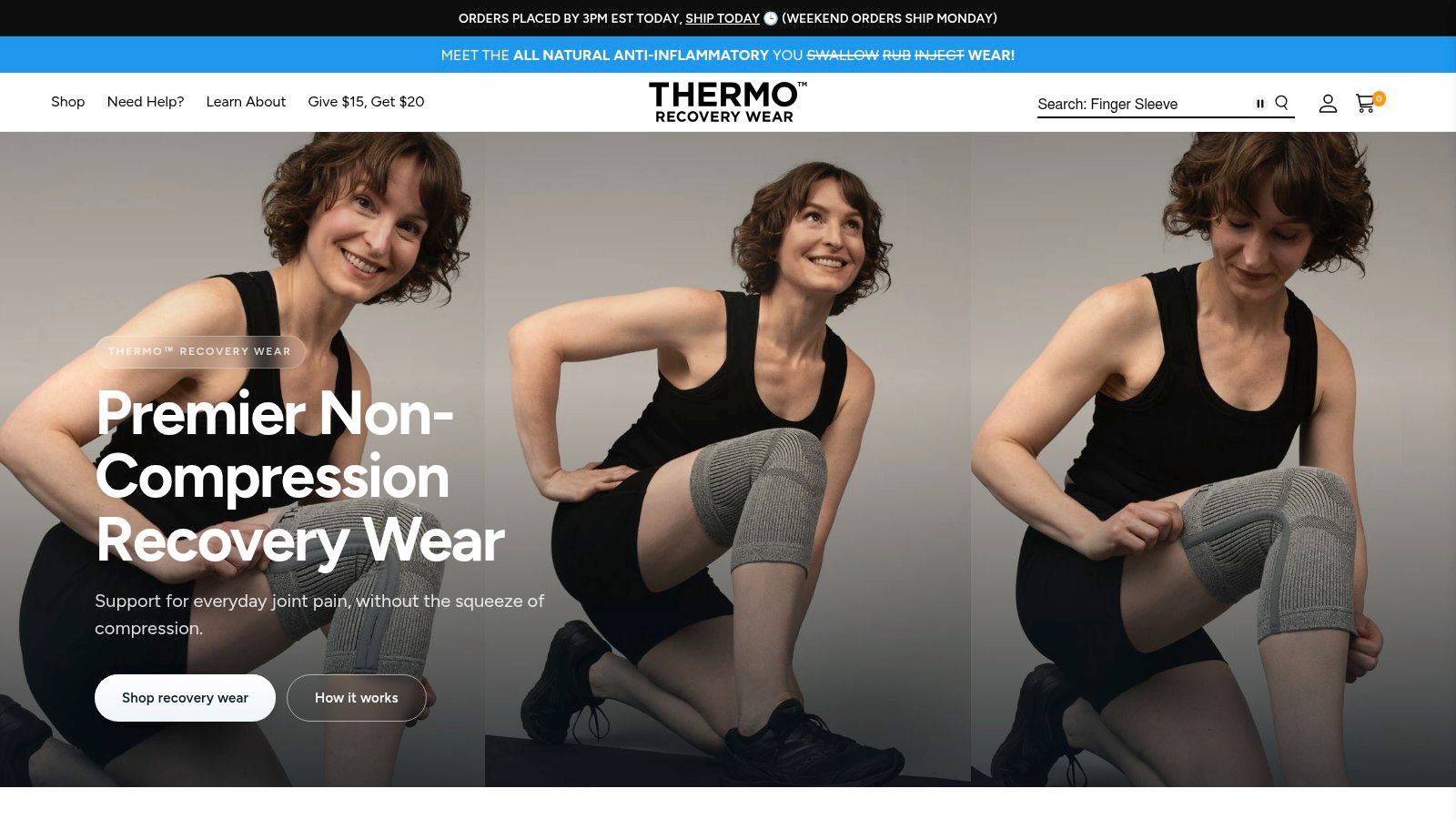
Thermo Recovery Wear's semiconductor-embedded, infrared-responsive fabric is reported to deliver up to 62% improvement in osteoarthritic joint pain and is designed as a non-compressive alternative for sensitive skin and all-day wear; that is a brand-reported claim, not a reason to expect the same result for everyone. If you're comparing wearable supports, read about the lightweight knee brace and consider comfort and fit alongside exercise and medication safety, not instead of them.
Injections, Duration of Relief, and Honest Expectations
Injections are escalation tools for symptoms, not a reset button for the joint. The clearest role is for intra-articular corticosteroid, which may provide short-term relief, particularly during a painful flare or when other medicines aren't effective or suitable. That temporary improvement may make daily movement easier, but it doesn't permanently correct joint degeneration.
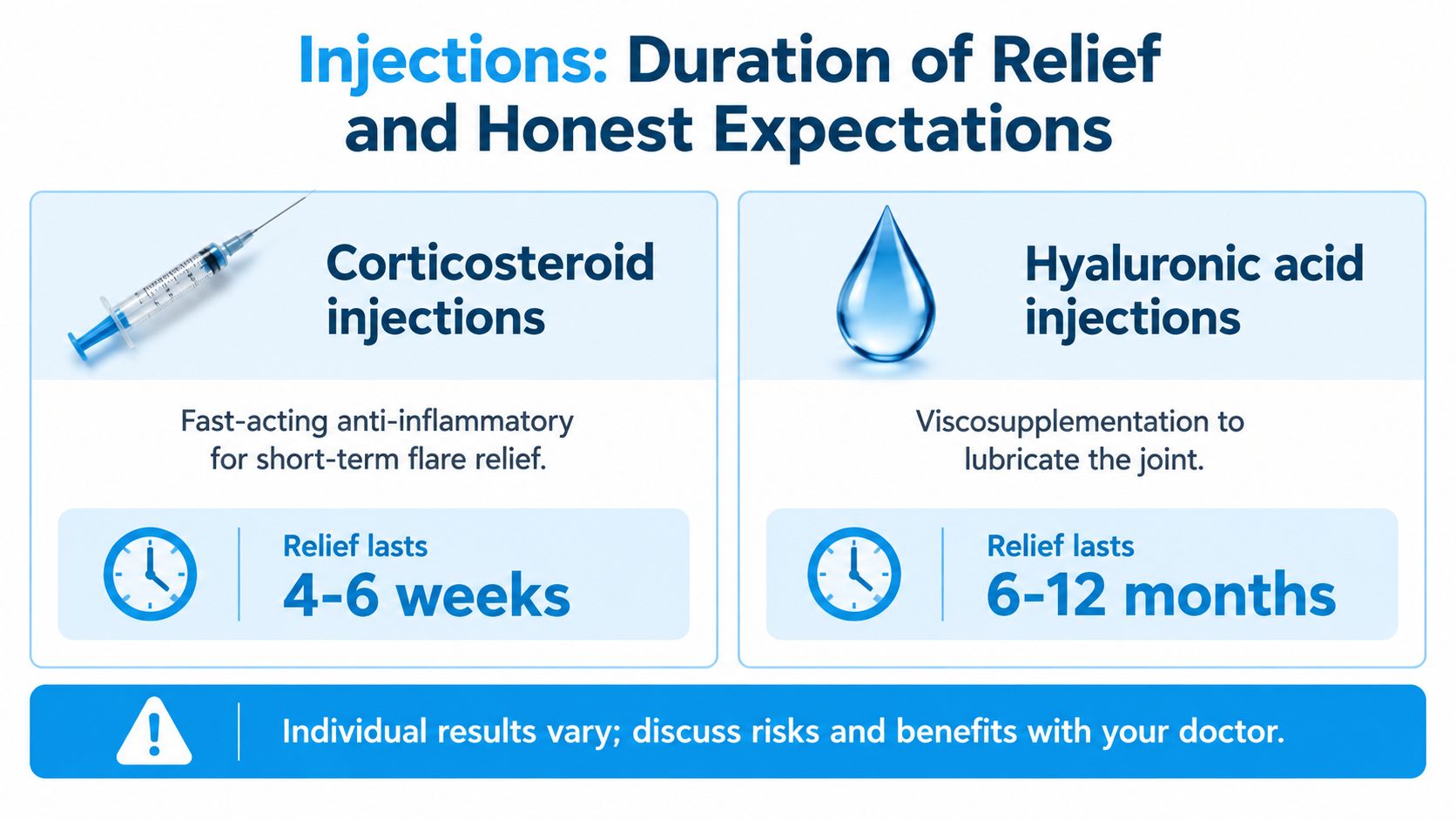
The graphic's specific relief durations should not be treated as guaranteed timelines. The verified guidance supports short-term relief from corticosteroid injections, but it doesn't establish a fixed duration that applies to every patient. Ask the clinician offering an injection what benefit they expect in your situation, what risks they'll consider, and how you'll decide whether it helped.
Compare the options without buying the promise
Hyaluronic acid injections are often presented as lubrication or cushioning. People considering them should ask what evidence supports their use for their particular symptoms and what realistic outcome to watch for. Available guidance and reviews do not establish that hyaluronic acid reliably preserves or reverses joint structure.
PRP is another option people encounter, but results vary with preparation methods and study quality. That makes strong, universal claims about its effects unreliable. Before paying for any injection, ask how it compares with established care, what the risks and costs are, and what happens if it doesn't help.
Use an injection as a bridge, not a plan. If it eases pain, use the window to keep building strength, manage activity, and review what comes next.
Corticosteroid injections, hyaluronic acid, and PRP may be discussed for symptom relief, but none should be sold to you as a dependable way to repair a degenerating joint. If pain remains disabling after a reasonable trial of nonsurgical care, reassess the whole plan rather than cycling through injections without a clear goal.
When Surgery Becomes the Right Next Step
Surgery isn't a failure of self-management, and it shouldn't be treated as the automatic answer to an imaging result. The key question is whether knee symptoms substantially affect your quality of life and whether nonsurgical treatment has been ineffective or unsuitable. NICE's joint replacement supporting guidance recommends considering referral when pain, stiffness, reduced function, or deformity substantially affects quality of life despite nonsurgical management. It also says not to exclude people solely because of age, sex, smoking, comorbidities, or overweight or obesity.
Match the operation to the problem
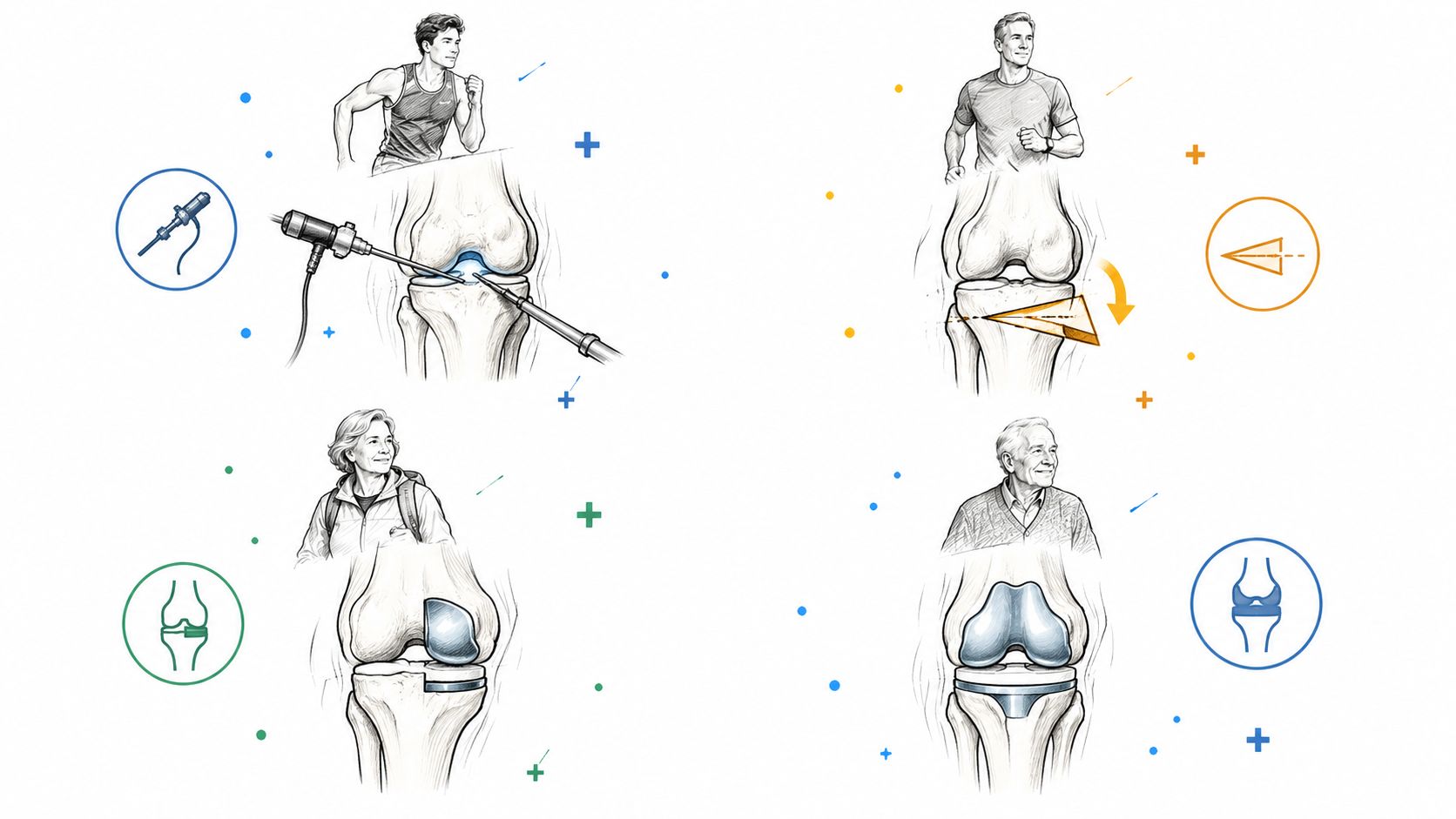
Arthroscopy has a limited role in degenerative knee osteoarthritis. It isn't a general-purpose way to undo joint wear. An osteotomy may be considered when a clinician identifies a suitable patient whose knee alignment and pattern of disease make realignment appropriate. A partial knee replacement replaces a damaged compartment while preserving more of the rest of the joint, so it depends on which areas are affected and whether the remaining structures are suitable.
A total knee replacement is considered when broader joint damage and persistent symptoms warrant replacing the joint. The choice depends on the pattern of disease, functional limits, overall health, and personal goals. Don't let the X-ray make the decision on its own. A guide to knee replacement and knee resurfacing can help you prepare questions for an orthopedic consultation.
A surgical conversation is reasonable when everyday function remains significantly limited after nonsurgical options have been tried or aren't suitable. You can ask what the operation is intended to improve, which alternatives remain reasonable, and what recovery and rehabilitation would involve.
For a visual overview of surgical choices, use this explanation as a starting point for discussion with your care team.
Surgery is an escalation based on persistent impact, not a reward for exhausting every possible product. If disability remains substantial, a specialist can help determine whether replacement or another procedure fits your situation.
Matching the Path to Your Profile
The right route depends on more than pain alone. Consider how much the knee limits your daily tasks, whether weakness or movement problems contribute, which health conditions affect medication choices, whether weight management is relevant, what physical therapy you can access, and what activity you're willing and able to maintain. Those factors give you a more useful starting point than copying a friend's treatment plan.
If pain is intermittent and you're active
Start with education, a manageable strengthening and low-impact activity routine, and adjustments to activities that trigger symptoms. If you're unsure how to exercise without aggravating the knee, get a physical therapist's help. A brace or sleeve may be worth discussing if a specific activity is difficult, but judge it by function and comfort rather than assuming it will change the joint.
If pain is chronic and weight management is relevant
Build a foundation plan you can repeat, and seek help with both exercise and weight management if doing it alone hasn't worked. Choose medication with a clinician who can assess your health and other prescriptions. If tight compression bothers your skin, compare comfortable non-compressive supports, but keep them in the adjunct category. These arthritis pain relief strategies may also help you prepare a practical discussion with your clinician.
If joint damage is advanced and function is poor
Ask for an assessment focused on symptoms, function, and which nonsurgical options are still suitable. A specialist can consider whether disease is concentrated in one compartment, whether a partial replacement might fit, or whether total replacement is the more appropriate discussion. Don't delay a useful surgical consultation just because you think age, weight, or another health condition automatically rules you out. NICE advises against excluding people solely on those grounds.
Tracking Progress and Knowing When to Reassess
Choose a small set of measures that reflect the life you want back. Each week, note walking tolerance, stair use, sleep, pain interference with daily tasks, and any adverse effects from medication or a device. Keep the notes simple: what was easier, what remained difficult, and what made symptoms worse.
Set a review point with your clinician when you choose a treatment plan. The purpose isn't to demand a dramatic change on a fixed schedule. It's to see whether the plan is helping enough to continue, whether it needs adjusting, or whether it's time to consider another step. Persistent disability despite a sustained nonsurgical approach is a reason to reassess and discuss options, including orthopedic referral.
Be especially cautious about products that promise structural repair. Braces, warmth, TENS, and infrared sleeves may help some people with comfort or movement, but responses vary and they shouldn't replace exercise, weight management when relevant, medication safety review, or clinical evaluation. If knee pain disrupts your sleep, you can use this resource on osteoarthritis knee pain at night to help identify questions to raise with your clinician.
Make the next step measurable: Decide what daily task you want to do more comfortably, track it, and use that result to guide your next conversation.
Thermo Recovery Wear offers non-compressive, infrared-responsive recovery sleeves designed for comfort during rest, light activity, and everyday wear. If you're considering a wearable support as an adjunct to your knee osteoarthritis plan, visit Thermo Recovery Wear to review the available options.


