


You finally fall asleep, then wake around 3 a.m. with a deep ache pulsing through your knee. You shift onto your back, pull the covers away, try bending the leg, and wonder why osteoarthritis knee pain at night feels so much worse than it did during the day.
That experience is frustrating, but it isn't unusual or imaginary. Night pain can reflect more than an awkward sleeping position. In many people, inflammation, stiffness, sensitized nerves, reduced movement, and broken sleep interact across a full 24-hour cycle. Understanding that cycle helps you choose practical, non-drug strategies that address the knee and the nervous system together.
Table of Contents
- Night Pain Is Part of the OA Condition, Not a Side Effect
- Why Your Knee Hurts When You Rest
- Optimizing Sleep Posture and Environment
- The Role of Infrared Recovery Wear
- Balancing Medications and Daytime Habits
- When Night Pain Signals a Deeper Issue
- Building Your Long-Term Relief Routine
Night Pain Is Part of the OA Condition, Not a Side Effect
At bedtime, your knee may feel manageable. Once the room becomes quiet and movement stops, a throbbing sensation can take over your attention. You adjust the pillow, turn to the other side, and begin watching the clock instead of resting.
Daytime activity can contribute, but it does not fully explain this pattern. Osteoarthritis-related night pain reflects an interaction among joint irritation, stiffness, reduced sensory distraction, disrupted sleep, and a nervous system that may have become more responsive to pain signals. Night symptoms deserve attention as part of the condition itself, not as a minor inconvenience or an inevitable feature of aging.
A large 2025 meta-analysis of 63 studies involving 276,092 people with osteoarthritis found a pooled sleep-disorder prevalence of 68.9% overall and 70.3% among people with knee osteoarthritis. The analysis also found that 59.2% scored above the poor-sleep threshold on the Pittsburgh Sleep Quality Index (2025 meta-analysis of sleep disorders in osteoarthritis).
Night pain follows a recognizable pattern
Clinical research has described this pattern for years. One study found that 81% of people with knee osteoarthritis had trouble maintaining sleep, while up to 31% had difficulty falling asleep. In the same research, 75% reported nocturnal pain, and 49% of those with nocturnal pain said they had stayed awake the previous night because of it (clinical research on nocturnal knee pain and sleep).
Waking repeatedly because your knee hurts is a symptom worth addressing, not a test of endurance.
Night pain can occur even when daytime pain seems tolerable. Quiet removes competing sensations, prolonged stillness makes stiffness more apparent, and repeated pain signals can increase nervous-system sensitivity. In other words, the night may expose a biological pain pattern that daytime activity partly masks.
That pattern calls for more than generic sleep hygiene. Alongside appropriate clinical care, a non-compression infrared recovery garment can provide a way to support the painful area without adding constriction during the day or night. It fits a targeted, continuous approach that considers joint inflammation and pain processing across the full 24-hour cycle. Learn more about the connection between inflammation and pain.
Pain that becomes more frequent, spreads beyond the joint, or regularly disrupts sleep deserves discussion with a healthcare professional.
Why Your Knee Hurts When You Rest
Osteoarthritis isn't just a mechanical problem that should disappear when you lie down. Joint loading matters, but the knee also contains inflamed tissues, pain-sensitive nerve endings, fluid-filled structures, and a nervous system that can become more reactive over time.
Think of pain sensitivity as a volume dial. In an uncomplicated strain, the dial may rise to warn you about a local problem and then gradually return toward normal. With persistent osteoarthritis pain, inflammation can lower the threshold at the joint, while repeated pain signals can make the spinal cord and brain respond more readily. This process is often described as peripheral and central sensitization.
What changes after movement stops
During the day, gentle movement changes pressure within the joint and gives the brain other sensations to process. At night, the knee stays in one position for longer. Stiffness becomes more noticeable, pressure can feel concentrated around the joint capsule, and inflammatory signals may be experienced more intensely.
The distinction matters. A knee that hurts only when placed in a particular position may respond well to alignment changes. A knee that throbs in several positions, hurts at rest, or wakes you despite repositioning may involve a broader pain pattern. A multicenter focus-group study of 130 hip and knee osteoarthritis patients across 6 centers in 4 countries found that 81% reported night pain. It occurred across disease stages, although severity increased as osteoarthritis progressed (multicenter study of night pain in osteoarthritis).
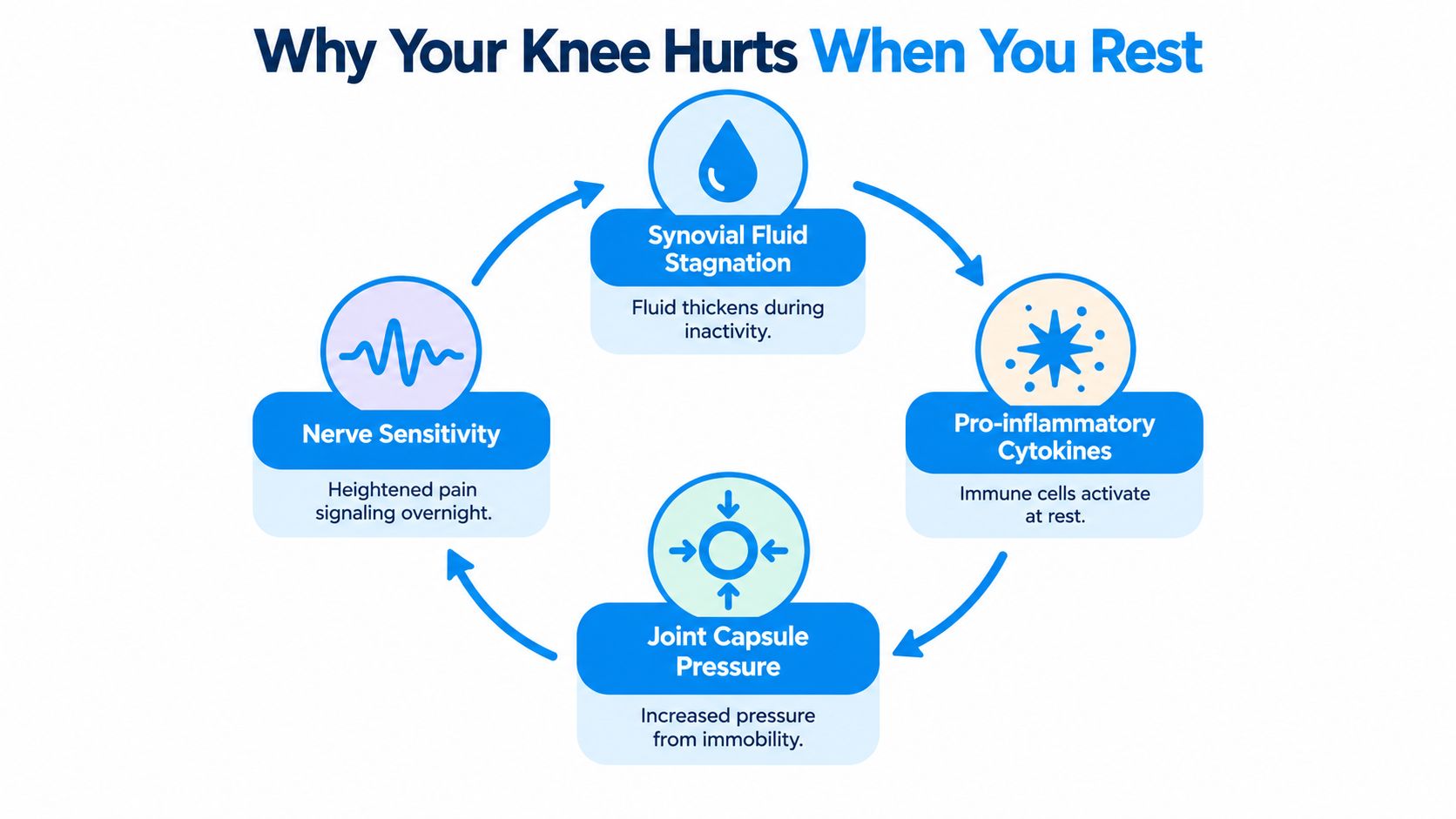
The diagram's four-part cycle is useful because it avoids an overly simple explanation. Reduced movement may contribute to stiffness. Inflammatory mediators may make local nerve endings more responsive. Joint pressure may become uncomfortable. The nervous system may then interpret ordinary sensations as more threatening.
Why poor sleep can amplify tomorrow's pain
The relationship runs in both directions. Pain interrupts sleep, and fragmented sleep can leave the nervous system less able to regulate pain the following day. In a cohort analysis, nocturnal knee pain prevalence rose from 13.3% to 25.5% among people with knee osteoarthritis and central sensitization. The same evidence linked restless sleep with worse pain and function, while psychophysical factors explained 30% to 45% of the variability in experimental knee pain responses (evidence on central sensitization, sleep, and knee pain).
This doesn't mean that every night flare proves central sensitization. It means that repeatedly treating the problem as a pillow issue may miss an important part of the picture. Positioning can reduce mechanical irritation, but a complete plan may also need to calm local irritation, preserve comfortable movement, and protect sleep continuity. For a plain-language explanation of the condition itself, see what osteoarthritis knee pain means.
Optimizing Sleep Posture and Environment
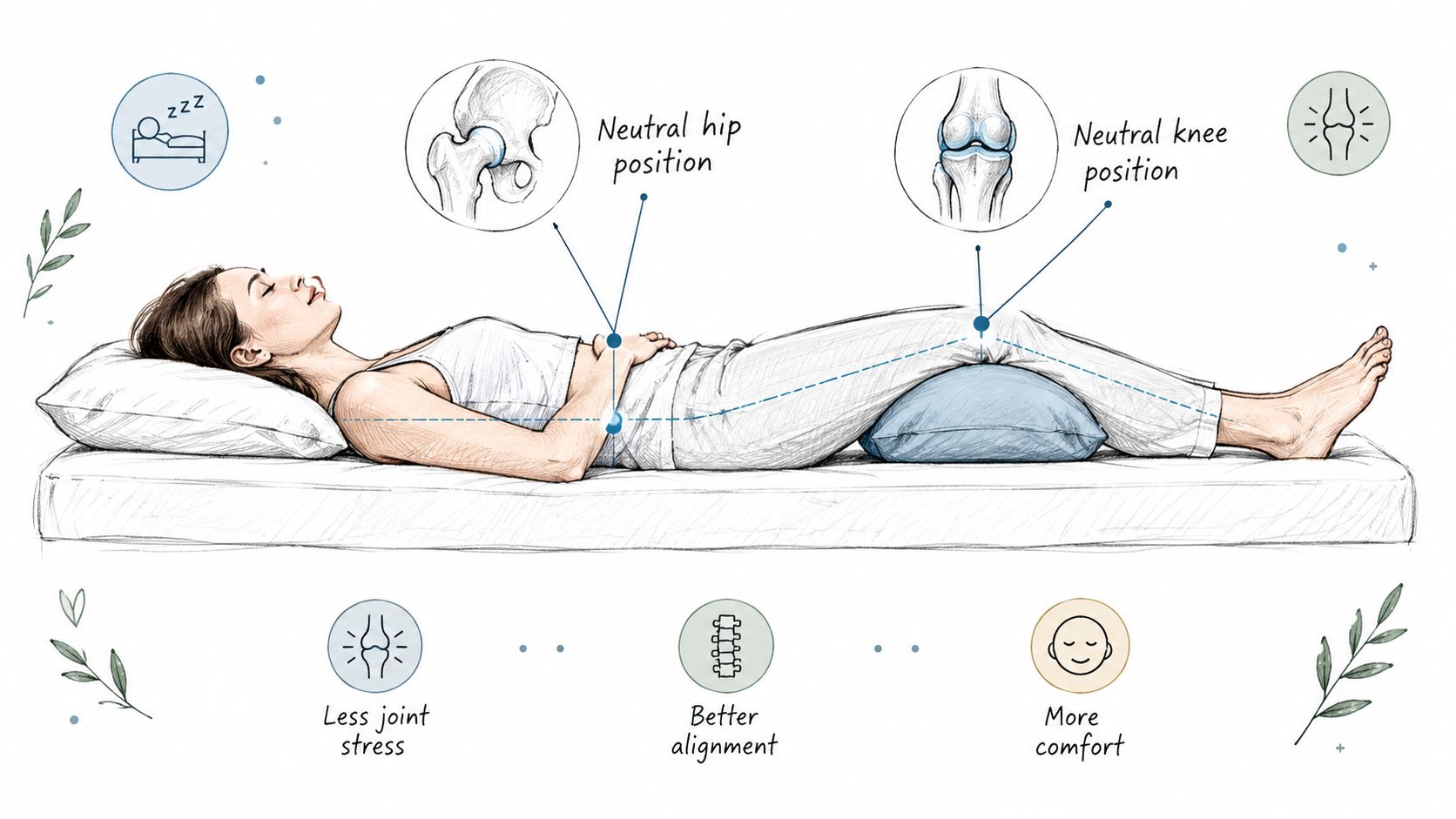
Start with alignment, not an expensive gadget. Your goal is to keep the hip, knee, and ankle supported without forcing the knee into a sharply bent or twisted position for hours.
Set up your position
Try these adjustments one at a time so you can tell what helps:
- Back sleeping: Place a supportive pillow beneath the knees. A small bend can reduce the feeling of pulling behind the joint without holding the knee in a tightly folded position.
- Side sleeping: Lie on the side that feels more comfortable and place a pillow between the knees. Extend the support far enough to keep the upper leg from dropping forward and twisting the pelvis.
- Direct pressure: Avoid lying directly on a tender knee if that position creates throbbing or localized soreness.
- Elevation: If swelling is part of your symptoms, a gentle leg-support arrangement may feel better than stacking several pillows directly under the knee.
- Position changes: If you wake stiff, make a small adjustment rather than forcing the joint abruptly into a new angle.
A mattress that sags can pull your pelvis and legs out of alignment. A surface that feels excessively hard may concentrate pressure over the knee. You don't need a particular firmness label to begin. Notice whether your hips sink unevenly, whether your knee rolls inward, and whether you can change position without fighting the mattress.
Temperature also matters. Some people feel better with gentle warmth before bed, while others prefer a cooler room or a brief cool application after an active day. Avoid extremes that leave the skin hot, numb, or irritated. A breathable sleep layer can help prevent sweating and repeated waking.
If you're considering a bed that changes your angle rather than relying on stacked pillows, this overview of adjustable bases from Vinson Fine Furniture offers useful context about how adjustable support works. It isn't a substitute for medical assessment, but it may help you think through the ergonomics of your sleep setup.
Test the setup for several nights
Keep a short note of your sleep position, the first time you woke, and what changed the discomfort. Don't judge a setup after one restless night. Pain naturally varies, and a new pillow may also feel unfamiliar at first.
A rigid brace isn't automatically better. If a support restricts movement, creates pressure behind the knee, causes tingling, or leaves marks, stop using it and ask a clinician whether it is appropriate. Guidance on the question of whether you should sleep with a knee brace can help you weigh support against overnight comfort.
A short demonstration can also make alignment easier to understand:
The Role of Infrared Recovery Wear
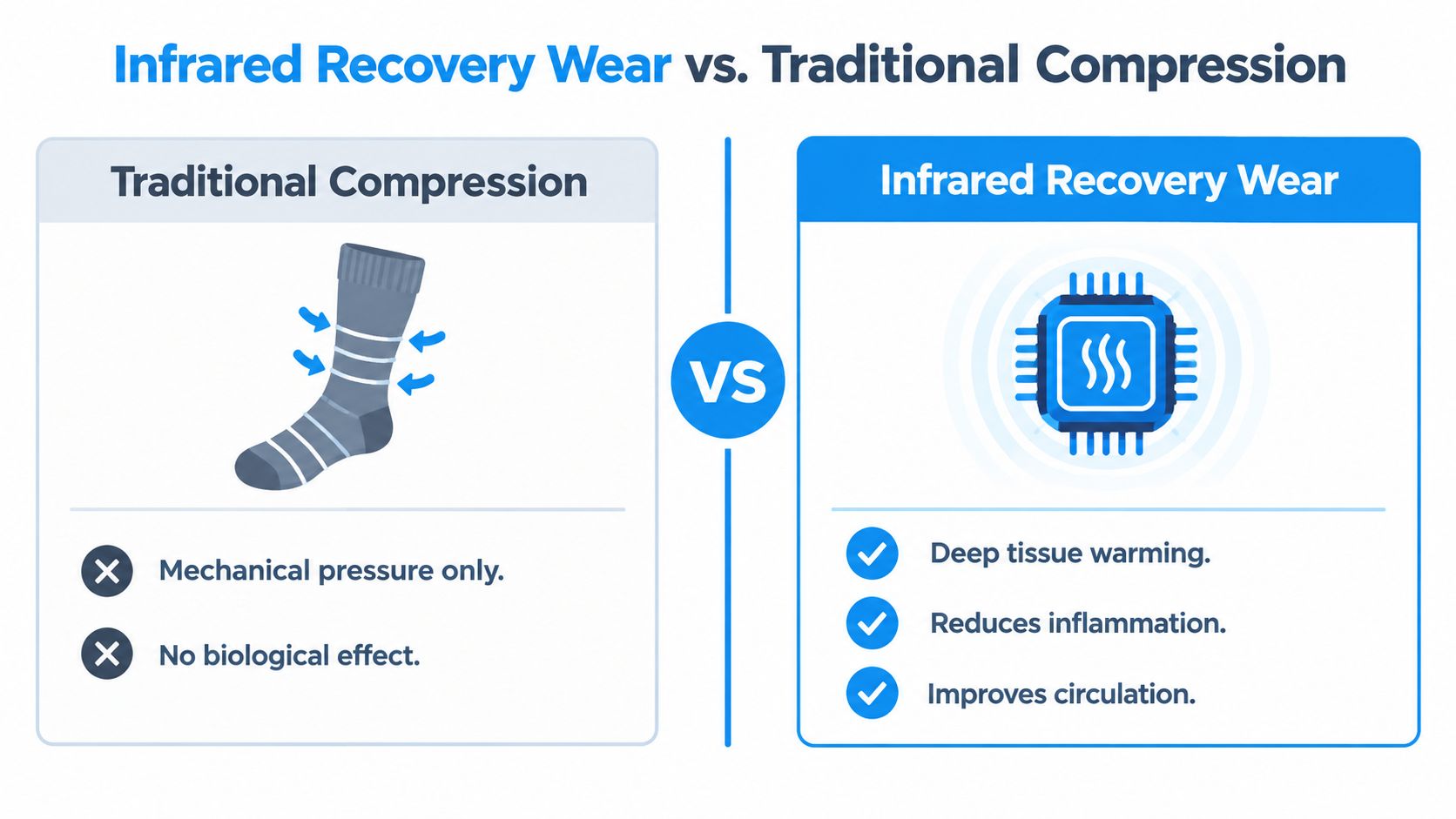
A pillow changes position. A medication may reduce symptoms for a limited period. A temporary heat pack warms the area until it cools. Non-compression infrared recovery wear takes a different approach by providing a wearable layer of gentle, ongoing support during rest and light activity.
Semiconductor-integrated fabrics are designed to respond to body heat and reflect it back toward the tissue as infrared energy. Thermo Recovery Wear describes its garments as non-compression products intended to support local warmth and circulation, rather than squeezing the knee mechanically. That distinction may matter to people who find tight sleeves uncomfortable, especially when they want to wear a support through the night.
The proposed benefit is not that fabric can reverse osteoarthritis. It is that a comfortable thermal layer may help some people manage the sensations that make rest difficult, such as stiffness, a cool or achy feeling, and discomfort after prolonged inactivity. Infrared wear should be viewed as an adjunct to clinical care, movement, positioning, and any treatment plan prescribed for you.
Why non-compression can be practical overnight
Traditional compression applies external pressure. That can be useful for selected conditions, but it isn't comfortable for everyone, and an overly tight garment may cause pressure, skin irritation, or a feeling of restriction. A non-compression design aims to stay flexible while allowing normal changes in position.
Material choice also affects whether someone will use a garment consistently. Bamboo and charcoal textiles are used in Thermo Recovery Wear's product range for moisture management and thermal comfort, with the brand identifying the material as suitable for sensitive skin. Check the fit and care instructions, and inspect your skin after initial wear. Stop if you develop persistent redness, itching, numbness, or worsening discomfort.
A recovery garment should make rest easier, not become another source of pressure you have to tolerate.
The approach is most sensible when you can connect it to a specific problem. If your knee feels stiff after lying still, gentle warmth may be worth trying. If pain is sharp, radiating, associated with marked swelling, or unchanged by any position, a wearable layer shouldn't delay an assessment. Learn more about the proposed mechanism in this explanation of infrared light therapy for knee pain.
Use the garment according to its instructions, and don't combine it with a heating device unless the manufacturer and your clinician say that combination is safe. People with reduced sensation, circulation disorders, or difficulty monitoring their skin should seek professional guidance before using any thermal product.
Balancing Medications and Daytime Habits
Night pain often reflects the entire day. A long period of sitting can leave the knee stiff. A demanding walk, repeated stairs, or a high-impact evening workout can leave tissues more irritated by bedtime. The most effective routine usually combines symptom management with choices that reduce unnecessary loading earlier in the day.
Compare the available tools
Medication may be appropriate, but it needs individual guidance. A clinician or pharmacist can help you consider options such as a topical nonsteroidal anti-inflammatory drug or a carefully timed oral medicine, taking into account allergies, kidney health, stomach risks, cardiovascular history, and other medicines. Don't use a product because pain has interrupted sleep before, and don't assume an over-the-counter medicine is harmless for long-term use.
Non-drug strategies have a different role:
- Pacing: Break demanding tasks into smaller periods instead of doing everything during a single pain-free window.
- Low-impact movement: Comfortable walking, cycling, water exercise, and prescribed strengthening can maintain function without the repeated impact of running or jumping.
- Evening mobility: Gentle heel slides, ankle pumps, and easy knee bends may reduce the sense of stiffness. Stop if the movement produces sharp or escalating pain.
- Recovery timing: Finish strenuous activity early enough to notice whether the knee is becoming warmer, more swollen, or more painful before bed.
- Footwear and surfaces: Supportive shoes and stable walking surfaces can reduce avoidable irritation during the day.
The point isn't to keep the knee motionless. Too much rest can increase stiffness, while too much loading can increase evening symptoms. A physical therapist can help you find the middle ground by adjusting range, resistance, repetitions, and recovery time.
Treat supplements cautiously
Supplements are often marketed as a simple answer to joint pain, but product quality, interactions, and evidence vary. Discuss any supplement with a healthcare professional, particularly if you take anticoagulants, have a chronic condition, or are preparing for a procedure. This resource on supplements for joint pain can help you prepare questions, but it shouldn't replace individualized medical advice.
Keep a symptom diary that connects daytime activity with nighttime results. Over time, you may see that a moderate activity level supports sleep, while either complete inactivity or a late burst of strenuous exercise makes the knee more reactive.
When Night Pain Signals a Deeper Issue
Assuming every nighttime flare is ordinary osteoarthritis can delay the right diagnosis. Osteoarthritis may be the main cause, but nighttime pain can also coexist with another joint problem, nerve irritation, an injury, or a sleep disorder.
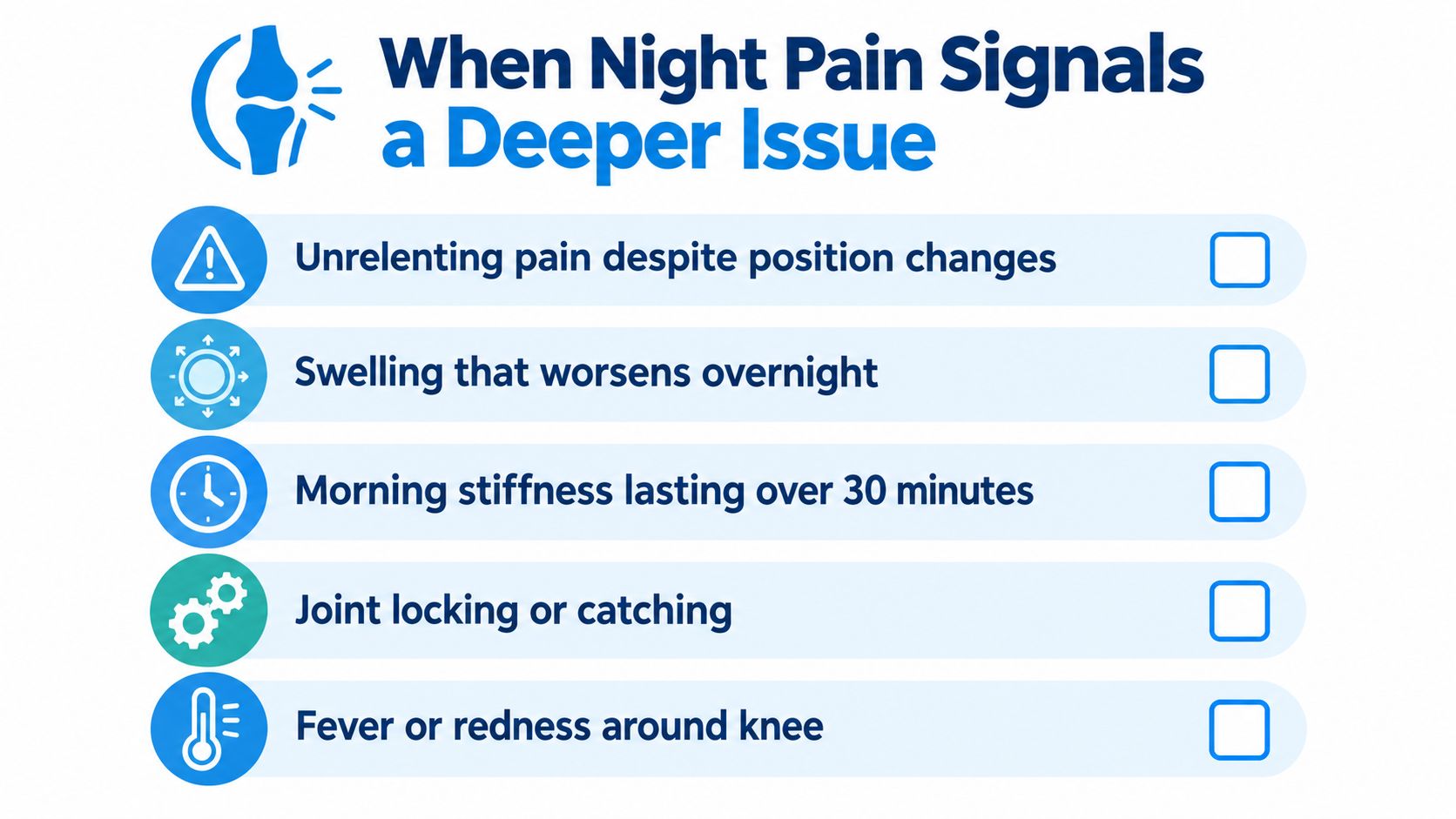
Seek prompt medical advice if pain comes with fever, spreading redness, sudden severe swelling, an inability to bear weight, or a recent significant injury. Pain that radiates down the leg, produces new numbness or weakness, or is accompanied by repeated giving way also needs evaluation rather than a new pillow alone.
Consider causes beyond the knee
A joint that locks or catches may need a different assessment from a knee that produces a diffuse, familiar ache. Marked warmth, rapidly worsening swelling, or persistent pain in several positions can also change the urgency of the situation. Don't use the absence of daytime pain as proof that nothing important is happening.
Sleep itself may be part of the problem. Arthritis organizations advise considering physical sleep disruptors such as sleep apnea when sleep remains poor, and knee pain can also have causes beyond osteoarthritis (guidance on osteoarthritis and sleep). Loud snoring, witnessed pauses in breathing, gasping, morning headaches, or significant daytime sleepiness are reasons to discuss a sleep evaluation with a clinician.
Persistent night waking is a health concern, not only a comfort concern.
Make an appointment if pain repeatedly interrupts sleep, gradually worsens, or fails to respond to reasonable changes in position and activity. Bring a concise record of when the pain starts, whether swelling appears, what wakes you, and whether the symptoms improve after movement. Those details can help distinguish position-dependent discomfort from a more persistent pain pattern.
Building Your Long-Term Relief Routine
A sustainable plan should be simple enough to repeat on a difficult day. Think in terms of reducing the total irritation reaching bedtime, then making the sleeping environment less demanding on the knee.
A practical daily sequence
During the day, alternate activity with short movement breaks instead of staying in one position for long periods. Use low-impact exercise and strengthening that a physical therapist has approved, and scale back if a particular activity reliably produces a nighttime flare.
In the evening, allow time for a gradual transition. Try gentle range-of-motion work, arrange your pillow support, and choose either mild warmth or cooling based on what your knee tolerates. Avoid testing several new interventions at once, because you won't know which one helped or caused irritation.
At bedtime, use the alignment that keeps the knee neutral and supported. If you use non-compression infrared recovery wear, check that it fits comfortably, doesn't create pressure points, and leaves your skin normal after wear. Follow the product instructions and treat it as a complement to, not a replacement for, medical care.
If you wake, avoid repeatedly forcing the knee into a painful stretch. Make a small position change, take a few slow breaths, and use gentle movement if that normally helps. Record the episode briefly the next morning rather than turning the night into a detailed troubleshooting session.
Central sensitization and persistent joint irritation rarely respond to one dramatic change. Consistency gives you a clearer picture of what supports sleep, while a symptom record helps your clinician make better decisions if the problem continues.
Thermo Recovery Wear offers non-compression infrared knee sleeves made for comfortable wear during rest and light daily activity, including garments using semiconductor-integrated and bamboo charcoal materials. Visit Thermo Recovery Wear to review the knee recovery options and choose a wearable, non-drug support that fits your nighttime routine.


