


The popular advice is to attack joint pain with more: more support, more compression, more gadgets, and more aggressive treatment. That approach often fails in daily life. A brace that feels restrictive, an exercise plan that triggers a flare, or a device that takes too much effort to use usually ends up abandoned.
Effective joint pain management is often less dramatic. It combines regular, tolerable movement with sensible recovery, symptom-guided pacing, and support that fits your everyday life. Heat, water-based exercise, walking, strengthening, and a comfortable wearable may each have a role, but none should replace diagnosis, rehabilitation, or a plan you can maintain.
Table of Contents
- Rethinking How We Treat Chronic Joint Discomfort
- The Reality of Osteoarthritis and Chronic Wear
- Dosing Movement for Joint Health and Mobility
- Thermal Therapies and Infrared Recovery Wear
- Evaluating Adjunct Therapies and Support Gear
- Recognizing When to Seek Professional Medical Care
- Building a Sustainable Daily Joint Care Routine
Rethinking How We Treat Chronic Joint Discomfort
Chronic joint discomfort doesn't automatically call for an aggressive intervention. For many adults with stable osteoarthritis symptoms, the practical challenge isn't finding the most powerful treatment. It's finding a routine that reduces stiffness enough to keep moving without creating new irritation.
Tight compression gear is a good example. Some people appreciate the stability and sensory feedback, while others experience pressure, heat, skin irritation, or reduced comfort during long wear. A support that works in a clinic or during a short walk may be a poor choice for desk work, sleep, travel, or light household activity. If you remove it repeatedly, its theoretical benefit matters less than its real-world usefulness.
A more sustainable approach starts with consistency rather than intensity. The aim is to preserve movement, maintain muscle support, and make everyday activity less threatening to the joint. That can mean a short walk, controlled strengthening, a few mobility drills, or warmth before activity. The right choice depends on the joint involved, your symptoms, and your ability to tolerate the load.
Why low-burden care tends to last
Pain can create a self-reinforcing cycle. You move less because movement hurts, muscles become less prepared for load, ordinary tasks feel harder, and the next flare becomes more likely. Breaking that cycle doesn't require an elaborate home gym. It requires a dose of activity that your body can absorb and that you can repeat.
Use your symptoms as information, not as a score you must defeat. Mild, manageable discomfort during an exercise may be acceptable, but a sharp increase in pain, new swelling, or a prolonged worsening response signals that the dose or technique needs adjustment.
Practical rule: The best support is the one that helps you stay active without making the routine feel like another medical task.
For a plain-language explanation of possible contributors to persistent symptoms, this overview of what causes chronic joint pain can help you frame the problem before choosing an intervention. The key shift is simple: stop asking which treatment sounds strongest and start asking which combination supports comfortable movement often enough to protect function.
The Reality of Osteoarthritis and Chronic Wear
Osteoarthritis is not a minor inconvenience reserved for a small group of people. In 2019, about 528 million people were living with osteoarthritis worldwide, representing a 113% increase since 1990, and the knee was the most frequently affected joint, with 365 million cases globally according to the World Health Organization's osteoarthritis fact sheet. Newer estimates place the burden at about 607 million people in 2021, equal to 7.7% of the global population, which reinforces why long-term, non-surgical care remains central.
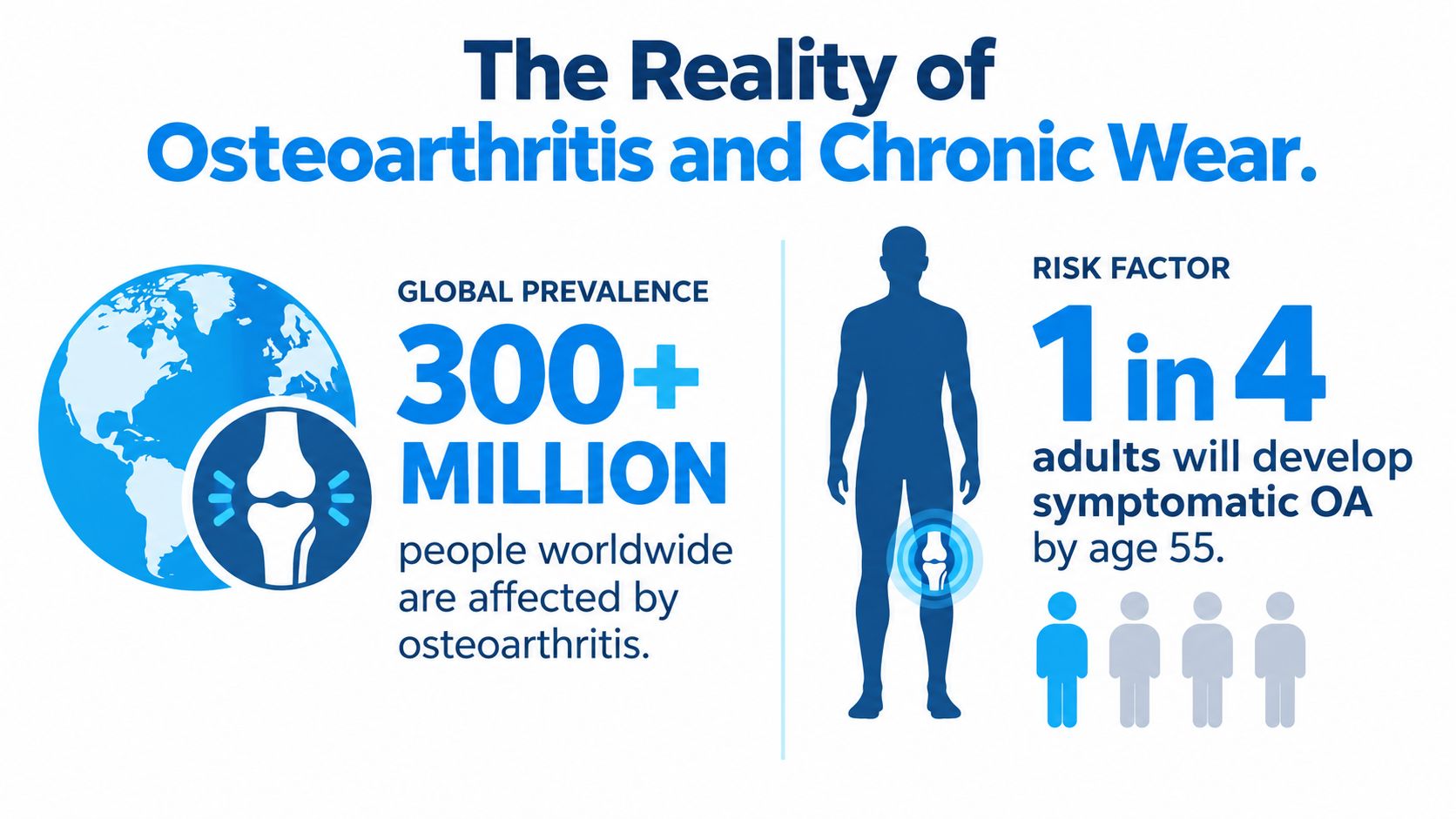
The condition commonly affects weight-bearing joints such as the knees and hips. Cartilage becomes less effective at providing a smooth, shock-absorbing surface, while surrounding tissues and muscles also influence pain, stiffness, balance, and confidence. Symptoms don't always match an image perfectly. Someone with visible structural change may function well, while another person with less obvious change may experience substantial daily limitation.
Why conservative care matters
A 2020 global analysis estimated 595 million people with osteoarthritis, or 7.6% of the world's population, and reported that total cases had increased by 132.2% since 1990. The same clinical context matters at an individual level. Epidemiology reviews describe symptomatic osteoarthritis as affecting roughly 240 million people worldwide, with adults aged 60 and older showing a marked age and sex gradient, about 10% of men and 18% of women affected in that group. These figures are summarized in the global osteoarthritis analysis indexed by PubMed.
Those numbers don't tell you which exercise, brace, or medication you'll need. They do show that chronic joint pain is a population-scale mobility problem, not evidence that you've failed to look after yourself. Since cartilage doesn't restore itself through a quick home remedy, management focuses on preserving function, reducing avoidable aggravation, and keeping treatment proportional to the problem.
For readers looking for another accessible discussion of conservative options, this joint pain relief guide for Utah offers additional context. A practical plan may include physical therapy, activity modification, weight-related support when appropriate, symptom relief, and professional review when function continues to decline. The goal isn't to pretend the joint is unchanged. It's to help you use it more confidently for as long as possible.
More practical guidance on living with osteoarthritis is available in this resource on how to help osteoarthritis. Keep the focus on capacity, not perfection. A joint that tolerates regular daily movement is usually more useful than one protected so aggressively that activity becomes intimidating.
Dosing Movement for Joint Health and Mobility
Exercise works best when you treat it like a dose, not a test of character. Too little movement allows weakness and avoidance to build. Too much, especially after a good day, can provoke a flare that makes you stop altogether.
Major arthritis guidance recommends about 150 minutes per week of moderate-intensity activity plus two days per week of strengthening work, as outlined by the Arthritis Foundation's exercise guidance for osteoarthritis. Some osteoarthritis cohorts have shown functional improvement with as little as 45 minutes per week, so a lower starting point can still be meaningful when a full schedule feels unrealistic.
Start with a dose you can repeat
Choose one activity and make the first version deliberately manageable.
- Walking: Use a pace that raises effort without forcing you to limp or brace against pain. Split the session into shorter bouts if continuous walking feels too demanding.
- Cycling: A stationary bike can provide repetitive knee motion with less impact than running. Adjust the seat so you aren't forcing the knee into an uncomfortable range.
- Water-based exercise: Pool walking or aquatic classes reduce the demand of body weight and may be easier during a painful period.
- Strengthening: Use controlled sit-to-stands, supported step work, resistance bands, or light weights to train the muscles that help manage joint load.
- Tai chi: Slow, deliberate movement can challenge balance, coordination, and confidence without requiring high-impact activity.
Progress one variable at a time. Add a little duration before adding speed, or add repetitions before increasing resistance. If symptoms are clearly worse later that day or the next morning, reduce the previous dose rather than abandoning movement altogether.
Use discomfort to refine the plan
The mechanical benefit of exercise comes from maintaining muscle support and neuromuscular control around the joint. That benefit disappears if the program is so demanding that you avoid it for several days afterward. A physical therapist can help identify whether the problem is the exercise itself, the range of motion, the speed, the surface, or the recovery interval.
If wrist pain limits upper-body training, this science-backed bench press wrist guide provides a useful example of how technique and load selection can affect a painful area. The same principle applies to knee and hip work: change the dose and setup before concluding that all exercise is unsuitable.
For a targeted starting point, review these knee mobility exercises, then select only the movements you can perform smoothly. Don't use a good day as permission to double the workload. Joint-friendly progress is usually quiet, gradual, and repeatable.
Thermal Therapies and Infrared Recovery Wear
Warmth can be useful when stiffness is the main barrier to movement. Controlled heat raises local tissue temperature and blood supply, and an expert review reports associations with improved stiffness, pain, and function in knee osteoarthritis. One review also described 9 serial mud baths at 44°C for 20 minutes over 21 days, with pain reduction lasting up to 3 months, although that type of supervised intervention shouldn't be treated as a guarantee for a home product. The findings are discussed in this review of heat therapy for rheumatic and musculoskeletal disease.
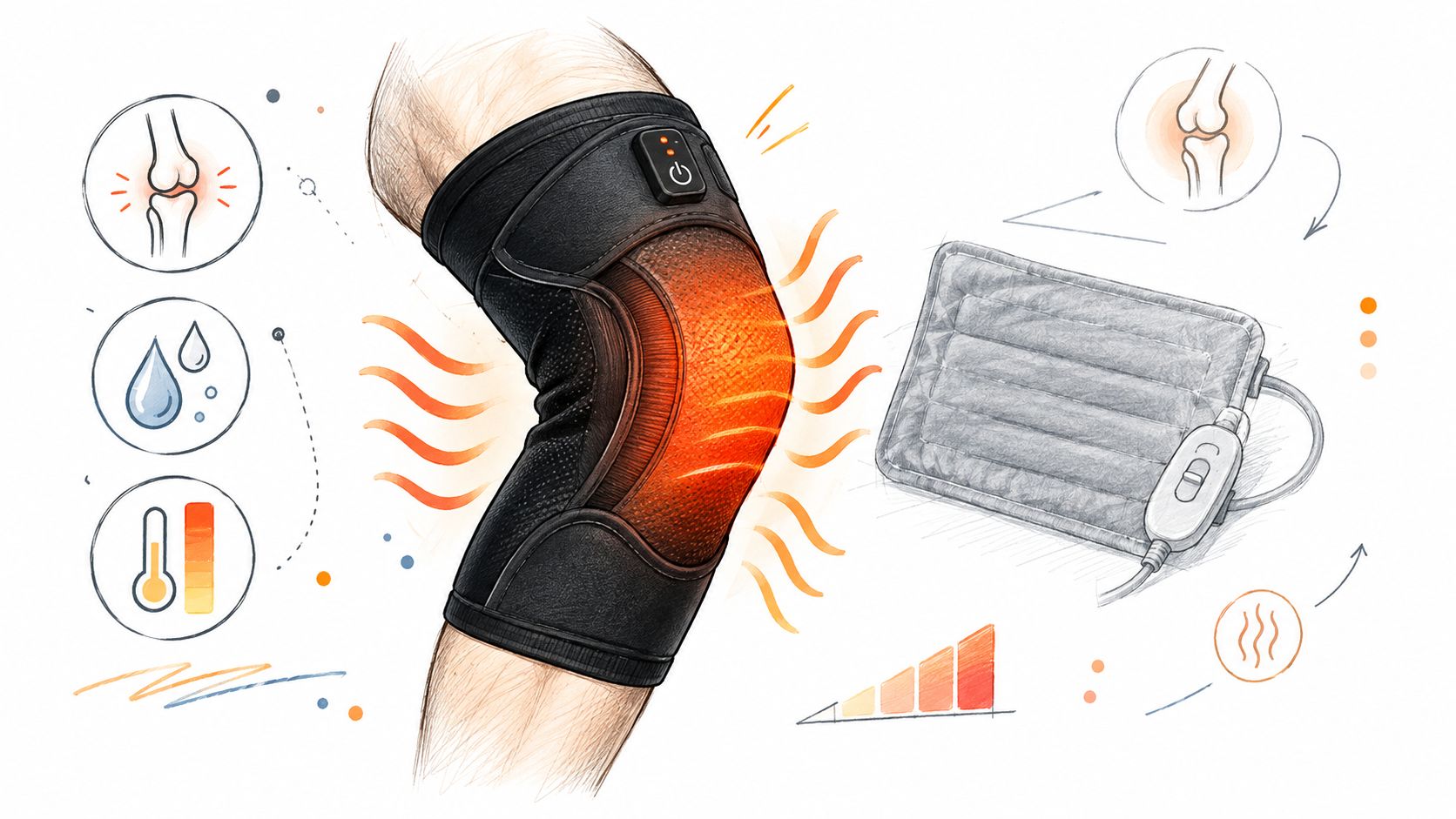
A heating pad can be helpful before mobility work, but it ties you to a socket and may become uncomfortably hot if you use it for too long. A wearable approach changes the trade-off. Instead of delivering a large burst of heat, an infrared-responsive sleeve or brace is designed to provide passive warmth while you rest or perform light activity.
What wearable warmth can and can't do
Semiconductor-embedded fabrics are intended to respond to body heat and support local warmth without the bulk of a powered heating device. A non-compressive design may suit someone who dislikes tight braces, has sensitive skin, or wants support that doesn't restrict normal movement. Moisture-wicking materials can also make extended wear more practical, though comfort and fit still determine whether the garment earns a place in your routine.
The important limitation is that wearable warmth is an adjunct, not a repair mechanism. It may reduce the sensation of stiffness enough to help you move, but it doesn't rebuild cartilage, correct instability, or diagnose the source of pain. Stop using it if it causes skin irritation, excessive heat, numbness, or worsening symptoms, and follow the manufacturer's wear and care instructions.
This short demonstration provides visual context for how a wearable thermal support may be positioned during daily recovery.
Use warmth strategically. Apply it before a morning mobility routine, during a sedentary period when stiffness builds, or alongside gentle movement. For more detail on the proposed role of infrared support, see this explanation of infrared light therapy for knee pain. The test is practical: does the support help you complete useful activity more comfortably, without adding pressure or complexity?
Evaluating Adjunct Therapies and Support Gear
The joint-care market rewards novelty, but novelty isn't the same as durable benefit. A 2026 network meta-analysis reported that knee braces ranked highest overall for pain, stiffness, and mobility, water-based therapy was especially effective for pain, and regular exercise consistently improved pain and function, while ultrasound and other high-tech approaches performed worse. These findings appear in the 2026 osteoarthritis clinical practice guideline.
That doesn't make every brace useful or every aquatic program accessible. It means the decision should start with the problem you need to solve. Do you need confidence during walking, reduced stiffness before exercise, less pain in the pool, or a way to keep training without irritating the joint?
Comparing Joint Pain Adjunct Therapies
| Therapy Type | Primary Benefit | Practical Limitation |
|---|---|---|
| Knee brace | Can provide support, sensory feedback, and help with pain, stiffness, or mobility | Fit, heat, and restriction may reduce consistent wear |
| Water-based therapy | Reduces the loading challenge while allowing movement and exercise | Requires pool access, transport, and suitable scheduling |
| Regular exercise | Builds muscle support, movement tolerance, and function | An excessive dose can trigger a flare and undermine adherence |
| Controlled heat | May ease stiffness and improve comfort before movement | Relief is generally supportive and short term, not corrective |
| Therapeutic ultrasound | A clinic-based modality marketed for symptom relief | High-tech delivery doesn't guarantee meaningful durable benefit |
| Supplements | May appeal to people seeking a simple home option | Evidence is weak, so recommendations are conditional |
| Injections | May be discussed for persistent symptoms after assessment | The evidence doesn't establish a universal preferred injection pathway |
The guideline also states that opioids shouldn't be initiated for hip or knee osteoarthritis, while evidence remains insufficient to prefer corticosteroid injections over viscosupplementation for knee osteoarthritis. That supports a measured conversation with a clinician rather than escalating automatically whenever basic care feels slow.
A wearable support can be reasonable when it improves participation. Thermo Recovery Wear offers compression-lite sleeves and braces using semiconductor-embedded, infrared-responsive fabrics, positioned as non-pharmacologic support for warmth and circulation during rest or light activity. If you're comparing options, this overview of joint pain relief products can help you assess features such as compression level, materials, intended wear, and care requirements.
Recognizing When to Seek Professional Medical Care
Home care is appropriate for familiar, stable symptoms that respond to sensible activity changes. It isn't an adequate answer for every painful joint. Sudden swelling, a new injury, marked warmth or redness, fever, or an inability to bear weight can indicate a problem that needs prompt medical assessment rather than another brace or exercise variation.
Instability deserves attention too. If the joint repeatedly gives way, locks, catches, or loses range of motion, arrange an evaluation. Those symptoms may reflect an injury, mechanical obstruction, or a condition that requires a different treatment plan.
Use function as a decision point
Pain that repeatedly disrupts sleep, prevents ordinary tasks, or fails to settle with conservative measures warrants professional review. You don't need to wait until movement becomes impossible. A clinician or physical therapist can examine the joint, review your training and daily demands, and determine whether imaging, medication advice, or a more structured rehabilitation plan is appropriate.
Seek urgent care for symptoms that appear suddenly or feel systemically unwell, especially a hot, swollen joint accompanied by fever. Also get medical advice when pain follows significant trauma, when numbness or weakness develops, or when the symptoms don't resemble your usual pattern.
A flare of established osteoarthritis may improve after a temporary reduction in load, gentle range-of-motion work, and appropriate symptom relief. A new pattern should be treated as new information. Don't use a successful past routine to explain away a symptom that now behaves differently.
Safety first: A wearable support can make activity more comfortable, but it shouldn't conceal worsening swelling, instability, or a serious injury.
Building a Sustainable Daily Joint Care Routine
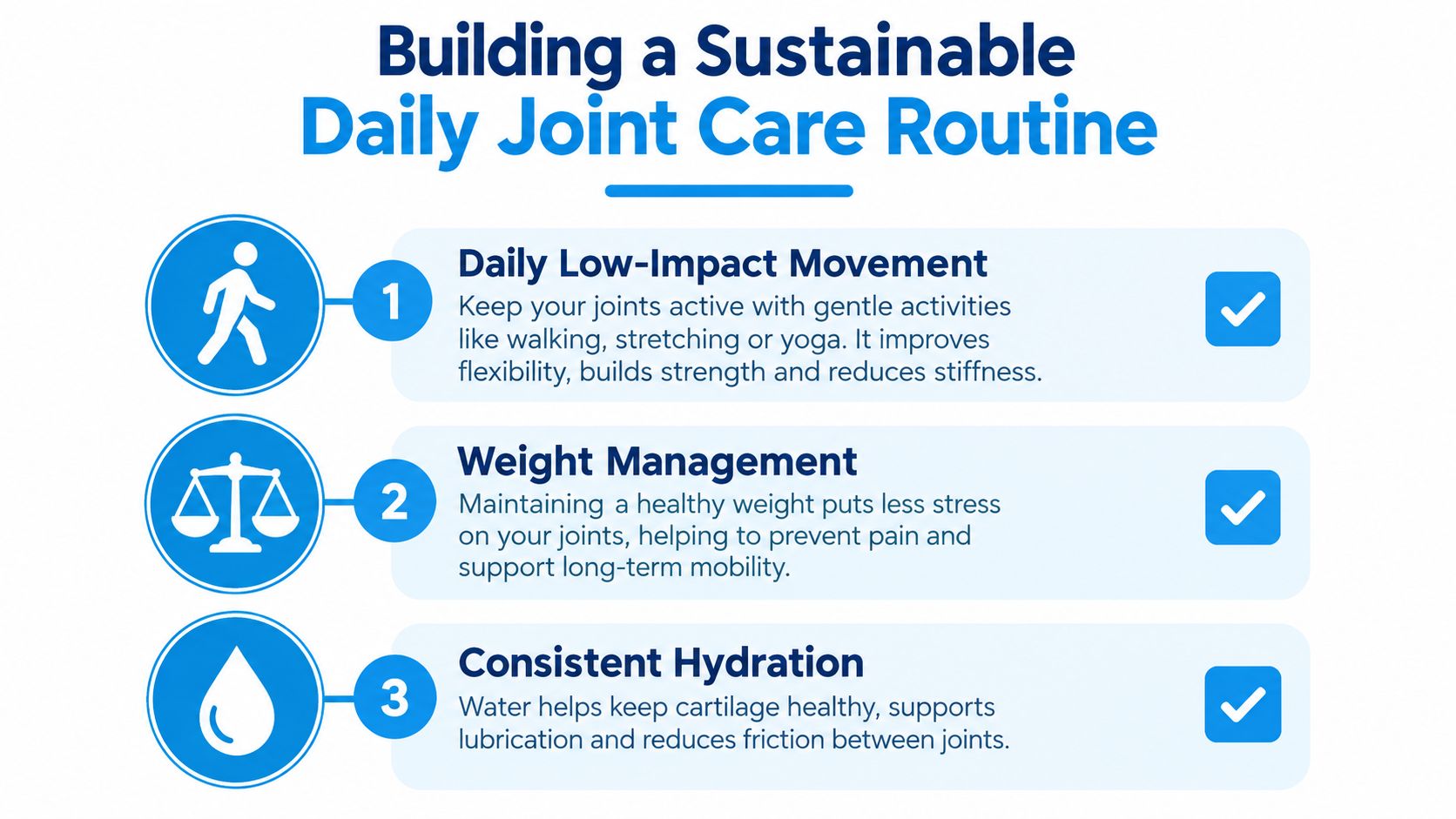
A useful routine should fit around your life rather than require you to reorganize your life around pain. Start with a small morning sequence: gentle range-of-motion movements, a brief walk around the home, and warmth if stiffness is preventing you from moving naturally. Later, add a planned low-impact activity or strengthening session, choosing a dose that leaves you able to function afterward.
Layer habits instead of collecting treatments
Think in layers, with each layer earning its place:
- Movement: Schedule walking, cycling, water-based activity, or strengthening at a time when you're most likely to follow through.
- Recovery: Use controlled warmth, rest breaks, sleep-supportive habits, and an easier session after a demanding day.
- Support: Choose a sleeve, brace, walking pole, or other aid only when it improves confidence or comfort without creating pressure or dependence.
- Monitoring: Track what you did, how the joint responded later, and whether the routine helped you complete meaningful tasks.
The most useful measure isn't whether the joint feels perfect. It's whether you can stand, walk, train, work, climb stairs, or sleep with fewer interruptions. Adjust the routine when symptoms change, and ask for professional guidance if the adjustment isn't enough.
Keep the plan deliberately ordinary. Put the walking shoes where you'll see them, keep resistance bands near the chair, and use wearable warmth during a predictable sedentary period rather than waiting for a severe flare. A low-burden habit repeated consistently can contribute more to long-term mobility than an expensive intervention you rarely use.
Thermo Recovery Wear offers compression-lite infrared-responsive sleeves and braces for the knee, ankle, wrist, elbow, back, and shoulders, designed to provide non-compressive warmth during rest or light activity. Visit Thermo Recovery Wear to review the available recovery wear and choose support that fits your daily joint pain management routine.


