


You wake with a dull ache in your wrist, shake out your hand, and notice the familiar tingling in your fingers. By morning, the discomfort has eased, but typing, gripping a mug, or turning a door handle brings it back. A wrist brace may help in that situation, but its purpose is often misunderstood. A brace can manage symptoms by limiting irritating movement or holding the wrist near neutral. It can't identify the underlying problem or guarantee a cure.
Table of Contents
- Understanding Wrist Pain and Why Support Matters
- Top Medical Conditions That Require a Wrist Brace
- How to Wear a Wrist Brace for Maximum Relief
- Acute Injuries and the Role of Bracing in Recovery
- The Balance Between Support and Mobility
- Comparing Rigid Braces and Recovery Sleeves
- When to See a Doctor About Your Wrist Pain
Understanding Wrist Pain and Why Support Matters
The wrist is a compact meeting point for bones, ligaments, tendons, muscles, and nerves. That arrangement gives your hand the precision needed for typing, lifting, writing, and gripping, but it also means that repeated pressure or an awkward position can irritate several different tissues. Pain in the wrist may come from a sprain, overuse, tendon irritation, arthritis, or compression of a nerve.
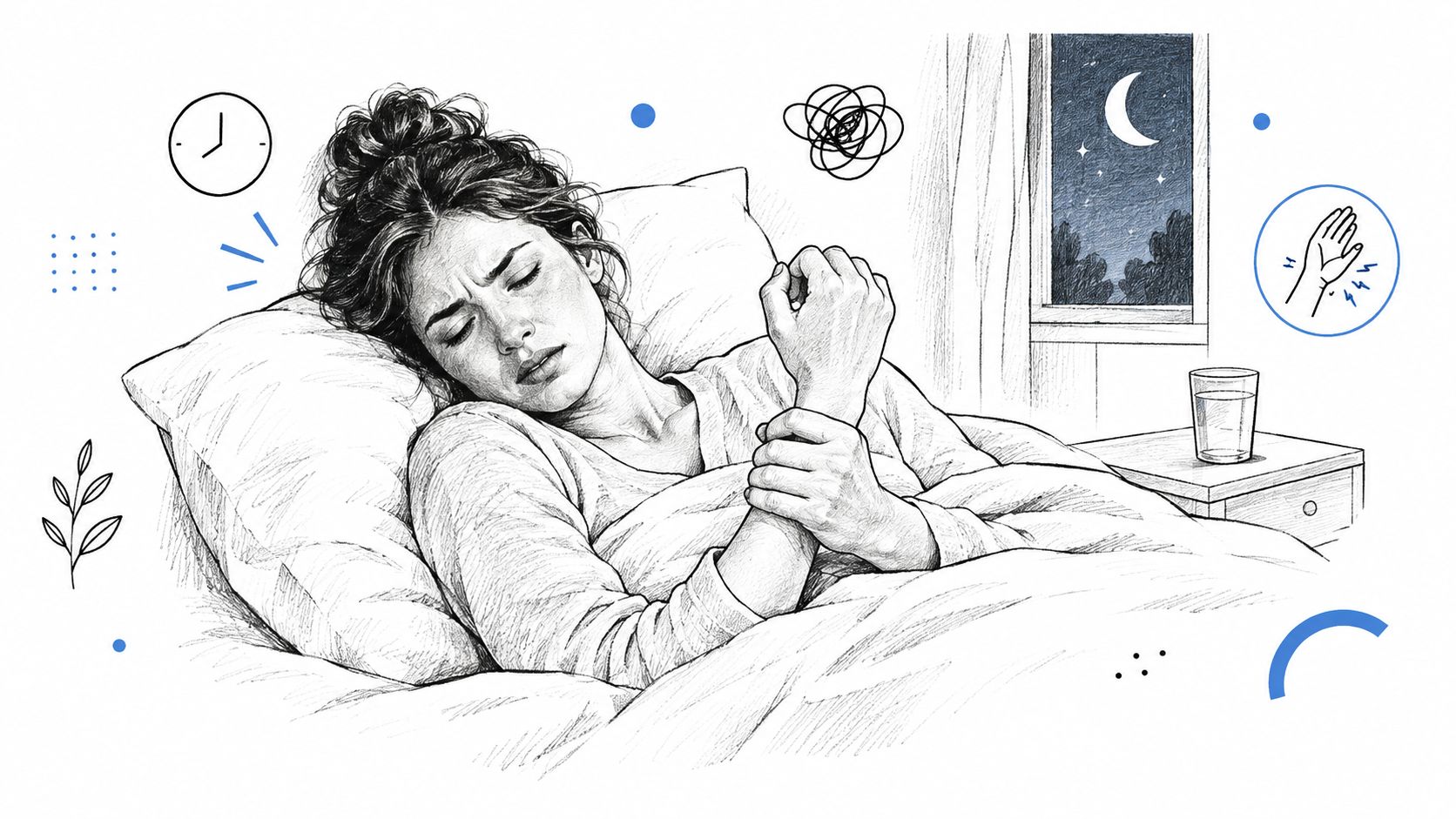
Sleep often makes symptoms more noticeable. Many people bend their wrists while resting, and that sustained position can aggravate nerve-related tingling or aching. A brace that keeps the wrist closer to neutral may reduce that repeated flexion or extension, giving irritated tissues a quieter environment overnight.
What support can and can't do
A brace creates an external limit. It may stop you from moving through the angle that causes pain, reduce unwanted wrist motion during a task, or provide a reminder to avoid forceful gripping. Those effects can make everyday activity more tolerable while the cause is being assessed or treated.
The distinction matters. Symptom relief isn't the same as diagnosis. If a brace makes pain less noticeable, you still need to consider why the pain began and whether the pattern is changing. A practical look at wrist symptoms that extend toward the forearm is available in this guide to pain from the wrist to the elbow.
Practical rule: Use a brace to support a specific movement problem, not to ignore symptoms that are becoming more severe.
A broader assessment may also consider how the shoulder, elbow, hand, posture, and daily movement patterns work together. Resources on a whole body approach to movement can help explain why wrist discomfort sometimes needs more than local support. The brace is one tool within that picture, not the entire plan.
Top Medical Conditions That Require a Wrist Brace
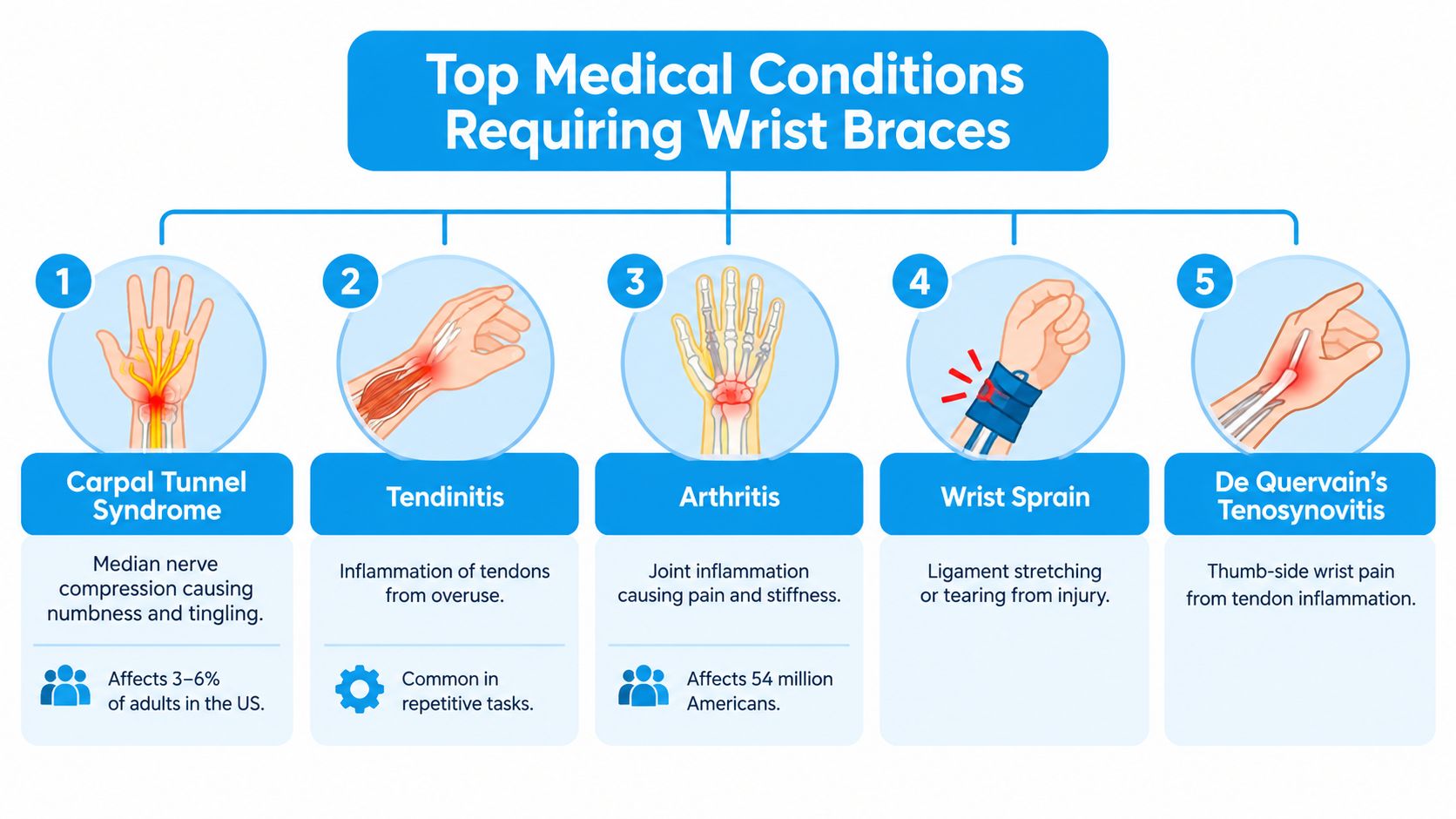
A wrist brace is most useful when its design matches the condition. A neutral-position splint for nighttime nerve symptoms serves a different purpose from a semi-rigid brace used after a sprain. The word “brace” describes a category of supports, not a single treatment.
Carpal tunnel syndrome
Carpal tunnel syndrome involves irritation or compression of the median nerve as it passes through the wrist. Bending the wrist for long periods can increase pressure in the carpal tunnel, so a splint that holds the wrist near neutral may reduce a common nighttime trigger.
A 2024 systematic review and meta-analysis examined 30 studies involving 5,311,785 individuals and estimated overall carpal-tunnel-syndrome prevalence at 14.4%, with a 95% confidence interval of 6.7% to 28.2%. The review estimated prevalence at 11.4% in low- and middle-income countries and 16.9% in high-income countries. These figures come from the systematic review and meta-analysis, and they show why wrist-related nerve symptoms are a common reason people seek support.
Evidence for braces is more cautious than product marketing often suggests. A Cochrane review found that splinting for fewer than three months may not improve symptoms or hand function compared with no intervention, although people using night splints tended to report greater overall improvement. That means a brace may be a reasonable conservative option, especially at night, but it shouldn't replace evaluation when numbness or weakness persists.
For help distinguishing nerve symptoms from tendon irritation, compare the patterns described in this resource on the difference between carpal tunnel and tendonitis.
Tendon irritation and arthritis
Tendinitis or other tendon irritation can make repeated gripping, lifting, or wrist motion painful. A brace may temporarily reduce the movement that loads an irritated tendon, but the correct support depends on the tendon involved and the activity causing symptoms.
Arthritis can produce aching, stiffness, tenderness, and reduced control. A brace may stabilize the joint during a flare or demanding task, while a softer sleeve may feel more comfortable when the goal is warmth and light support. People looking after older relatives may also find this overview of practical health advice for seniors useful when considering broader day-to-day support.
How to Wear a Wrist Brace for Maximum Relief
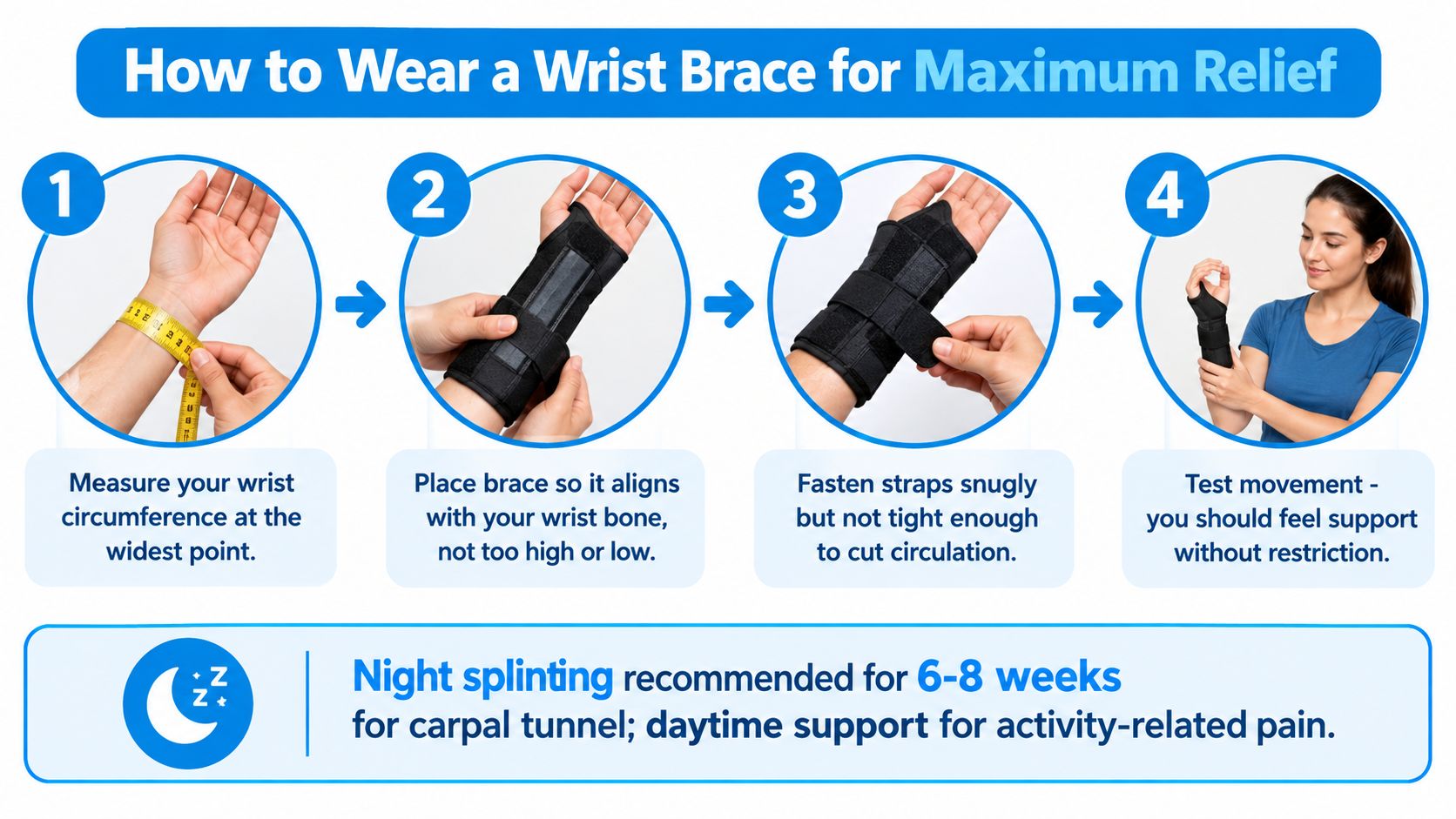
Start with the reason you're wearing it. Nighttime support makes sense when symptoms appear during sleep or when you wake with tingling. Daytime use is more appropriate when a particular activity, such as typing, gripping, or lifting, reliably provokes symptoms.
A safer fitting sequence
- Measure carefully. Use the manufacturer's sizing guidance and measure where it instructs. A brace that's too large may shift, while one that's too small can create pressure points.
- Position the support. Place the brace so it supports the wrist joint without pressing into the palm or sitting unnecessarily high on the forearm. Your fingers should remain free to move unless a clinician has prescribed more extensive immobilization.
- Secure it gently. Fasten the straps until the brace feels stable, not until it feels tight. Check the fingers after fitting. New or increasing tingling, numbness, color change, swelling, or throbbing indicates that you should loosen or remove the brace.
- Test the task. Move your fingers and perform a light version of the activity. You should feel controlled support, not painful pressure or complete loss of useful movement.
A practical clinical protocol for carpal tunnel symptoms is nighttime wear for approximately 6 weeks, with daytime use considered when activities repeatedly trigger symptoms, as described in this clinical evidence review. The exact schedule may differ after an injury, so don't apply a nighttime routine to a fracture or significant sprain without professional advice.
For additional guidance when the thumb is involved, see this explanation of how to wear a wrist brace with thumb support.
A brace should support a plan, not become a substitute for movement forever. Remove it for clinician-approved exercises or gentle movement, and inspect the skin regularly. If the brace increases symptoms instead of settling them, stop using it and reassess the fit and diagnosis.
Acute Injuries and the Role of Bracing in Recovery
After a fall, twist, or forceful extension, a brace can reduce painful motion while the injured tissue settles. Wrist sprains commonly occur in athletic and occupational settings, but overuse at work, at home, or during ordinary activities can also contribute. Hyperextension is a common mechanism, and the scapholunate ligament is identified as the most common form of carpal instability in the clinical reference from StatPearls on wrist sprains.
For a mild acute sprain, rest, elevation, and ice followed by early mobilization may lead to improvement within 24 to 48 hours, according to that same reference. Moderate-to-severe injuries may need a semi-rigid brace, soft lace-up brace, or forearm splint. The choice should reflect the injury's severity, stability, and examination findings.
Protection should change as healing progresses
A brace works through controlled limitation. It prevents a painful motion from repeatedly stressing a ligament or irritated tissue, but it doesn't repair that tissue by itself. As pain settles and stability improves, a clinician or therapist may introduce gradual movement so the wrist doesn't remain unnecessarily stiff.
Stable distal-radius injuries follow a similar principle. Orthopedic guidance supports considering early mobilization from a removable support when the fracture is stable, while rehabilitation guidance describes shorter immobilization combined with hand movement and swelling-control exercises, followed by wrist range-of-motion work when clinically appropriate. The British Orthopaedic Association guidance on distal radial fractures links the schedule to healing status and stability, not to a universal wear rule.
Controlled protection is different from permanent immobilization.
Once a healthcare professional has cleared movement, supportive habits such as those described in this resource on staying active with healthy joints can complement recovery. After an uncomplicated injury, practical guidance on how to heal a sprained wrist can help you understand why protection and gradual movement belong together.
The Balance Between Support and Mobility
A tighter brace isn't automatically a better brace. Excess pressure can irritate the skin, restrict circulation, compress sensitive tissues, and make the hand harder to use. A support that leaves the fingers pale, cold, numb, or increasingly tingly has failed its most basic purpose.
Why mobility still matters
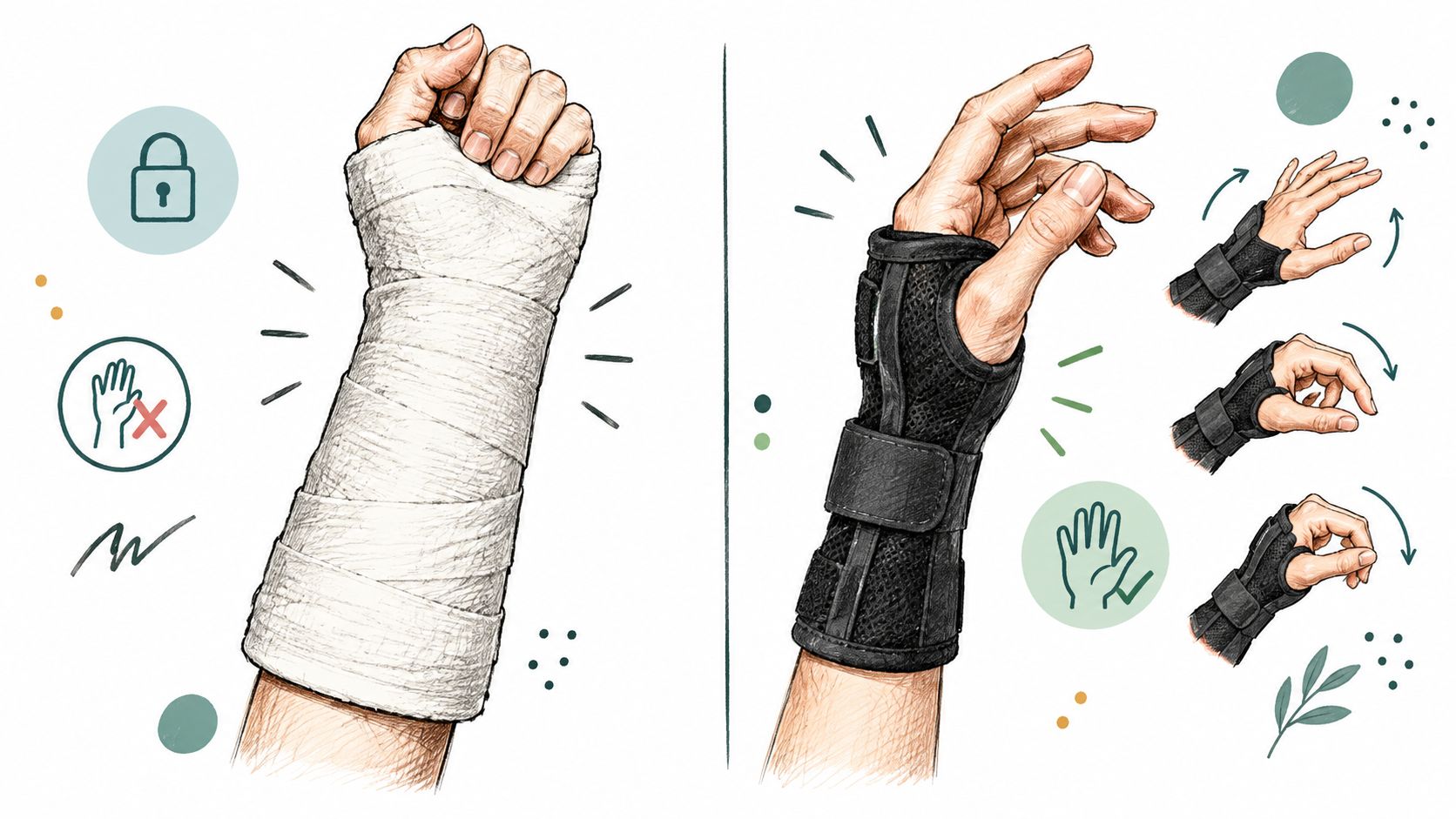
Immobilization can be valuable after selected injuries, but unnecessary immobilization can increase stiffness and delay functional recovery. Your wrist, hand, and forearm also need appropriate movement to maintain coordination and usable strength. That doesn't mean forcing a painful range. It means allowing the movement that your condition and clinician permit.
A flexible support may be suitable for a light task when you need a reminder to keep the wrist aligned but don't need strict immobilization. A rigid splint may be more appropriate when a clinician wants to restrict a specific motion during healing. The right level of support depends on the problem, not on how substantial the brace looks.
- Too loose: The brace shifts and fails to control the aggravating movement.
- Too tight: The brace creates pressure, tingling, swelling, or circulation changes.
- Too long: Continuous restriction may contribute to stiffness and reduced use of the supporting muscles.
- Well matched: The brace limits the harmful motion while preserving comfortable finger movement and planned rehabilitation.
A useful checkpoint is function. If you can wear the brace without skin irritation, sensory changes, or worsening pain, and it helps you complete a defined task more comfortably, it may be serving its intended role. If you need it just to tolerate every activity, the underlying condition deserves closer attention.
Comparing Rigid Braces and Recovery Sleeves
Rigid braces and recovery sleeves aren't interchangeable. A rigid design usually offers more control over wrist motion, while a sleeve prioritizes comfort, warmth, light compression, or discreet support. Choosing between them starts with the level of protection you need.
| Feature | Rigid Brace | Recovery Sleeve |
|---|---|---|
| Motion control | Limits selected wrist movements and may hold the wrist near neutral | Allows more movement and provides lighter support |
| Typical use | Clinician-directed care after selected injuries or during a significant flare | Daily activities, mild discomfort, overuse, or comfort-focused support |
| Wearability | More structured and potentially bulkier | Usually easier to wear under clothing or during light tasks |
| Main trade-off | Greater restriction can also increase stiffness if used unnecessarily | Greater comfort means less protection when strict immobilization is required |
| Fit priorities | Correct positioning, stable straps, and careful circulation checks | Accurate sizing, comfortable contact, and freedom for the fingers |
| Best decision question | Does this wrist need controlled immobilization? | Do I need light support while preserving useful movement? |
A rigid brace is the more logical option when a clinician has identified instability, a significant sprain, or a healing injury that needs protection. It isn't the right choice because pain feels intense. Pain severity and injury severity don't always match, and a rigid support can mask a problem that needs examination.
A recovery sleeve may suit activity-related discomfort or chronic symptoms when the wrist remains stable. Thermo Recovery Wear offers wrist sleeves using compression-lite materials and infrared-responsive fabric, designed for support during light daily activity. It should be considered an adjunct, not a replacement for assessment or prescribed rehabilitation.
You can explore broader criteria in this guide to types of recovery wear for joint and muscle support. Whatever style you choose, stop if it causes numbness, color change, skin injury, or increasing pain.
When to See a Doctor About Your Wrist Pain
A brace is reasonable for short-term symptom management when the wrist is stable and the cause seems familiar. It isn't a safe substitute for evaluation after significant trauma or when symptoms keep progressing.
Seek professional care promptly if you notice:
- Trauma signs: Deformity, marked swelling, escalating pain, or difficulty using the hand after a fall or impact.
- Nerve changes: Persistent numbness, worsening tingling, progressive weakness, or wasting of the muscles at the base of the thumb.
- Circulation or skin changes: Discoloration, unusual coldness, swelling, or symptoms that appear after putting on the brace.
- Failure to improve: Pain or sensory symptoms that continue despite sensible activity changes and a correctly fitted, time-limited support.
A clinician can determine whether you need imaging, nerve testing, therapy, medication, or a different type of immobilization. That assessment matters because the same complaint, such as wrist pain at night, can reflect different conditions with different treatments.
Don't use a brace to push through worsening symptoms. Use it as a carefully fitted aid while you arrange appropriate care, and follow the prescribed schedule when an injury has already been diagnosed.
Thermo Recovery Wear offers compression-lite wrist sleeves and braces designed for support during light movement, rest, work, and repetitive activities. Visit Thermo Recovery Wear to review wrist support options, sizing guidance, and wear-care instructions, then choose support that matches your symptoms and clinical advice.


