


Morning stiffness usually comes from either mechanical changes, such as cartilage wear, reduced lubrication, and prolonged inactivity, or inflammation that builds during overnight rest. Osteoarthritis affected approximately 528 million people worldwide in 2019, while inflammatory arthritis can produce stiffness that lasts 60 minutes or longer.
The alarm rings, but your knees don't seem ready to cooperate. Your fingers feel tight around the coffee mug, your hips resist the first steps, or your back needs a few careful movements before it feels like part of you again. That experience can be unsettling, especially when it happens repeatedly.
The important question isn't only how stiff you feel. It's what the pattern looks like. Stiffness that fades quickly after gentle movement often has a different explanation from stiffness that lasts, involves several matching joints, or appears with warmth, swelling, and fatigue. Understanding that difference helps you choose sensible comfort measures without dismissing symptoms that deserve medical attention.
Table of Contents
- Why Your Joints Feel Frozen When You Wake Up
- The Mechanics Behind Overnight Stiffness
- How Osteoarthritis Drives Morning Stiffness
- When Inflammation Drives Morning Stiffness
- Other Common Contributors Worth Knowing
- How to Read Your Own Symptom Pattern
- Self-Care Strategies That Actually Help
- When to Seek a Medical Evaluation
Why Your Joints Feel Frozen When You Wake Up
You may wake up feeling older than you are, shuffle toward the bathroom, and wonder why your knees, hands, or hips seem to have locked overnight. A joint doesn't freeze, but several hours without movement can make tissues feel less flexible and increase resistance when you start moving again.
For some people, the explanation is mainly mechanical. Cartilage, joint fluid, connective tissue, and surrounding muscles respond to prolonged stillness. For others, inflammation in the joint lining continues during sleep and creates a deeper combination of stiffness, swelling, and pain. Osteoarthritis commonly produces a brief, movement-sensitive pattern, while inflammatory arthritis can keep symptoms going much longer. The overlap is why the clock alone can't provide a diagnosis.
The useful question: How long does the stiffness last, which joints are involved, and what other signs appear with it?
A person with a stiff knee that loosens during a slow morning walk has a different pattern from someone whose hands are swollen on both sides and remain difficult to close for much of the morning. Neither pattern should be interpreted in isolation, but each points toward a different next step.
Some people also explore supportive options alongside medical care. For example, those researching hyaluronic-acid joint products should review typical HA doses and safety carefully rather than assuming every supplement is appropriate for them. A practical guide to relieving morning hand stiffness can also help you think through gentle movement and comfort strategies.
The sections ahead separate the basic mechanics of overnight stiffness from osteoarthritis, inflammatory disease, crystal attacks, medication effects, and inactivity. The goal isn't to label yourself from a symptom description. It's to recognize the pattern clearly enough to know when home care is reasonable and when an evaluation matters.
The Mechanics Behind Overnight Stiffness
A healthy joint works less like a dry hinge and more like a carefully lubricated bearing. Cartilage covers the ends of bones, synovial fluid helps surfaces glide, and the capsule and surrounding tissues keep the joint stable while allowing movement.
During sleep, that system receives little mechanical input. Fluid distribution changes, the joint moves less, and muscles and connective tissues remain in one position. Tissues that feel supple after regular movement may feel temporarily resistant when you first bend a knee, open a hand, or rotate a shoulder.
Think of a door hinge that has sat untouched for hours. The hinge may not be damaged, but the first movement feels less smooth than the movements that follow. A sponge offers another useful comparison. When it has been compressed and left alone, it doesn't immediately regain its full flexibility. Gentle motion gradually restores its normal feel.
Mechanical stiffness and the gel phenomenon
This short-lived response is sometimes described as a mechanical or “gel” phenomenon. The joint feels stiff after inactivity, then becomes easier to move as fluid redistributes and tissues warm through motion. That pattern can occur after sleep and after sitting at a desk, riding in a car, or watching a long film.
It doesn't mean the joint is healthy or unhealthy by itself. A worn joint may have more friction and less effective lubrication, so inactivity makes the first movements more uncomfortable. A relatively healthy joint can also feel tight after an awkward sleep position or a period of unusual exertion.
The jaw follows the same broad mechanical principles, although its anatomy and treatment differ from a knee or hand. People with clicking, jaw tightness, or difficulty opening the mouth may find background information about TMJ treatment from Dr. Wiitala useful when deciding whether their symptoms need dental or medical assessment.
Why inflammation feels different
Inflammatory stiffness isn't just a hinge that needs oil. Inflammation can cause swelling inside and around the joint, alter the fluid environment, increase pain sensitivity, and restrict movement even before you place a load on the joint. That process may continue during rest, which is why the person can wake feeling worse rather than merely unused.
The distinction matters because a brief warm-up may be enough for mechanical stiffness, while persistent inflammatory symptoms call for evaluation and possibly targeted treatment.
How Osteoarthritis Drives Morning Stiffness
Osteoarthritis, or OA, is a degenerative joint disease in which cartilage and surrounding tissues deteriorate over time. The World Health Organization estimated that approximately 528 million people worldwide were living with OA in 2019, a 113% increase from 1990. About 73% of affected people were older than 55, and women represented roughly 60% of cases, according to the World Health Organization's osteoarthritis fact sheet.
The knee is the most commonly affected joint, with an estimated 365 million people experiencing knee OA globally, as reported by the same WHO source. OA often begins from the late 40s to the mid-50s, although joint trauma, repetitive overuse, athletic injury, or another joint disease can lead to earlier symptoms.
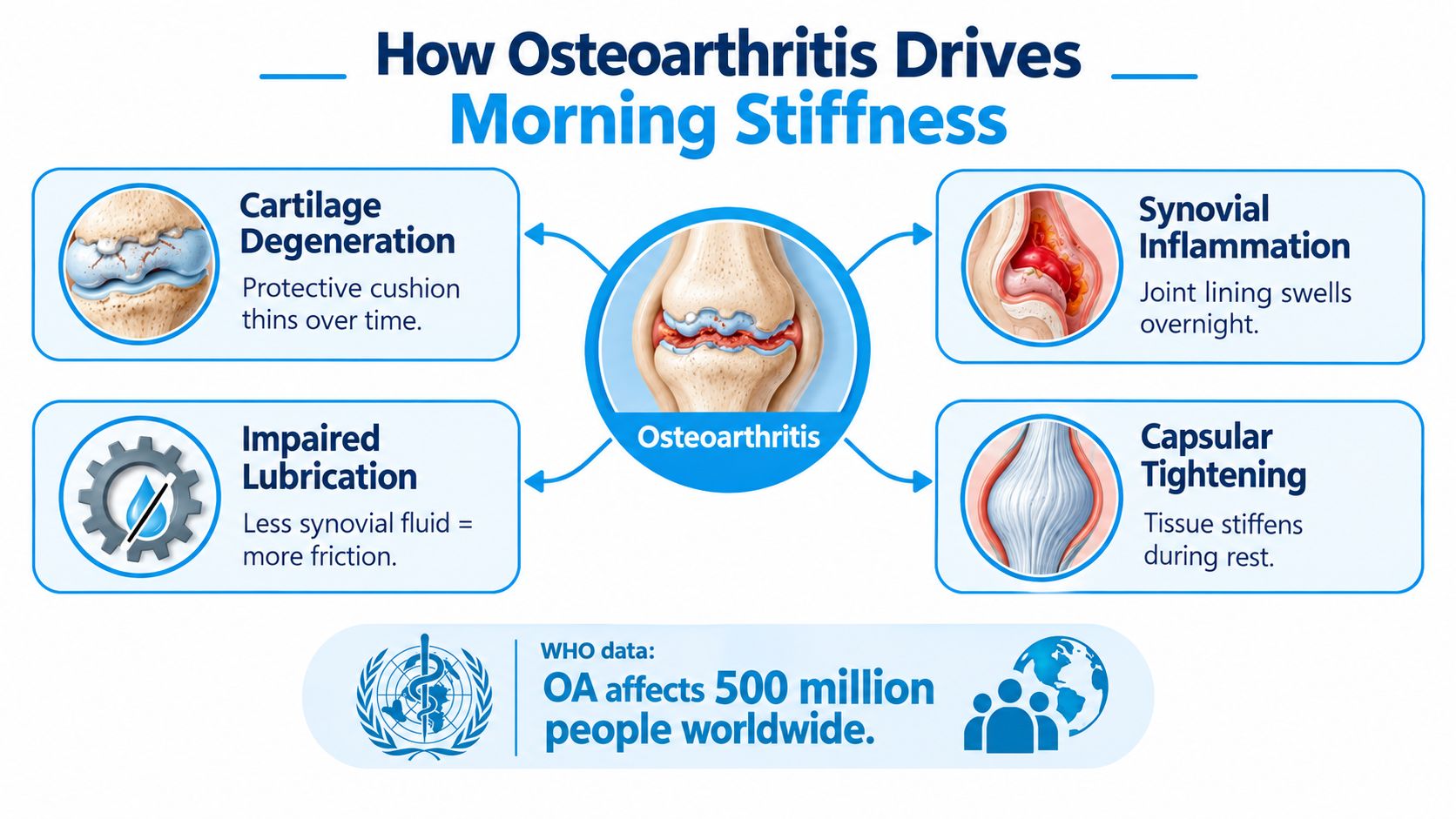
Four changes that make the first movements uncomfortable
Cartilage degeneration reduces the smooth, protective surface that helps bones move across one another. As cartilage and nearby tissues change, the joint can tolerate movement and load less comfortably.
Synovial irritation can add swelling and sensitivity. OA isn't purely a “wear and tear” process. It may involve low-grade inflammation, changes in the joint lining, bone remodeling, and reduced elasticity in muscles and connective tissues.
Impaired boundary lubrication increases friction. Synovial fluid contains natural surface-active phospholipids that help joints glide. When this lubrication system is less effective, the first movements may feel rough or resistant.
Capsular tightening adds another layer. The capsule and tissues around the joint can feel less yielding after hours of rest, particularly when the joint is already painful or structurally changed.
The classic OA pattern is stiffness on waking or after inactivity that improves as the joint begins moving. It commonly lasts less than 30 minutes, although the research on OA stiffness and joint lubrication emphasizes that the pattern can vary, especially when active synovial inflammation is present.
Making the first load gradual
A slow transition works better than asking a cold, uncomfortable joint to absorb sudden impact. Try ankle pumps before standing, easy knee bends while holding a counter, or gentle hand opening and closing before gripping objects. Guidance on helping osteoarthritis at home can complement, but not replace, an individualized clinical plan.
Stiffness that lasts much longer, keeps worsening, or occurs with swelling, warmth, or reduced range of motion isn't automatically harmless OA. Those features can signal active inflammation or another condition and deserve assessment.
When Inflammation Drives Morning Stiffness
Inflammatory arthritis changes what happens inside a joint during sleep. In rheumatoid arthritis, the immune system activates the synovium, the tissue lining the joint. Overnight rest can allow swelling, altered synovial fluid, fluid movement around the joint, and immune signals to build rather than settle. The joint may feel less like a stiff hinge and more like a space crowded by fluid and irritated tissue.
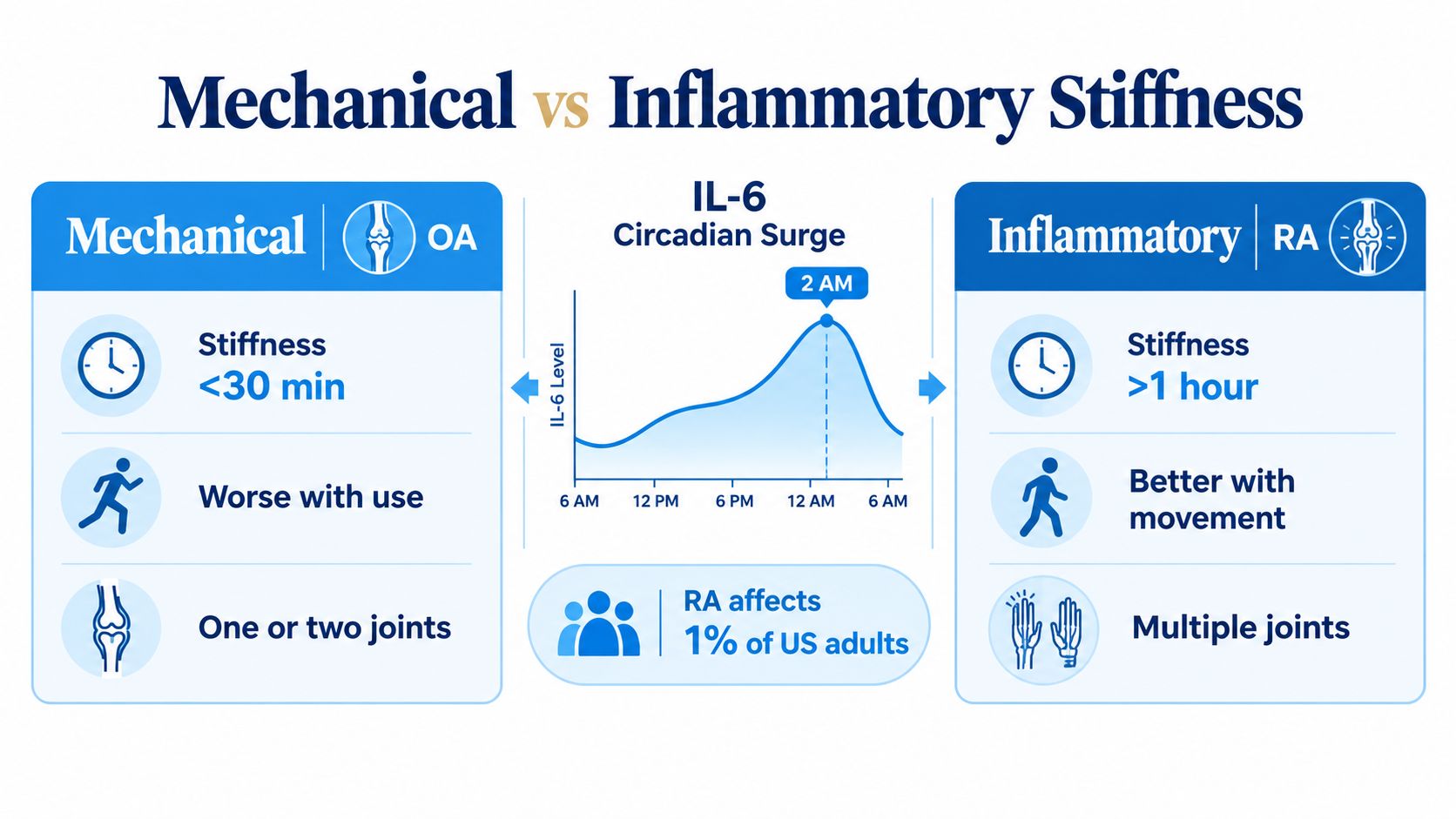
Daily hormone rhythms add another layer. Pro-inflammatory signals such as interleukin-6 and tumor necrosis factor-alpha rise during the late-night and early-morning period. Cortisol, an anti-inflammatory hormone made by the body, is relatively low before its morning increase. In one overnight rheumatoid arthritis study, mean cortisol rose from 57 ng/mL at 01:00 to 229 ng/mL at 07:15, and symptom patterns were linked to these daily changes in the Arthritis Research and Therapy study.
Clues that inflammation may be involved
Duration provides one clue, but it is not a diagnosis. Inflammatory stiffness often continues well beyond the first few movements and may ease only gradually. Swelling, warmth, tenderness, or restricted movement that remains after walking around makes active inflammation more likely.
Distribution helps refine the pattern. Similar symptoms in both hands, both wrists, or both feet suggest a systemic inflammatory process more than pain limited to one heavily loaded knee. Fatigue, recurring flares, or a low-grade fever add context and warrant closer attention.
A study of 176 patients with rheumatoid arthritis undergoing arthroplasty found that 83% reported morning stiffness. Stiffness severity and duration were significantly associated with disease activity. Among patients whose joint tissue contained both synovial fibrin and neutrophils, 73% reported stiffness lasting more than one hour, according to the published RA study.
General information about chronic inflammation therapy in Mexico may help explain treatment discussions, but a qualified clinician should identify the cause and guide care.
Rheumatoid arthritis is only one possibility. Gout, psoriatic arthritis, lupus, infection, and other disorders can create inflammatory symptoms. Prolonged stiffness should prompt a closer look, not serve as proof of one diagnosis. Information about the connection between inflammation and pain can clarify why irritated tissues hurt, but it cannot identify the disease responsible.
Other Common Contributors Worth Knowing
Morning stiffness has more possible contributors than OA and RA. Some are temporary, some follow a recognizable attack pattern, and some begin after a change in medication or daily routine.
Crystal arthritis can arrive abruptly. Gout may cause an intensely painful, red, hot joint, often involving the big toe, while calcium-pyrophosphate crystal disease can affect other joints. The suddenness and visible inflammation distinguish these attacks from the gradual stiffness of ordinary inactivity.
Fluid redistribution can make tissues feel swollen after lying down. A person with fluid retention may notice puffiness in the legs or feet on waking. Bilateral pitting edema, where pressure leaves a temporary indentation, is a reason to discuss the symptom with a clinician rather than treating it as simple joint tightness.
Medication effects deserve a timeline check. Stiffness that begins after starting or changing a prescription, including some statins, blood-pressure medicines, or aromatase inhibitors, should be documented and discussed with the prescriber. Don't stop a prescribed medicine on your own.
Inactivity is the least mysterious contributor. If a person sits for long periods during the day, sleeps in one position, or has recently reduced activity, muscles and joint-supporting tissues may become less adaptable. That stiffness often eases after movement, although persistent symptoms still need context.
Dehydration is often blamed too broadly. It may contribute to feeling generally unwell or amplify discomfort, but it doesn't explain every stiff joint. A practical overview of dehydration-based joint pain can help separate hydration habits from signs that point toward inflammation, crystals, or structural disease.
The best clue is the sequence: what changed first, which joints reacted, and whether swelling or redness appeared. That timeline often tells a clinician more than a single description such as “I wake up stiff.”
How to Read Your Own Symptom Pattern
The 30-minute rule is useful as a screening clue, not a diagnosis. OA-related stiffness often improves within about 30 minutes, while inflammatory arthritis more often lasts at least 30 minutes and may continue for an hour or longer. Yet OA can include inflammation, and short-lived stiffness doesn't rule out an early inflammatory condition.
Track four features instead of relying on the clock alone:
- Duration: Start timing when you first notice stiffness and stop when ordinary movement feels easier. Record the trend over several mornings rather than treating one unusual day as decisive.
- Swelling and warmth: Look at the joint in good light. Compare sides for puffiness, warmth, redness, and difficulty fully bending or straightening.
- Distribution: Write down every affected joint. One knee after loading suggests a different pattern from both wrists, several finger joints, or matching feet.
- Systemic clues: Note fatigue, fever, nighttime pain, psoriasis, nail changes, unexplained weight changes, or a general sense of being unwell. These details can shift the need for evaluation.
Comparing the most common patterns of morning stiffness
| Pattern | Typical Duration | Swelling/Warmth | Joint Distribution | Systemic Clues |
|---|---|---|---|---|
| Mechanical or OA-like | Often brief and improves with movement | May be absent or localized | Often one or a few load-bearing joints | Usually no broader symptoms |
| Inflammatory | Often at least 30 minutes, sometimes an hour or longer | More likely to include warmth and visible swelling | Can involve several joints symmetrically | Fatigue, fever, or recurrent flares may occur |
| Crystal-related | Sudden attack pattern rather than a routine daily stiffness pattern | Marked redness, heat, swelling, and tenderness can occur | Often sharply focused in one joint during an attack | Feeling unwell may accompany a severe flare |
Consider three examples. A person whose knee feels tight for a short time after waking, improves with gentle motion, and has no swelling has a mechanical-looking pattern. Someone with both hands swollen and stiff through much of the morning should seek an assessment, even if the discomfort isn't severe.
A third person may wake with one red, hot, exquisitely painful toe. That pattern calls for prompt medical advice because crystal arthritis and infection can resemble one another. New symptoms that spread or persist deserve attention even if they haven't followed a familiar timeline for long.
Track the combination, not just the duration. A short episode with swelling may matter more than a longer episode that steadily improves and never changes.
Self-Care Strategies That Actually Help
Self-care works best when it matches the likely mechanism and stays within safe limits. For stiffness that improves with movement and has no warning signs, begin with a gradual warm-up rather than a forceful stretch.
Try a 5-to-10-minute routine:
- Start with slow ankle circles, hand opening and closing, shoulder rolls, or gentle spinal movements.
- Add low-load range-of-motion exercises, stopping before sharp pain.
- Use light isometric contractions, such as gently tightening the thigh or glute muscles without moving the joint.
- Stand and walk gradually. Avoid jumping, sprinting, or heavy loading as the first activity of the day.
Short movement breaks during the day can reduce the contrast between stillness and activity. If sitting is part of your routine, change position regularly and take brief walks when practical. Sleep position also matters. A joint held in an awkward angle can feel worse on waking, even when no disease process has changed.
Warmth may make movement more comfortable for some people, particularly when muscles and connective tissues feel tight. A warm shower, heated wrap, or breathable supportive garment can serve as a comfort measure. Compression-lite options may suit people who dislike tight compression, but they should not be worn over unexplained swelling, altered sensation, or a joint that may be infected without professional advice.
Thermo Recovery Wear offers compression-lite infrared-responsive sleeves and braces intended to provide warmth and support during rest or light activity. That kind of garment is an adjunct, not a treatment for rheumatoid arthritis, gout, infection, or another condition requiring diagnosis. General ideas for joint pain relief at home can help you build a practical routine without treating comfort as a cure.
Try a two-week record. Each morning, note duration, affected joints, swelling, warmth, sleep quality, activity the previous day, and what helped. The log can reveal whether the pattern is stable, improving, spreading, or becoming more inflammatory, and it gives your clinician concrete information to work with.
When to Seek a Medical Evaluation
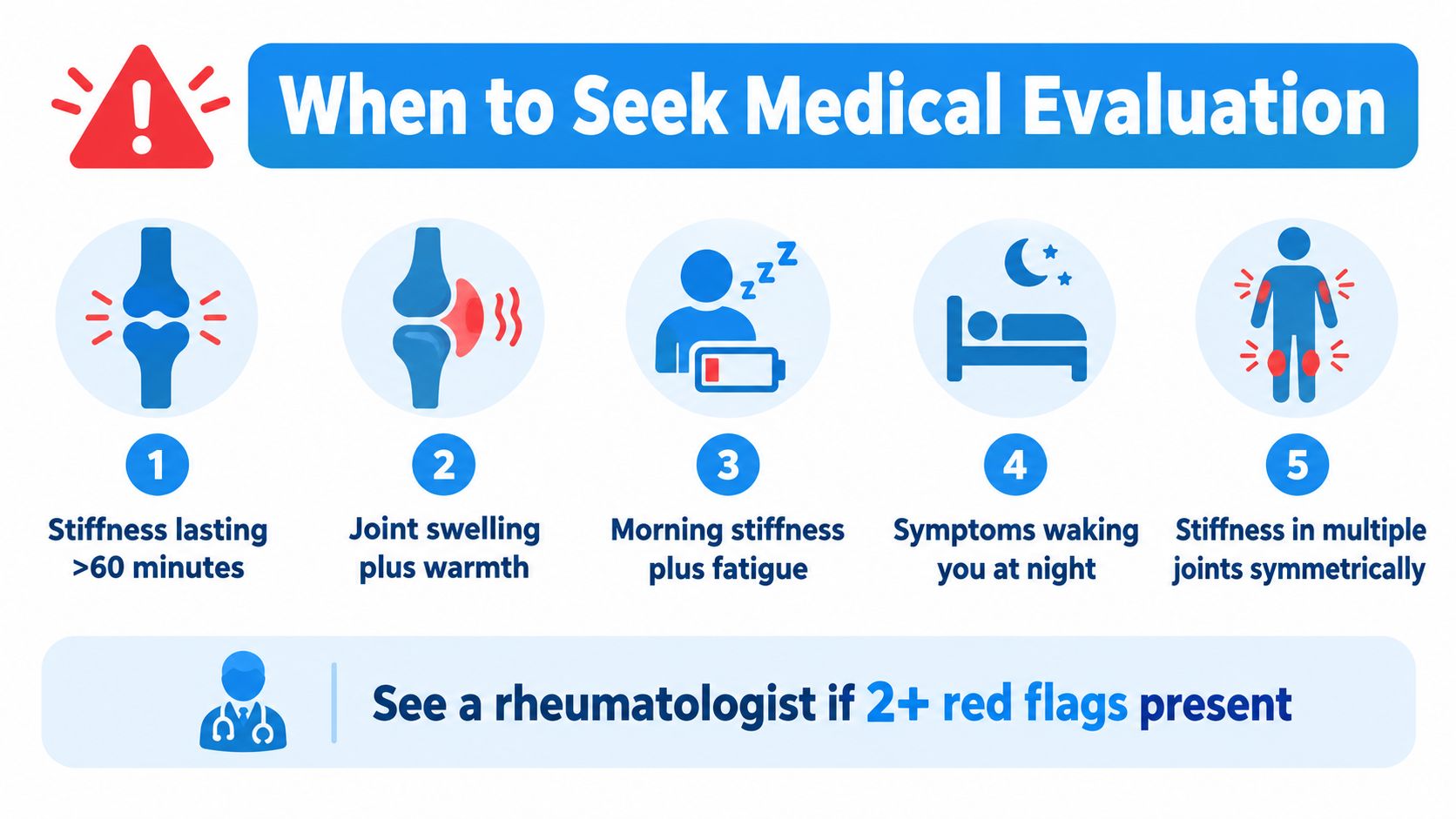
Morning stiffness deserves medical attention when it becomes persistent, progressive, or part of a broader symptom pattern. Arrange an evaluation when stiffness lasts 30 to 60 minutes or longer, especially if it comes with swelling, warmth, reduced movement, or symptoms in several joints. A clinician may use an examination, blood tests, imaging, or joint-fluid analysis depending on the findings.
Seek prompt advice for a joint that becomes suddenly red, hot, and intensely painful. Infection and crystal arthritis can look similar at first, and both require more than a warming sleeve or home exercise routine.
New prolonged stiffness can also matter more than long-standing, unchanged stiffness. Research in people with clinically suspect arthralgia found that stiffness lasting at least 60 minutes was associated with subclinical synovitis, tenosynovitis, and high C-reactive protein, and was linked to a higher likelihood of progression to rheumatoid arthritis, with a hazard ratio of 1.56, according to the published arthralgia research.
Questions people commonly ask
Does morning stiffness always mean arthritis?
No. Inactivity, an awkward sleep position, overuse, medication effects, crystal disease, and other conditions can cause it. Arthritis becomes more concerning when stiffness persists, returns frequently, or appears with swelling, warmth, multiple affected joints, or systemic symptoms.
How should I describe it to a clinician?
Bring your two-week record. Say how long stiffness lasts, identify every joint involved, describe swelling or warmth, explain whether movement helps, and mention fatigue, fever, skin changes, nighttime symptoms, recent injuries, and medication changes.
Should I use warmth or movement first?
For uncomplicated, movement-sensitive stiffness, gentle motion and mild warmth may improve comfort. Avoid forcing a swollen or acutely hot joint, and don't let temporary relief delay evaluation when inflammatory or infectious symptoms are possible.
Can early inflammatory arthritis be ruled out because symptoms are recent?
No. A short history doesn't automatically make inflammatory disease harmless. A suggestive pattern involving swelling, warmth, multiple joints, or systemic symptoms should be assessed even when the symptoms haven't been present for a long time.
Thermo Recovery Wear offers compression-lite, infrared-responsive sleeves and braces for people seeking warmth and support during rest or light activity related to joint discomfort. Explore the available options at Thermo Recovery Wear, and use any garment as a comfort aid alongside, not instead of, appropriate medical evaluation.


