


You wake with one hand numb, shake it beside the bed, and wait for the pins and needles to fade. By morning, the feeling may be better, but the interrupted sleep and recurring ache make it clear that something is happening while your wrist is resting.
A wrist brace at night can be a sensible first step when symptoms suggest mild-to-moderate carpal tunnel syndrome, particularly if numbness and tingling are worse during sleep. The useful mindset isn't “wear this forever.” Treat the brace as a time-limited trial, use it correctly, and measure whether your sleep and hand function are improving.
Table of Contents
- Why Nighttime Wrist Pain Happens
- Choosing the Right Type of Support
- How to Wear Your Brace Correctly
- How Long Should You Try It?
- Comfort Tips for Sensitive Skin
- When to See a Professional
Why Nighttime Wrist Pain Happens
Your wrist may feel manageable during the day, then wake you with tingling in the thumb, index, middle, or part of the ring finger. You may find your hand tucked beneath a pillow or your wrist folded toward your palm. Holding that position for hours can increase pressure around the median nerve, particularly when the carpal tunnel is already irritated.
Carpal tunnel syndrome is a common nerve-compression problem, and symptoms often become more noticeable at night. Reduced movement, prolonged wrist bending, and pressure from your sleeping position can keep sensitive tissues irritated while you rest. The pattern matters: note which fingers feel numb, whether symptoms wake you, and how quickly they settle after you change position.

Why neutral positioning matters
A night splint works mechanically. It limits prolonged wrist flexion or extension, positions that can raise pressure inside the carpal tunnel and irritate the median nerve. A neutral wrist sits close to straight, without folding sharply toward the palm or being forced backward.
That pattern does not confirm carpal tunnel syndrome. Tendon irritation, arthritis, ulnar nerve symptoms, and irritation from the neck can create similar complaints. Pain that travels from the wrist toward the elbow deserves a broader assessment, so use this guide to pain from the wrist to the elbow as background rather than a diagnosis.
A brace cannot identify the cause. It can, however, test whether controlling wrist position changes your symptoms. During a trial, record your nighttime awakenings, morning numbness, and daytime grip or hand function. Improvement over several weeks supports continuing the approach. No meaningful change, worsening symptoms, or increasing weakness means the trial has not solved the problem and warrants professional advice.
Practical rule: A brace should control an aggravating position, not squeeze the wrist to force relief.
Your mattress and sleep posture may also encourage you to fold an arm beneath your body. If discomfort appears connected to broader positioning or joint support, guidance on choosing the best mattress for arthritis can help you assess the sleep surface. Keep expectations realistic. Nighttime bracing is conservative symptom management, best judged by measurable changes rather than by wearing it indefinitely.
Choosing the Right Type of Support
A brace earns its place during a six-week trial by controlling the movement that aggravates your symptoms without creating pressure, stiffness, or new tingling. Start by identifying whether your main problem is position, compression, or both.
A soft compression sleeve offers warmth and light support, but it gives you less control over wrist angle. It may suit mild aching when comfort is the priority. If you wake with tingling after sleeping with your wrist sharply bent, a sleeve may feel comfortable while failing to address the position contributing to the symptoms.
A structured night splint usually has a palm support or stays that limit bending. For suspected carpal tunnel symptoms, choose a design that holds the wrist close to neutral. Avoid a brace that forces the hand noticeably backward. Your fingers should remain free, and the palm support should not press hard into the hand.

Match support to the symptom pattern
Use the symptom pattern to narrow your choice:
- Numbness or tingling that worsens during sleep: Choose a neutral-position splint with enough structure to limit curling.
- General soreness without nerve symptoms: Try a lighter, flexible support if it still prevents the wrist from collapsing into a painful position.
- Swelling or sensitive skin: Do not tighten the brace in pursuit of more relief. Look for adjustable straps, softer contact areas, and enough room for normal finger movement.
- Symptoms in several joints: A wrist brace addresses only the wrist. Broader needs, including ways to support joints during menopause, may need separate clinical advice.
Measure your wrist according to the manufacturer's instructions. Then assess the fit both seated and lying down. A brace that feels acceptable with your arm hanging at your side can press differently when your hand rests on a pillow.
A thumb opening can help orient the brace and reduce rotation, but it should not pull your thumb into an uncomfortable angle. A rigid palm stay can limit bending, while an aggressively curved stay may hold the wrist too far backward. This guide to a lightweight wrist brace can help you compare flexibility with overnight control.
Comfort is part of correction
The most corrective brace is not useful if you remove it after an hour. Choose the least restrictive design that reliably limits the movement linked to your symptoms. Fit, skin tolerance, and consistent use matter because they determine whether you can complete the trial.
Evidence does not establish one brace design or wearing schedule as superior. The 2023 systematic review included 19 randomized studies involving 1,190 participants, yet found limited evidence for selecting a particular design or schedule. Use that uncertainty practically: test one suitable brace, record nighttime awakenings, morning numbness, and daytime hand function, then review the trend across six weeks. Stop if symptoms worsen, pressure causes skin or circulation changes, or weakness progresses, and seek professional assessment rather than switching endlessly between braces.
How to Wear Your Brace Correctly
Putting on a brace takes less than a minute, but small positioning errors can determine whether it helps or irritates your hand. Put it on before bed while you're relaxed, not after symptoms have already woken you.
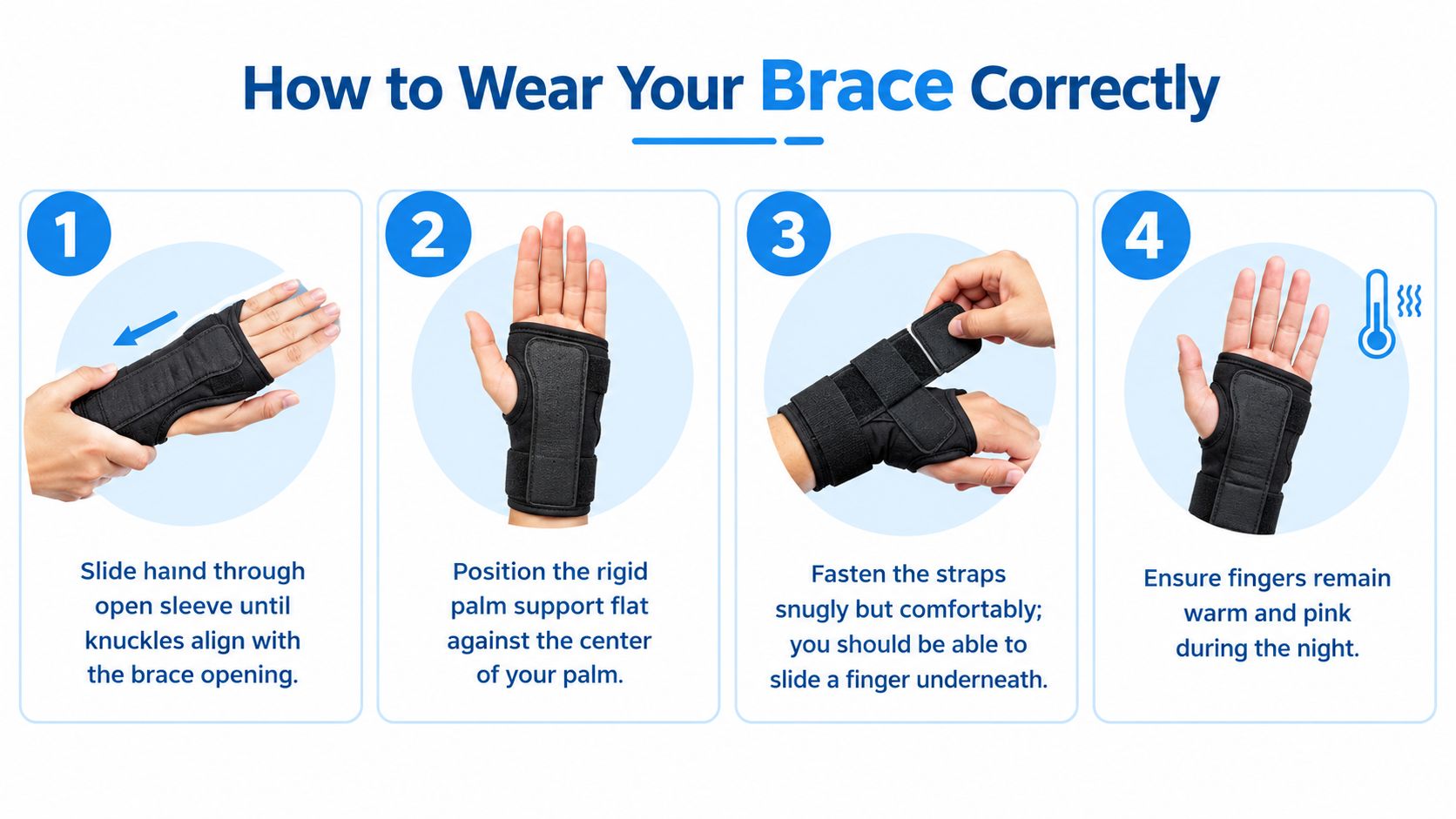
- Slide your hand into the brace. Move your hand through the opening until the knuckles and thumb sit where the design intends. The brace shouldn't twist toward the little-finger side or leave the palm support sitting diagonally.
- Find the neutral position. Look at the wrist from the side. Your hand should form a relatively straight continuation of the forearm. If the brace bends your wrist toward the palm, or noticeably backward, it may be the wrong shape, incorrectly fitted, or positioned too high.
- Secure the palm and wrist straps. Fasten each strap snugly enough to stop the brace sliding, then ease off if you feel pressure, throbbing, or increasing tingling. You should be able to slide a finger beneath the strap without forcing it.
Check the brace before sleeping
Open and close your fingers several times. They should move freely, and the brace shouldn't obstruct the thumb or press across the finger joints. Compare both hands for warmth and normal color. A brace is intended to prevent extreme wrist positions, not create rigid compression around the hand.
Wear it for a short period while reading or sitting before committing to sleep. If the brace causes new tingling before bedtime, don't assume you'll “get used to it.” Adjust the fit or reconsider the design.
A useful fit test: Your fingers should remain warm and normally colored, and the brace shouldn't produce new weakness or numbness.
Your sleeping position matters too. Try not to place the hand beneath your head or body, and support the forearm on a pillow if that helps you keep the wrist aligned. Don't pull the straps tighter to compensate for a brace that shifts because the size or shape is wrong.
For additional visual guidance, see this explanation of how to wear a wrist brace with a thumb opening. If you use a brace with a removable stay, don't remove a structural component that you need for neutral positioning unless the manufacturer or clinician has advised it.
Use this video as another visual reference before your first night:
In the morning, remove the brace and note what happened. Temporary tingling immediately after removal has been reported in trials, but persistent or worsening symptoms are not a reason to tighten the brace and continue without review.
How Long Should You Try It?
Treat nighttime bracing as a measured six-week trial, not a permanent prescription. For adults with suspected mild-to-moderate carpal tunnel syndrome, start with nighttime-only use for approximately six weeks. Check the fit after the first night and again during the first week. The brace should limit wrist bending while leaving the palm, fingers, and circulation unrestricted. New tingling, numbness, weakness, or marked discomfort means the fit or design needs reassessment.
A randomized trial of active workers used nocturnal splinting for six weeks. The splinted group reported a significant reduction in wrist, hand, and finger discomfort, and the improvement remained evident at 12 months, according to the Military Medicine study. This supports a consistent trial period. It does not establish that every person benefits from indefinite brace use.
Track the response, not just the routine
Record a baseline before the first night. Use the same measures throughout the trial:
- Nighttime waking: Count how often symptoms wake you.
- Morning symptoms: Note numbness, tingling, stiffness, and aching when you get up.
- Daytime sensation: Record whether numbness continues after you begin using the hand.
- Grip-related tasks: Note difficulty opening containers, holding a phone, carrying a bag, or handling tools.
- Brace use: Record the nights worn and whether you removed it early.
- Sleep quality: Note whether the brace helped you stay asleep or disturbed your sleep.
Review the notes at two weeks and again at six weeks. Useful improvement may appear as fewer awakenings, less morning tingling, or better tolerance for ordinary hand tasks. A comfortable brace is not producing a sufficient result if daytime numbness or weakness continues to progress.
Adherence also matters. A 2020 study of 30 subjects representing 37 hands found that 47% reported wearing a wrist splint every night, while 91% wore it on at least five to seven nights, according to the reported study findings. The practical lesson is clear: a recommendation for nightly use does not guarantee consistent use. Poor comfort can shorten the trial and weaken its value.
Reassess instead of extending automatically
As the Cochrane review notes, one trial found meaningful improvement after six weeks, with no added benefit from extending splinting for another six weeks. The review found low-certainty evidence for short-term overall improvement and insufficient evidence to establish whether nighttime-only, full-time, short-term, or long-term use works best. In one low-quality study of 80 wrists, nighttime splinting for four weeks more than tripled the likelihood of reported overall improvement compared with no treatment, with a risk ratio of 3.86 and a 95% confidence interval of 2.29 to 6.51.
At six weeks, decide from the symptom pattern rather than habit. Clear improvement supports discussing whether to continue or taper use. Little improvement, worsening numbness, increasing weakness, or persistent symptoms calls for professional assessment instead of a tighter brace or another unplanned extension.
Comfort Tips for Sensitive Skin
A brace can be mechanically appropriate and still fail because it makes sleep miserable. Sweat, friction, rough seams, and excessive strap pressure can cause irritation that leads you to remove the support. For sensitive skin, the material and the fit need to be considered together.
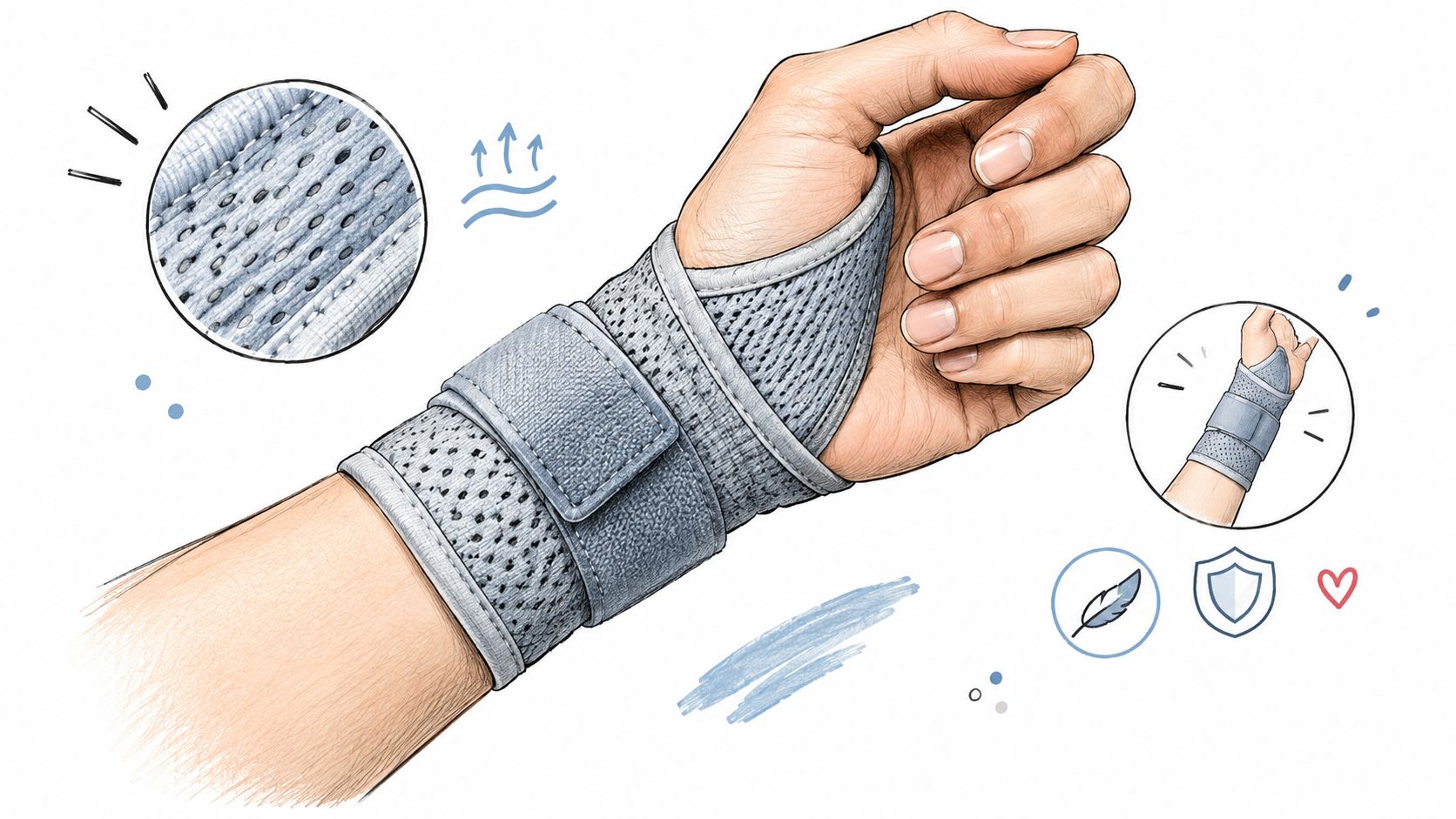
Neoprene-style materials often feel soft and insulating, but they may hold warmth and moisture against the skin. That isn't automatically a problem, but it becomes less attractive if you wake damp, develop redness, or have difficulty keeping the skin dry.
Breathable recovery fabrics offer a different trade-off. Bamboo and charcoal textiles are designed for moisture management and can feel less bulky than heavily padded constructions. A guide to fabric for sensitive skin can help you compare softness, breathability, and care requirements rather than choosing by appearance alone.
Compare the common choices
| Option | Potential advantage | Trade-off to watch |
|---|---|---|
| Soft sleeve | Light support and easy movement | May not stop the wrist from bending |
| Neoprene-style brace | Warmth and cushioning | Can feel hot or retain moisture |
| Structured splint | Better control of wrist position | May create palm pressure or disturb sleep |
| Breathable recovery fabric | Lower moisture and softer contact | Still needs correct sizing and adequate position control |
Wash and dry the brace according to its care instructions. Put it on with clean, dry skin, and inspect the wrist after removing it. Don't place a damp brace back on irritated skin, and don't cover a developing pressure mark with extra tightening.
People with diabetes, peripheral neuropathy, fragile skin, or reduced sensation should be especially cautious. Reduced ability to feel pressure can make a minor fit problem harder to detect before it becomes a skin injury.
Comfort test: Mild awareness of the brace is acceptable. Increasing numbness, swelling, throbbing, skin breakdown, or symptoms that persist after removal are warning signs.
You don't need to accept poor sleep as proof that bracing is working. A lighter material may improve adherence, but it still has to maintain the wrist near neutral. If a soft sleeve doesn't control the movement that triggers symptoms, comfort has come at the expense of correction.
When to See a Professional
Use a nighttime brace as a time-limited self-care trial. Stop and arrange a clinical assessment if numbness becomes constant, weakness increases, grip function declines, or you notice wasting at the base of the thumb. These changes can indicate progressing nerve involvement that a brace will not correct.
If symptoms worsen during the trial, read our guide on why a wrist brace can make pain worse before assuming the approach has failed. Check the fit, wrist position, and pressure first, then seek professional advice if the problem continues. Increasing wear time without improvement can delay assessment and leave the underlying cause untreated.
Stop for pressure or circulation warnings
Remove or loosen the brace promptly if your fingers become cold, unusually pale, blue, swollen, or difficult to move. New weakness, escalating tingling, throbbing, skin breakdown, or symptoms that persist after removal also warrant professional advice.
A brace should not leave a deep strap mark, force the wrist backward, or compress the palm. If you keep tightening the straps because the device shifts, the design or size may be wrong. More correction is not always better. Excess pressure can disturb sleep and irritate tissues, while too little control may fail to limit the wrist position linked to your symptoms.
People with diabetes, peripheral neuropathy, fragile skin, or reduced sensation need particular caution. Check the skin each morning because a minor pressure problem may be difficult to feel before it becomes an injury.
Use a simple review routine
At the end of each night, inspect the skin and compare sensation with your usual baseline. During the day, record whether numbness is fading, gripping feels easier, and symptoms appear during ordinary tasks. Review the pattern at approximately two weeks and six weeks, rather than extending the trial automatically.
In a randomized comparison involving clinically and electrophysiologically confirmed carpal tunnel syndrome, nighttime splinting produced general improvement in 54% of participants at three months, compared with 80% after surgery. At 18 months, the corresponding rates were 75% and 90%, according to the PubMed study. These findings support bracing as a reasonable conservative trial, not a guaranteed substitute for definitive treatment.
Ask a therapist or physician about nerve-conduction testing when symptoms persist, weakness develops, or the diagnosis is uncertain. A clinician can also check whether the symptoms fit carpal tunnel syndrome or point elsewhere. Numbness concentrated along the little finger, symptoms traveling from the neck, or pain that does not follow a wrist-position pattern may require a different assessment.
A safe routine is straightforward: fit the brace while awake, keep the wrist near neutral, leave room for finger movement, check the skin each morning, and keep a symptom record. Stop self-treating and seek care when warning signs appear.
Thermo Recovery Wear offers recovery sleeves and wrist supports with non-compressive and moisture-wicking fabric options for overnight use and light daily activity. Visit Thermo Recovery Wear to compare wrist-support designs for a six-week, symptom-guided trial.


